NR293 Exam 1 Actual Exam Style V1 | NR
293 Pharmacology for Nursing Practice |
Chamberlain
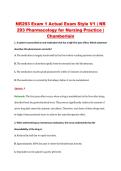
1. A patient is prescribed an oral medication that has a high first-pass effect. Which statement
describes this phenomenon correctly?
A. The medication is largely inactivated by the liver before reaching systemic circulation.
B. The medication is absorbed rapidly from the stomach into the bloodstream.
C. The medication reaches peak plasma levels within 15 minutes of administration.
D. The medication is excreted by the kidneys before it can be metabolized.
Answer: A
Rationale: The first-pass effect occurs when a drug is metabolized in the liver after being
absorbed from the gastrointestinal tract. This process significantly reduces the amount of
active drug that enters the systemic circulation. Therefore, oral doses of these drugs must
be higher than parenteral doses to achieve the same therapeutic effect.
2. When administering an intravenous medication, the nurse understands that the
bioavailability of the drug is:
A. Reduced by half due to rapid excretion.
B. Approximately 100% because it enters the bloodstream directly.
C. Dependent on the patient’s gastric pH levels.
,D. Delayed due to the distribution to peripheral tissues.
Answer: B
Rationale: Bioavailability refers to the portion of a drug that reaches the systemic
circulation in an unchanged form. For intravenous administration, the drug is injected
directly into the blood, bypassing absorption barriers. This results in immediate and total
bioavailability compared to other routes.
3. A nurse is caring for an elderly patient with low albumin levels. What is the primary
concern regarding drug distribution in this patient?
A. The drug will be absorbed more slowly from the gastrointestinal tract.
B. There will be more free drug in the bloodstream, increasing the risk of toxicity.
C. The kidneys will excrete the drug too quickly to be effective.
D. The liver will be unable to metabolize the drug efficiently.
Answer: B
Rationale: Many drugs bind to plasma proteins like albumin, and only the unbound ‘free’
portion is pharmacologically active. When albumin levels are low, there are fewer binding
sites, leading to an increase in the concentration of free drug. This elevation significantly
increases the risk for adverse effects and drug toxicity.
4. A patient is taking a drug with a narrow therapeutic index. What is the nurse’s priority
action?
A. Check the patient’s blood levels of the drug regularly as ordered.
, B. Administer the drug only on an empty stomach.
C. Instruct the patient to increase fluid intake to prevent toxicity.
D. Assess for an allergic reaction after the first dose.
Answer: A
Rationale: A narrow therapeutic index means that the difference between a therapeutic
dose and a toxic dose is very small. Monitoring serum drug levels is essential to ensure the
drug remains within a safe and effective range. This prevents subtherapeutic dosing or
dangerous toxic accumulations in the body.
5. Which of the following is considered a Schedule II controlled substance?
A. Heroin
B. Morphine
C. Diazepam
D. Cough syrup with codeine
Answer: B
Rationale: Schedule II drugs have a high potential for abuse but also have accepted
medical uses. Morphine is a classic example of a Schedule II opioid used for severe pain
management. These drugs require strict record-keeping and specific prescription
regulations due to their high dependency potential.
293 Pharmacology for Nursing Practice |
Chamberlain
1. A patient is prescribed an oral medication that has a high first-pass effect. Which statement
describes this phenomenon correctly?
A. The medication is largely inactivated by the liver before reaching systemic circulation.
B. The medication is absorbed rapidly from the stomach into the bloodstream.
C. The medication reaches peak plasma levels within 15 minutes of administration.
D. The medication is excreted by the kidneys before it can be metabolized.
Answer: A
Rationale: The first-pass effect occurs when a drug is metabolized in the liver after being
absorbed from the gastrointestinal tract. This process significantly reduces the amount of
active drug that enters the systemic circulation. Therefore, oral doses of these drugs must
be higher than parenteral doses to achieve the same therapeutic effect.
2. When administering an intravenous medication, the nurse understands that the
bioavailability of the drug is:
A. Reduced by half due to rapid excretion.
B. Approximately 100% because it enters the bloodstream directly.
C. Dependent on the patient’s gastric pH levels.
,D. Delayed due to the distribution to peripheral tissues.
Answer: B
Rationale: Bioavailability refers to the portion of a drug that reaches the systemic
circulation in an unchanged form. For intravenous administration, the drug is injected
directly into the blood, bypassing absorption barriers. This results in immediate and total
bioavailability compared to other routes.
3. A nurse is caring for an elderly patient with low albumin levels. What is the primary
concern regarding drug distribution in this patient?
A. The drug will be absorbed more slowly from the gastrointestinal tract.
B. There will be more free drug in the bloodstream, increasing the risk of toxicity.
C. The kidneys will excrete the drug too quickly to be effective.
D. The liver will be unable to metabolize the drug efficiently.
Answer: B
Rationale: Many drugs bind to plasma proteins like albumin, and only the unbound ‘free’
portion is pharmacologically active. When albumin levels are low, there are fewer binding
sites, leading to an increase in the concentration of free drug. This elevation significantly
increases the risk for adverse effects and drug toxicity.
4. A patient is taking a drug with a narrow therapeutic index. What is the nurse’s priority
action?
A. Check the patient’s blood levels of the drug regularly as ordered.
, B. Administer the drug only on an empty stomach.
C. Instruct the patient to increase fluid intake to prevent toxicity.
D. Assess for an allergic reaction after the first dose.
Answer: A
Rationale: A narrow therapeutic index means that the difference between a therapeutic
dose and a toxic dose is very small. Monitoring serum drug levels is essential to ensure the
drug remains within a safe and effective range. This prevents subtherapeutic dosing or
dangerous toxic accumulations in the body.
5. Which of the following is considered a Schedule II controlled substance?
A. Heroin
B. Morphine
C. Diazepam
D. Cough syrup with codeine
Answer: B
Rationale: Schedule II drugs have a high potential for abuse but also have accepted
medical uses. Morphine is a classic example of a Schedule II opioid used for severe pain
management. These drugs require strict record-keeping and specific prescription
regulations due to their high dependency potential.