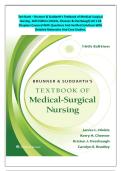
Test bank For Medical Biochemistry | 2nd Edition | Antonio &
Gustavo Blanco | All 1–32 Chapters Covered With Questions And
Verified Solutions With Detailed Rationales And Case Studies.
, TABLE OF CONTENT
Chapter 1. Chemical Composition of Living Beings
Chapter 2. Water
Chapter 3. Proteins
Chapter 4. Carbohydrates
Chapter 5. Lipids
Chapter 6. Nucleic Acids
Chapter 7. Elements of Thermodynamics and Biochemical Kinetics
Chapter 8. Enzymes
Chapter 9. Biological Oxidations: Bioenergetics
Chapter 10. Antioxidants
Chapter 11. Membranes
Chapter 12. Digestion - Absorption
Chapter 13. Metabolism
Chapter 14. Carbohydrate Metabolism
Chapter 15. Lipid Metabolism
Chapter 16. Amino Acid Metabolism
Chapter 17. Heme Metabolism
Chapter 18. Purine and Pyrimidine Metabolism
Chapter 19. Integration and Regulation of Metabolism
Chapter 20. Metabolism in Some Tissues
Chapter 21. The Genetic Information (I)
Chapter 22. The Genetic Information (II)
Chapter 23. Regulation of Gene Expression
,Chapter 24. Posttranslational Protein Modifications
Chapter 25. Biochemical Basis of Endocrinology (I) Receptors and Signal
Transduction
Chapter 26. Biochemical Bases of Endocrinology (II) Hormones and Other
Chemical Intermediates
Chapter 27. Vitamins
Chapter 28. Water and Acid–Base Balance
Chapter 29. Essential Minerals
Chapter 30. Molecular Basis of Immunity
Chapter 31. Hemostasis
Chapter 32. Cell Death
Chapter 1: Chemical Composition of Living Beings
, SECTION A: MULTIPLE-CHOICE QUESTIONS
1. Which four elements make up approximately 96% of the total mass of a living
human organism?
• A) Carbon, Hydrogen, Oxygen, Nitrogen
• B) Carbon, Hydrogen, Oxygen, Calcium
• C) Carbon, Oxygen, Nitrogen, Phosphorus
• D) Hydrogen, Oxygen, Nitrogen, Sulfur
Correct Answer: A
Rationale: The human body's bulk composition is dominated by organic molecules
(proteins, carbohydrates, lipids, and nucleic acids), all of which are built on a backbone of
carbon and hydrogen, with oxygen and nitrogen being essential for functional groups and
amino acids. Together, these four elements account for ~96% of body weight.
Why others are incorrect:
• B (Calcium) is abundant but constitutes only ~1.5% of body mass, far less than the
top four.
• C (Phosphorus) is critical (e.g., in ATP and DNA) but represents only ~1% of mass.
• D (Sulfur) is a trace element in this context, found primarily in specific amino acids
like methionine.
2. The term "trace element" in biochemistry refers to an element that:
• A) Is artificially introduced into the body via supplements
• B) Is required in amounts less than 100 mg per day for normal physiological function
• C) Has no known biological function and is a contaminant
• D) Is only found in plant-derived foods
Correct Answer: B
Rationale: Trace elements (e.g., iron, zinc, copper, selenium) are essential minerals
required in very small quantities (typically <100 mg/day) for enzyme function, oxygen
transport, and redox reactions.
Why others are incorrect:
• A is false; trace elements are naturally obtained through diet.
• C is false; trace elements have well-defined biological roles (e.g., zinc in DNA
polymerase).
• D is false; trace elements are found in both plant and animal sources.
3. A patient presents with severe fatigue, pallor, and microcytic anemia. Laboratory
findings show low serum ferritin. This condition is most directly related to a
deficiency in which trace element?
• A) Zinc
Gustavo Blanco | All 1–32 Chapters Covered With Questions And
Verified Solutions With Detailed Rationales And Case Studies.
, TABLE OF CONTENT
Chapter 1. Chemical Composition of Living Beings
Chapter 2. Water
Chapter 3. Proteins
Chapter 4. Carbohydrates
Chapter 5. Lipids
Chapter 6. Nucleic Acids
Chapter 7. Elements of Thermodynamics and Biochemical Kinetics
Chapter 8. Enzymes
Chapter 9. Biological Oxidations: Bioenergetics
Chapter 10. Antioxidants
Chapter 11. Membranes
Chapter 12. Digestion - Absorption
Chapter 13. Metabolism
Chapter 14. Carbohydrate Metabolism
Chapter 15. Lipid Metabolism
Chapter 16. Amino Acid Metabolism
Chapter 17. Heme Metabolism
Chapter 18. Purine and Pyrimidine Metabolism
Chapter 19. Integration and Regulation of Metabolism
Chapter 20. Metabolism in Some Tissues
Chapter 21. The Genetic Information (I)
Chapter 22. The Genetic Information (II)
Chapter 23. Regulation of Gene Expression
,Chapter 24. Posttranslational Protein Modifications
Chapter 25. Biochemical Basis of Endocrinology (I) Receptors and Signal
Transduction
Chapter 26. Biochemical Bases of Endocrinology (II) Hormones and Other
Chemical Intermediates
Chapter 27. Vitamins
Chapter 28. Water and Acid–Base Balance
Chapter 29. Essential Minerals
Chapter 30. Molecular Basis of Immunity
Chapter 31. Hemostasis
Chapter 32. Cell Death
Chapter 1: Chemical Composition of Living Beings
, SECTION A: MULTIPLE-CHOICE QUESTIONS
1. Which four elements make up approximately 96% of the total mass of a living
human organism?
• A) Carbon, Hydrogen, Oxygen, Nitrogen
• B) Carbon, Hydrogen, Oxygen, Calcium
• C) Carbon, Oxygen, Nitrogen, Phosphorus
• D) Hydrogen, Oxygen, Nitrogen, Sulfur
Correct Answer: A
Rationale: The human body's bulk composition is dominated by organic molecules
(proteins, carbohydrates, lipids, and nucleic acids), all of which are built on a backbone of
carbon and hydrogen, with oxygen and nitrogen being essential for functional groups and
amino acids. Together, these four elements account for ~96% of body weight.
Why others are incorrect:
• B (Calcium) is abundant but constitutes only ~1.5% of body mass, far less than the
top four.
• C (Phosphorus) is critical (e.g., in ATP and DNA) but represents only ~1% of mass.
• D (Sulfur) is a trace element in this context, found primarily in specific amino acids
like methionine.
2. The term "trace element" in biochemistry refers to an element that:
• A) Is artificially introduced into the body via supplements
• B) Is required in amounts less than 100 mg per day for normal physiological function
• C) Has no known biological function and is a contaminant
• D) Is only found in plant-derived foods
Correct Answer: B
Rationale: Trace elements (e.g., iron, zinc, copper, selenium) are essential minerals
required in very small quantities (typically <100 mg/day) for enzyme function, oxygen
transport, and redox reactions.
Why others are incorrect:
• A is false; trace elements are naturally obtained through diet.
• C is false; trace elements have well-defined biological roles (e.g., zinc in DNA
polymerase).
• D is false; trace elements are found in both plant and animal sources.
3. A patient presents with severe fatigue, pallor, and microcytic anemia. Laboratory
findings show low serum ferritin. This condition is most directly related to a
deficiency in which trace element?
• A) Zinc