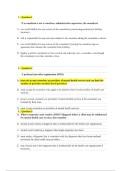
1.Question1
If a consultant is not a consultee s administrative supervisor, the consultant:
A. can avoid liability for any actions of the consultee by purchasing professional liability
insurance.
B. still is responsible for any outcomes related to the consultee taking the consultant s advice.
C. can avoid liability for any actions of the consultee by having the consultee sign an
agreement that releases the consultant from liability.
D. legally would be considered to have control and authority over a consultee, even though
the consultant is not the consultee s boss.
2.Question2
R —
A preferred provider organization (PPO):
B. must accept all counselors who apply to be added to their list of providers of health care
services.
C. have to accept counselors as providers of mental health services if the counselors are
licensed by their state.
D. must accept counselors as providers of mental health services.
3.Question3
A. When a counselor must render a DSM-5 diagnosis before a client may be reimbursed
for mental health care services, the counselor:
B. should always choose a diagnosis that is reimbursable by the health care organization.
C. should avoid rendering a diagnosis that might stigmatize the client
D. must render a diagnosis that is consistent with the diagnoses that have been rendered
previously by other health care providers.
E. may choose one of the diagnoses that is reimbursable by the health care organization if
necessary.
, 4. Question 4
A. cannot be committed when the source of an idea is the Internet.
B. is always just cause for expelling a student from a counselor training program.
is difficult for professors to detect.
C. is summarizing a passage from another author s work without using quotation marks and
giving the source and page number where the passage was found.
5.
All of the following are fraudulent health care practices EXCEPT:
A. waiving the co-payment when a co-payment is required.
B. billing for a missed session and indicating the client attended the session because missed
sessions are not reimbursable.
C. reporting that an approved professional is providing direct services to a client when the
services actually are being provided by a counselor who is not approved.
D. providing family counseling services (which are not reimbursable) and reporting that
individual counseling services are being provided (which are reimbursable).
6.Question6
Clinical supervision is the process whereby the work of counselors is reviewed by
other mental health professionals, usually with the goal of:
A. increasing the counselor’s knowledge of the counseling literature.
B. ensuring that counselors services are delivered in a manner that satisfies the counselors
employers.
C. ensuring that counselors perform their job functions appropriately.
helping counselors practice in an ethical manner.
7.Question7
Health care plans in the United States:
A. are available to 99% of the population.
B. must, by federal law, include mental health services benefits.
If a consultant is not a consultee s administrative supervisor, the consultant:
A. can avoid liability for any actions of the consultee by purchasing professional liability
insurance.
B. still is responsible for any outcomes related to the consultee taking the consultant s advice.
C. can avoid liability for any actions of the consultee by having the consultee sign an
agreement that releases the consultant from liability.
D. legally would be considered to have control and authority over a consultee, even though
the consultant is not the consultee s boss.
2.Question2
R —
A preferred provider organization (PPO):
B. must accept all counselors who apply to be added to their list of providers of health care
services.
C. have to accept counselors as providers of mental health services if the counselors are
licensed by their state.
D. must accept counselors as providers of mental health services.
3.Question3
A. When a counselor must render a DSM-5 diagnosis before a client may be reimbursed
for mental health care services, the counselor:
B. should always choose a diagnosis that is reimbursable by the health care organization.
C. should avoid rendering a diagnosis that might stigmatize the client
D. must render a diagnosis that is consistent with the diagnoses that have been rendered
previously by other health care providers.
E. may choose one of the diagnoses that is reimbursable by the health care organization if
necessary.
, 4. Question 4
A. cannot be committed when the source of an idea is the Internet.
B. is always just cause for expelling a student from a counselor training program.
is difficult for professors to detect.
C. is summarizing a passage from another author s work without using quotation marks and
giving the source and page number where the passage was found.
5.
All of the following are fraudulent health care practices EXCEPT:
A. waiving the co-payment when a co-payment is required.
B. billing for a missed session and indicating the client attended the session because missed
sessions are not reimbursable.
C. reporting that an approved professional is providing direct services to a client when the
services actually are being provided by a counselor who is not approved.
D. providing family counseling services (which are not reimbursable) and reporting that
individual counseling services are being provided (which are reimbursable).
6.Question6
Clinical supervision is the process whereby the work of counselors is reviewed by
other mental health professionals, usually with the goal of:
A. increasing the counselor’s knowledge of the counseling literature.
B. ensuring that counselors services are delivered in a manner that satisfies the counselors
employers.
C. ensuring that counselors perform their job functions appropriately.
helping counselors practice in an ethical manner.
7.Question7
Health care plans in the United States:
A. are available to 99% of the population.
B. must, by federal law, include mental health services benefits.