

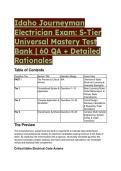
Idaho Journeyman
Electrician Exam: S-Tier
Universal Mastery Test
Bank | 60 QA + Detailed
Rationales
Table of Contents
Cognitive Tier Section Title Question Range Focus Area
PART I The Preview & Critical N/A Overview of Idaho
Axioms Electrical Licensing &
Amended Standards
Tier 1 Foundational Syntax & Questions 1–15 Base Licensing Rules,
Application Code Mathematics, &
Primary State
Amendments
Tier 2 Complex Application & Questions 16–35 Circuit Design,
Simulation Raceway Calculations,
& Regulatory Field
Simulations
Tier 3 Grandmaster Synthesis Questions 36–60 Complex Multi-Variable
Engineering, System
Sizing, & Legal
Transitions
The Preview
This comprehensive, expert-level test bank is engineered to cultivate high-performance
academic and professional mastery for electrical candidates seeking licensure in the State of
Idaho. By replacing rote memorization with a rigorous, structurally simulated gauntlet, this
resource translates complex statutory provisions and technical calculations into immediate
clinical and analytical field competence.
Critical Idaho Electrical Code Axioms
,Parameter / Code Statutory or Core Technical or Legal Operational Impact for
Section Administrative Source
Rule Licensees
Residential Idaho Code § Limit of one residential, Maximizes on-site
Apprentice Ratio 54-1010(3) journeyman, or master residential labor force
electrician to a deployment.
maximum of six
apprentices.
Commercial Idaho Code § Limit of one Enforces tight safety
Apprentice Ratio 54-1010(3) journeyman or master supervision in
electrician to a high-hazard
maximum of two environments.
apprentices.
6,000-Hour Exemption Idaho Code § No ratio applies to Allows advanced
54-1010(3) apprentices with \ge apprentices to work
6,000 hours of with increased
experience who are operational autonomy.
enrolled in or
completed school.
Bedroom AFCI IDAPA 24.39.10.600(k) AFCI is restricted Eliminates AFCI
Exception strictly to branch installation costs in
circuits and outlets non-bedroom areas.
supplying bedrooms in
dwellings.
250V GFCI Exemption IDAPA 24.39.10.600(b) Deletes all 2023 NEC Prevents nuisance
GFCI requirements for tripping on ranges,
250-volt receptacles in dryers, and heavy
dwelling units. residential appliances.
Unpaid DOPL Fees IDAPA 24.39.10.500 Permit holders with Enforces administrative
outstanding fines or compliance through
unpaid permit fees are permitting holds.
barred from purchasing
new permits.
S-Tier Universal Mastery Test Bank
Tier 1 - Foundational Syntax & Application
Q1: A licensed journeyman electrician is supervising a residential installation crew on a new
wood-frame single-family housing tract in Meridian, Idaho. Under Idaho Code Section 54-1010,
what is the MAXIMUM number of registered apprentice electricians this single journeyman is
permitted to supervise on this residential site? A) Two apprentices B) Three apprentices C) Four
apprentices D) Six apprentices
● The Answer: D (Six apprentices)
● Distractor Analysis:
○ A is incorrect: A 1:2 ratio is mandated strictly for commercial and industrial settings,
not residential.
○ B is incorrect: A 1:3 ratio is a common legacy standard in neighboring jurisdictions
, but is not recognized by Idaho statute.
○ C is incorrect: A 1:4 ratio is an outdated regional standard and does not represent
Idaho's current expanded residential allowance.
The Mentor's Analysis: Idaho Code establishes an exceptionally generous
apprentice-to-journeyman ratio in residential settings to facilitate local workforce development.
When managing residential crews, the journeyman must ensure the headcount does not exceed
the 1:6 threshold. By utilizing the residential ratio of 1:6, the contractor maximizes on-site labor
without violating administrative safety ratios. Professional/Academic Intuition: Maintain a
maximum of a 1:6 ratio in residential settings, while strictly keeping to a 1:2 ratio in commercial
settings.
Q2: A journeyman electrician is managing a commercial tenant improvement project for a retail
store in Idaho Falls. According to Idaho Code Section 54-1010, what is the MAXIMUM number
of registered apprentice electricians that can perform electrical work under the supervision of
this single journeyman on-site? A) One apprentice B) Two apprentices C) Three apprentices D)
Six apprentices
● The Answer: B (Two apprentices)
● Distractor Analysis:
○ A is incorrect: A 1:1 ratio is a localized collective bargaining preference but is more
restrictive than the statutory limit of 1:2.
○ C is incorrect: A 1:3 ratio is permitted in other states like North Dakota but violates
the Idaho commercial cap.
○ D is incorrect: A 1:6 ratio is restricted exclusively to residential settings and is
prohibited on commercial sites.
The Mentor's Analysis: Non-residential settings present complex hazards, warranting a tighter
supervision ratio to protect personnel and property. When deploying apprentices in commercial
or industrial environments, the supervisor must maintain a strict 1:2 ratio. By utilizing the 1:2
commercial ratio, the journeyman ensures adequate oversight of complex systems.
Professional/Academic Intuition: Commercial and industrial projects in Idaho require a
strict 1:2 journeyman-to-apprentice supervision limit.
Q3: An apprentice electrician working on an industrial site in Pocatello has completed 6,200
hours of registered electrical work in Idaho and is currently enrolled in the fourth year of a
board-approved sequence of instruction. Which supervision ratio applies to this apprentice on
this commercial job site? A) One journeyman to two apprentices B) One journeyman to one
apprentice C) One journeyman to six apprentices D) No supervision ratio applies to this
apprentice
● The Answer: D (No supervision ratio applies to this apprentice)
● Distractor Analysis:
○ A is incorrect: A 1:2 ratio is the standard commercial ratio, but this advanced
apprentice qualifies for a statutory exemption.
○ B is incorrect: A 1:1 ratio is incorrect because this apprentice is exempt from the
standard ratio counting.
○ C is incorrect: A 1:6 ratio is strictly for residential environments and cannot be
applied to any apprentice in a commercial setting.
The Mentor's Analysis: Idaho Code incentivizes progress through registered apprenticeship
programs. Once an apprentice achieves 6,000 registered hours and is enrolled in or has
completed their fourth year of instruction, they are exempt from standard supervision ratios. By
utilizing the 6,000-hour ratio exemption, the contractor gains significant operational flexibility.
Professional/Academic Intuition: Apprentices with over 6,000 hours and active
Electrician Exam: S-Tier
Universal Mastery Test
Bank | 60 QA + Detailed
Rationales
Table of Contents
Cognitive Tier Section Title Question Range Focus Area
PART I The Preview & Critical N/A Overview of Idaho
Axioms Electrical Licensing &
Amended Standards
Tier 1 Foundational Syntax & Questions 1–15 Base Licensing Rules,
Application Code Mathematics, &
Primary State
Amendments
Tier 2 Complex Application & Questions 16–35 Circuit Design,
Simulation Raceway Calculations,
& Regulatory Field
Simulations
Tier 3 Grandmaster Synthesis Questions 36–60 Complex Multi-Variable
Engineering, System
Sizing, & Legal
Transitions
The Preview
This comprehensive, expert-level test bank is engineered to cultivate high-performance
academic and professional mastery for electrical candidates seeking licensure in the State of
Idaho. By replacing rote memorization with a rigorous, structurally simulated gauntlet, this
resource translates complex statutory provisions and technical calculations into immediate
clinical and analytical field competence.
Critical Idaho Electrical Code Axioms
,Parameter / Code Statutory or Core Technical or Legal Operational Impact for
Section Administrative Source
Rule Licensees
Residential Idaho Code § Limit of one residential, Maximizes on-site
Apprentice Ratio 54-1010(3) journeyman, or master residential labor force
electrician to a deployment.
maximum of six
apprentices.
Commercial Idaho Code § Limit of one Enforces tight safety
Apprentice Ratio 54-1010(3) journeyman or master supervision in
electrician to a high-hazard
maximum of two environments.
apprentices.
6,000-Hour Exemption Idaho Code § No ratio applies to Allows advanced
54-1010(3) apprentices with \ge apprentices to work
6,000 hours of with increased
experience who are operational autonomy.
enrolled in or
completed school.
Bedroom AFCI IDAPA 24.39.10.600(k) AFCI is restricted Eliminates AFCI
Exception strictly to branch installation costs in
circuits and outlets non-bedroom areas.
supplying bedrooms in
dwellings.
250V GFCI Exemption IDAPA 24.39.10.600(b) Deletes all 2023 NEC Prevents nuisance
GFCI requirements for tripping on ranges,
250-volt receptacles in dryers, and heavy
dwelling units. residential appliances.
Unpaid DOPL Fees IDAPA 24.39.10.500 Permit holders with Enforces administrative
outstanding fines or compliance through
unpaid permit fees are permitting holds.
barred from purchasing
new permits.
S-Tier Universal Mastery Test Bank
Tier 1 - Foundational Syntax & Application
Q1: A licensed journeyman electrician is supervising a residential installation crew on a new
wood-frame single-family housing tract in Meridian, Idaho. Under Idaho Code Section 54-1010,
what is the MAXIMUM number of registered apprentice electricians this single journeyman is
permitted to supervise on this residential site? A) Two apprentices B) Three apprentices C) Four
apprentices D) Six apprentices
● The Answer: D (Six apprentices)
● Distractor Analysis:
○ A is incorrect: A 1:2 ratio is mandated strictly for commercial and industrial settings,
not residential.
○ B is incorrect: A 1:3 ratio is a common legacy standard in neighboring jurisdictions
, but is not recognized by Idaho statute.
○ C is incorrect: A 1:4 ratio is an outdated regional standard and does not represent
Idaho's current expanded residential allowance.
The Mentor's Analysis: Idaho Code establishes an exceptionally generous
apprentice-to-journeyman ratio in residential settings to facilitate local workforce development.
When managing residential crews, the journeyman must ensure the headcount does not exceed
the 1:6 threshold. By utilizing the residential ratio of 1:6, the contractor maximizes on-site labor
without violating administrative safety ratios. Professional/Academic Intuition: Maintain a
maximum of a 1:6 ratio in residential settings, while strictly keeping to a 1:2 ratio in commercial
settings.
Q2: A journeyman electrician is managing a commercial tenant improvement project for a retail
store in Idaho Falls. According to Idaho Code Section 54-1010, what is the MAXIMUM number
of registered apprentice electricians that can perform electrical work under the supervision of
this single journeyman on-site? A) One apprentice B) Two apprentices C) Three apprentices D)
Six apprentices
● The Answer: B (Two apprentices)
● Distractor Analysis:
○ A is incorrect: A 1:1 ratio is a localized collective bargaining preference but is more
restrictive than the statutory limit of 1:2.
○ C is incorrect: A 1:3 ratio is permitted in other states like North Dakota but violates
the Idaho commercial cap.
○ D is incorrect: A 1:6 ratio is restricted exclusively to residential settings and is
prohibited on commercial sites.
The Mentor's Analysis: Non-residential settings present complex hazards, warranting a tighter
supervision ratio to protect personnel and property. When deploying apprentices in commercial
or industrial environments, the supervisor must maintain a strict 1:2 ratio. By utilizing the 1:2
commercial ratio, the journeyman ensures adequate oversight of complex systems.
Professional/Academic Intuition: Commercial and industrial projects in Idaho require a
strict 1:2 journeyman-to-apprentice supervision limit.
Q3: An apprentice electrician working on an industrial site in Pocatello has completed 6,200
hours of registered electrical work in Idaho and is currently enrolled in the fourth year of a
board-approved sequence of instruction. Which supervision ratio applies to this apprentice on
this commercial job site? A) One journeyman to two apprentices B) One journeyman to one
apprentice C) One journeyman to six apprentices D) No supervision ratio applies to this
apprentice
● The Answer: D (No supervision ratio applies to this apprentice)
● Distractor Analysis:
○ A is incorrect: A 1:2 ratio is the standard commercial ratio, but this advanced
apprentice qualifies for a statutory exemption.
○ B is incorrect: A 1:1 ratio is incorrect because this apprentice is exempt from the
standard ratio counting.
○ C is incorrect: A 1:6 ratio is strictly for residential environments and cannot be
applied to any apprentice in a commercial setting.
The Mentor's Analysis: Idaho Code incentivizes progress through registered apprenticeship
programs. Once an apprentice achieves 6,000 registered hours and is enrolled in or has
completed their fourth year of instruction, they are exempt from standard supervision ratios. By
utilizing the 6,000-hour ratio exemption, the contractor gains significant operational flexibility.
Professional/Academic Intuition: Apprentices with over 6,000 hours and active


