
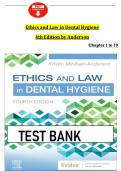
Ethics and Law in Dental Hygiene
4th Edition by Anderson
Chapter 1 to 10
TEST BANK
, TABLE OF CONTENT
1. Risk Management
2. Ethics and Professionalism
3. Ethical Theoryand Philosophy
4. Ethical Principles and Values
5. Codes of Ethics
6. Ethical DecisionMakingin Dental Hygieneand Dentistry
7. Social Responsibility
8. Society and the State DentalPractice Act
9. DentalHygienist–PatientRelationship
10. DentalHygienist–Dentist- EmployerRelationship
,Chapter01:RiskManagement
MULTIPLECHOICE
1. Whenwas the inceptionof the professionof dental hygiene?
a. In ancient Greece
b. In the early 1800s
c. In the early 1900s
d. In 1979
ANS: C
The scope of practice of a dentalhygienist was first establishedby law in Connecticutin 1915.
Alfred C. Fones taughthis dental assistant, Irene Newman,to treat patientsand toteach them
to maintaintheir mouthsin a clean state. In 1913,Fones establishedthe first school for dental
hygienists in Bridgeport, Connecticut.The first oath writtenfor dentalhygienistscalled upon
Apollo and Hygeia,who were the Greek god and goddess of health, respectively.A modernized
version of the first oath was adoptedby the Board of Trustees of the American Dental
Hygienists’Association(ADHA)in 1979.
DIF: Recall REF: p. 3 OBJ: 1
TOP: 7.0 ProfessionalResponsibility|7.1Ethical Principles, includinginformedconsent
2. Whichmemberof thedental team is the primary oral preventivetherapist?
a. Dentist
b. Dentalhygienist
c. Dentalassistant
d. Receptionist
ANS: B
The dental hygienistis the oral preventivetherapist in the dental office. The dentists who
pioneeredthis special field of endeavorhad a vision of the day when dental disease could be
preventedby followinga system of treatmentand cleanliness. The dentistis primarily
concernedwith restorativetreatment, althoughhe or she also shares in preventingoral disease.
The dental assistant assists the dentistand may assist the dentalhygienist as well. The
receptionist greets patientsand may help with the business and financial aspects of the
practice.
DIF: Recall REF: p. 4 OBJ: 1
TOP: 7.0 Professional Responsibility|7.4 General
3. The dental hygiene oath is revised by action of which of the following professional
organizations?
a. TheAmerican DentalAssociation(ADA)
b. TheAmericanDentalHygienists’Association(ADHA)
c. TheOccupationalSafety and HealthAdministration(OSHA)
d. TheOrganizationfor Safety,Asepsis, and Prevention(OSAP)
e. The Foodand Drug Administration(FDA)
ANS: B
, The first dental hygieneoath was adoptedby the Board of Trustees of the American Dental
Hygienists’Association(ADHA)in 1979and is still in use today. The oath may be seen at the
followingwebsite (www.adha.org/aboutadha/dhoath.htm ). The AmericanDentalAssociationhas
an oath for dentists.A copy of each oath may be foundin the textbook.
DIF: Recall REF: p. 3 OBJ: 1
TOP: 7.0 Professional Responsibility|7.4 General
4. Success is measuredby financial gain in the corporateworld;however, forthe health care
professionalthe patient’swelfare is placed above profit.
a. Both the statementand reason are correct and related.
b. Both the statementand reason are correct but NOTrelated.
c. The statementis correct, but the reason is NOT.
d. The statementis NOTcorrect, but the reason is correct.
e. NEITHERthe statementNORthe reason is correct.
ANS: A
Because the welfare of the patientis more importantthan profit,society has granted the health
care professionala certain status that carries prestige,power, and the right to apply special
knowledgeand skills.
DIF: Comprehension REF: p. 4 OBJ: 2
TOP: 7.0 Professional Responsibility|7.4 General
5. Society recognizes that health care providersare held to a higher standard than
legislative mandate.These higher standardsare expressed in professionalcodes of
ethics and are enforcedby the legal system.
a. Both statementsare true.
b. Both statementsare false.
c. The first statementis true, the second statementis false.
d. The first statementis false, the second statementis true.
ANS: C
Health care providers are held to a higher standard than can be expressed exclusively by
legislative mandate.Whileit is true that these higher standards are expressed in professional
codes of ethics, they are enforcedby thosewithin the professionrather than by the legal
system. Importantcomponentsof this enforcementinclude self- regulationand submissionto
peer review.
DIF: Comprehension REF: p. 4 OBJ: 1
TOP: 7.0 Professional Responsibility|7.4 General
6. Whichof the followingis regarded as the most importantaspect of the delivery of health care
services?
a. Technicalskill
b. Appropriateknowledge
c. Critical judgment
d. Caring
ANS: D
4th Edition by Anderson
Chapter 1 to 10
TEST BANK
, TABLE OF CONTENT
1. Risk Management
2. Ethics and Professionalism
3. Ethical Theoryand Philosophy
4. Ethical Principles and Values
5. Codes of Ethics
6. Ethical DecisionMakingin Dental Hygieneand Dentistry
7. Social Responsibility
8. Society and the State DentalPractice Act
9. DentalHygienist–PatientRelationship
10. DentalHygienist–Dentist- EmployerRelationship
,Chapter01:RiskManagement
MULTIPLECHOICE
1. Whenwas the inceptionof the professionof dental hygiene?
a. In ancient Greece
b. In the early 1800s
c. In the early 1900s
d. In 1979
ANS: C
The scope of practice of a dentalhygienist was first establishedby law in Connecticutin 1915.
Alfred C. Fones taughthis dental assistant, Irene Newman,to treat patientsand toteach them
to maintaintheir mouthsin a clean state. In 1913,Fones establishedthe first school for dental
hygienists in Bridgeport, Connecticut.The first oath writtenfor dentalhygienistscalled upon
Apollo and Hygeia,who were the Greek god and goddess of health, respectively.A modernized
version of the first oath was adoptedby the Board of Trustees of the American Dental
Hygienists’Association(ADHA)in 1979.
DIF: Recall REF: p. 3 OBJ: 1
TOP: 7.0 ProfessionalResponsibility|7.1Ethical Principles, includinginformedconsent
2. Whichmemberof thedental team is the primary oral preventivetherapist?
a. Dentist
b. Dentalhygienist
c. Dentalassistant
d. Receptionist
ANS: B
The dental hygienistis the oral preventivetherapist in the dental office. The dentists who
pioneeredthis special field of endeavorhad a vision of the day when dental disease could be
preventedby followinga system of treatmentand cleanliness. The dentistis primarily
concernedwith restorativetreatment, althoughhe or she also shares in preventingoral disease.
The dental assistant assists the dentistand may assist the dentalhygienist as well. The
receptionist greets patientsand may help with the business and financial aspects of the
practice.
DIF: Recall REF: p. 4 OBJ: 1
TOP: 7.0 Professional Responsibility|7.4 General
3. The dental hygiene oath is revised by action of which of the following professional
organizations?
a. TheAmerican DentalAssociation(ADA)
b. TheAmericanDentalHygienists’Association(ADHA)
c. TheOccupationalSafety and HealthAdministration(OSHA)
d. TheOrganizationfor Safety,Asepsis, and Prevention(OSAP)
e. The Foodand Drug Administration(FDA)
ANS: B
, The first dental hygieneoath was adoptedby the Board of Trustees of the American Dental
Hygienists’Association(ADHA)in 1979and is still in use today. The oath may be seen at the
followingwebsite (www.adha.org/aboutadha/dhoath.htm ). The AmericanDentalAssociationhas
an oath for dentists.A copy of each oath may be foundin the textbook.
DIF: Recall REF: p. 3 OBJ: 1
TOP: 7.0 Professional Responsibility|7.4 General
4. Success is measuredby financial gain in the corporateworld;however, forthe health care
professionalthe patient’swelfare is placed above profit.
a. Both the statementand reason are correct and related.
b. Both the statementand reason are correct but NOTrelated.
c. The statementis correct, but the reason is NOT.
d. The statementis NOTcorrect, but the reason is correct.
e. NEITHERthe statementNORthe reason is correct.
ANS: A
Because the welfare of the patientis more importantthan profit,society has granted the health
care professionala certain status that carries prestige,power, and the right to apply special
knowledgeand skills.
DIF: Comprehension REF: p. 4 OBJ: 2
TOP: 7.0 Professional Responsibility|7.4 General
5. Society recognizes that health care providersare held to a higher standard than
legislative mandate.These higher standardsare expressed in professionalcodes of
ethics and are enforcedby the legal system.
a. Both statementsare true.
b. Both statementsare false.
c. The first statementis true, the second statementis false.
d. The first statementis false, the second statementis true.
ANS: C
Health care providers are held to a higher standard than can be expressed exclusively by
legislative mandate.Whileit is true that these higher standards are expressed in professional
codes of ethics, they are enforcedby thosewithin the professionrather than by the legal
system. Importantcomponentsof this enforcementinclude self- regulationand submissionto
peer review.
DIF: Comprehension REF: p. 4 OBJ: 1
TOP: 7.0 Professional Responsibility|7.4 General
6. Whichof the followingis regarded as the most importantaspect of the delivery of health care
services?
a. Technicalskill
b. Appropriateknowledge
c. Critical judgment
d. Caring
ANS: D


