COMSAE Phase 1 Form ASA 121
Foundational Biomedical Sciences Exam
Practice Questions & [Verified Answers],
Plus Explained Rationales|2026 Latest
Update| Instant Download PDF
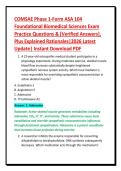
1. A 24-year-old woman presents with fatigue, pallor, and exertional
dyspnea. Laboratory testing reveals microcytic anemia with decreased
serum ferritin. Which cellular process is most directly impaired?
A. DNA replication
B. Heme synthesis
C. Ribosomal protein production
D. Purine degradation
Answer: B. Heme synthesis
Rationale: Iron deficiency anemia results from inadequate iron
availability for heme production. Reduced heme synthesis decreases
hemoglobin formation, producing microcytic, hypochromic red blood
cells.
2. A mutation prevents phosphorylation of glucose inside
hepatocytes. Which enzyme is most likely affected?
A. Hexokinase
B. Glucokinase
,C. Pyruvate kinase
D. Phosphofructokinase
Answer: B. Glucokinase
Rationale: Hepatocytes use glucokinase to convert glucose to glucose-
6-phosphate after meals. Unlike hexokinase, glucokinase has a high
Km and responds to increased glucose concentrations.
3. A patient develops muscle weakness after prolonged exercise due
to inability to utilize glycogen stores. Which enzyme deficiency is most
likely?
A. Glucose-6-phosphatase
B. Muscle glycogen phosphorylase
C. Pyruvate carboxylase
D. Lactate dehydrogenase
Answer: B. Muscle glycogen phosphorylase
Rationale: McArdle disease results from deficiency of muscle glycogen
phosphorylase, preventing glycogen breakdown during exercise and
causing exercise intolerance.
4. A newborn develops severe hypoglycemia after fasting. Genetic
testing reveals inability to release free glucose from glycogen
breakdown. Which enzyme is deficient?
A. Glycogen synthase
B. Branching enzyme
C. Glucose-6-phosphatase
D. Fructose-1,6-bisphosphatase
,Answer: C. Glucose-6-phosphatase
Rationale: Von Gierke disease causes inability to convert glucose-6-
phosphate into free glucose, producing severe fasting hypoglycemia,
hepatomegaly, and lactic acidosis.
5. A patient taking a medication develops dry cough due to
accumulation of bradykinin. Which drug was prescribed?
A. Losartan
B. Amlodipine
C. Lisinopril
D. Hydrochlorothiazide
Answer: C. Lisinopril
Rationale: ACE inhibitors prevent breakdown of bradykinin, causing
cough and angioedema. ARBs block angiotensin receptors without
affecting bradykinin metabolism.
6. Which immunoglobulin is responsible for immediate
hypersensitivity reactions?
A. IgA
B. IgG
C. IgE
D. IgM
Answer: C. IgE
Rationale: IgE binds mast cells and basophils. Cross-linking causes
histamine release, producing allergic reactions and anaphylaxis.
, 7. A patient with recurrent infections has absent mature B cells due to
mutation in BTK. Which immune function is impaired?
A. T-cell activation
B. Antibody production
C. Complement activation
D. Neutrophil migration
Answer: B. Antibody production
Rationale: Bruton agammaglobulinemia prevents B-cell maturation,
resulting in markedly reduced immunoglobulin production.
8. A Gram-positive cocci organism is catalase-positive and coagulase-
positive. Which organism is identified?
A. Streptococcus pyogenes
B. Staphylococcus aureus
C. Enterococcus faecalis
D. Streptococcus pneumoniae
Answer: B. Staphylococcus aureus
Rationale: Staphylococcus aureus is a Gram-positive cocci in clusters
that is catalase-positive and coagulase-positive.
9. A patient develops watery diarrhea after antibiotic use. Stool
testing detects toxin-mediated inhibition of colonic cells. Which
organism is responsible?
A. Salmonella
B. Clostridioides difficile
Foundational Biomedical Sciences Exam
Practice Questions & [Verified Answers],
Plus Explained Rationales|2026 Latest
Update| Instant Download PDF
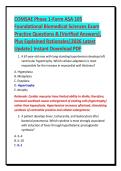
1. A 24-year-old woman presents with fatigue, pallor, and exertional
dyspnea. Laboratory testing reveals microcytic anemia with decreased
serum ferritin. Which cellular process is most directly impaired?
A. DNA replication
B. Heme synthesis
C. Ribosomal protein production
D. Purine degradation
Answer: B. Heme synthesis
Rationale: Iron deficiency anemia results from inadequate iron
availability for heme production. Reduced heme synthesis decreases
hemoglobin formation, producing microcytic, hypochromic red blood
cells.
2. A mutation prevents phosphorylation of glucose inside
hepatocytes. Which enzyme is most likely affected?
A. Hexokinase
B. Glucokinase
,C. Pyruvate kinase
D. Phosphofructokinase
Answer: B. Glucokinase
Rationale: Hepatocytes use glucokinase to convert glucose to glucose-
6-phosphate after meals. Unlike hexokinase, glucokinase has a high
Km and responds to increased glucose concentrations.
3. A patient develops muscle weakness after prolonged exercise due
to inability to utilize glycogen stores. Which enzyme deficiency is most
likely?
A. Glucose-6-phosphatase
B. Muscle glycogen phosphorylase
C. Pyruvate carboxylase
D. Lactate dehydrogenase
Answer: B. Muscle glycogen phosphorylase
Rationale: McArdle disease results from deficiency of muscle glycogen
phosphorylase, preventing glycogen breakdown during exercise and
causing exercise intolerance.
4. A newborn develops severe hypoglycemia after fasting. Genetic
testing reveals inability to release free glucose from glycogen
breakdown. Which enzyme is deficient?
A. Glycogen synthase
B. Branching enzyme
C. Glucose-6-phosphatase
D. Fructose-1,6-bisphosphatase
,Answer: C. Glucose-6-phosphatase
Rationale: Von Gierke disease causes inability to convert glucose-6-
phosphate into free glucose, producing severe fasting hypoglycemia,
hepatomegaly, and lactic acidosis.
5. A patient taking a medication develops dry cough due to
accumulation of bradykinin. Which drug was prescribed?
A. Losartan
B. Amlodipine
C. Lisinopril
D. Hydrochlorothiazide
Answer: C. Lisinopril
Rationale: ACE inhibitors prevent breakdown of bradykinin, causing
cough and angioedema. ARBs block angiotensin receptors without
affecting bradykinin metabolism.
6. Which immunoglobulin is responsible for immediate
hypersensitivity reactions?
A. IgA
B. IgG
C. IgE
D. IgM
Answer: C. IgE
Rationale: IgE binds mast cells and basophils. Cross-linking causes
histamine release, producing allergic reactions and anaphylaxis.
, 7. A patient with recurrent infections has absent mature B cells due to
mutation in BTK. Which immune function is impaired?
A. T-cell activation
B. Antibody production
C. Complement activation
D. Neutrophil migration
Answer: B. Antibody production
Rationale: Bruton agammaglobulinemia prevents B-cell maturation,
resulting in markedly reduced immunoglobulin production.
8. A Gram-positive cocci organism is catalase-positive and coagulase-
positive. Which organism is identified?
A. Streptococcus pyogenes
B. Staphylococcus aureus
C. Enterococcus faecalis
D. Streptococcus pneumoniae
Answer: B. Staphylococcus aureus
Rationale: Staphylococcus aureus is a Gram-positive cocci in clusters
that is catalase-positive and coagulase-positive.
9. A patient develops watery diarrhea after antibiotic use. Stool
testing detects toxin-mediated inhibition of colonic cells. Which
organism is responsible?
A. Salmonella
B. Clostridioides difficile