

CSET ELA SUBTEST 1
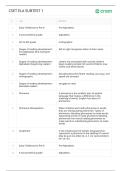
# Term Definition
1 Early Childhood to Pre-K Pre-Alphabetic
2 K-second (third grade) Alphabetic
3 4th to 8th grade orthographic
4 Stages of reading development: left to right recognizes letter in their name
Pre-Alphabetic (the emergent
reader)
5 Stages of reading development: Letters are associated with sounds children
Alphabetic (beginning reader) begin reading simple CVC words Children now
rhyme and blend words
6 Stages of reading development: decoding becomes fluent reading, accuracy, and
orthographic speed are stressed.
7 Stages of reading development: struggle to read.
Remedial readers
8 Phoneme A phoneme is the smallest part of spoken
language that makes a difference in the
meaning of words. English has about 41
phonemes.
9 Phoneme Manipulation When children work with phonemes in words,
they are manipulating phonemes. Types of
phonemes: blending phonemes to make words
separating words to make phonemes deleting
phonemes from words adding phonemes to
make words or substituting phonemes to make
words
10 Grapheme is the smallest part of written language that
represents a phoneme in the spelling of a word.
May be just one letter (b, d, f, ) or several letters
(ch, th, sh).
11 Early Childhood to Pre-K Pre-Alphabetic
12 K-second (third grade) Alphabetic
, CSET ELA SUBTEST 1
# Term Definition
13 4th to 8th grade orthographic
14 Stages of reading development: left to right recognizes letter in their name
Pre-Alphabetic (the emergent
reader)
15 Stages of reading development: Letters are associated with sounds children
Alphabetic (beginning reader) begin reading simple CVC words Children now
rhyme and blend words
16 Stages of reading development: decoding becomes fluent reading, accuracy, and
orthographic speed are stressed.
17 Stages of reading development: struggle to read.
Remedial readers
18 Phoneme A phoneme is the smallest part of spoken
language that makes a difference in the
meaning of words. English has about 41
phonemes.
19 Phoneme Manipulation When children work with phonemes in words,
they are manipulating phonemes. Types of
phonemes: blending phonemes to make words
separating words to make phonemes deleting
phonemes from words adding phonemes to
make words or substituting phonemes to make
words
20 Grapheme is the smallest part of written language that
represents a phoneme in the spelling of a word.
May be just one letter (b, d, f, ) or several letters
(ch, th, sh).
21 Phonics understanding that there is a predictable
relationship between phoneme ( the sounds of
spoken language) and grapheme ( the letters
and spelling that represent those sounds in
written language).
22 Systematic is a plan of instruction which includes a carefully
selected set of letter-sound relationships that
are organized into a logical sequence.
# Term Definition
1 Early Childhood to Pre-K Pre-Alphabetic
2 K-second (third grade) Alphabetic
3 4th to 8th grade orthographic
4 Stages of reading development: left to right recognizes letter in their name
Pre-Alphabetic (the emergent
reader)
5 Stages of reading development: Letters are associated with sounds children
Alphabetic (beginning reader) begin reading simple CVC words Children now
rhyme and blend words
6 Stages of reading development: decoding becomes fluent reading, accuracy, and
orthographic speed are stressed.
7 Stages of reading development: struggle to read.
Remedial readers
8 Phoneme A phoneme is the smallest part of spoken
language that makes a difference in the
meaning of words. English has about 41
phonemes.
9 Phoneme Manipulation When children work with phonemes in words,
they are manipulating phonemes. Types of
phonemes: blending phonemes to make words
separating words to make phonemes deleting
phonemes from words adding phonemes to
make words or substituting phonemes to make
words
10 Grapheme is the smallest part of written language that
represents a phoneme in the spelling of a word.
May be just one letter (b, d, f, ) or several letters
(ch, th, sh).
11 Early Childhood to Pre-K Pre-Alphabetic
12 K-second (third grade) Alphabetic
, CSET ELA SUBTEST 1
# Term Definition
13 4th to 8th grade orthographic
14 Stages of reading development: left to right recognizes letter in their name
Pre-Alphabetic (the emergent
reader)
15 Stages of reading development: Letters are associated with sounds children
Alphabetic (beginning reader) begin reading simple CVC words Children now
rhyme and blend words
16 Stages of reading development: decoding becomes fluent reading, accuracy, and
orthographic speed are stressed.
17 Stages of reading development: struggle to read.
Remedial readers
18 Phoneme A phoneme is the smallest part of spoken
language that makes a difference in the
meaning of words. English has about 41
phonemes.
19 Phoneme Manipulation When children work with phonemes in words,
they are manipulating phonemes. Types of
phonemes: blending phonemes to make words
separating words to make phonemes deleting
phonemes from words adding phonemes to
make words or substituting phonemes to make
words
20 Grapheme is the smallest part of written language that
represents a phoneme in the spelling of a word.
May be just one letter (b, d, f, ) or several letters
(ch, th, sh).
21 Phonics understanding that there is a predictable
relationship between phoneme ( the sounds of
spoken language) and grapheme ( the letters
and spelling that represent those sounds in
written language).
22 Systematic is a plan of instruction which includes a carefully
selected set of letter-sound relationships that
are organized into a logical sequence.


