

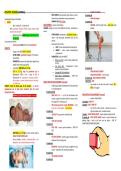
PEDIATRIC NURSING (NOMRAL) - Crawling or creeping
- BIRTH LENGTH: supine position, tape measure is used, 10 months old
Development Stages of the Babies when measure centimeter unit upon assessment - Stand with support
1. INFANT - NORMAL VALUE: 45 – 55 cm 11 months old
- Age: 1 month old – 12 months old DEVELOPMENT – process of maturation - CRUISING –hold the baby hands – both hands while
Note: psychiatric (Sigmund Freud) nursing concept range CHANGES: changes in terms of the SKILLS of the baby – considered as walking
extends to the 18 month unique
- Before the infancy, neonatal stage of development ( 0 - OTHER NAMES: Development is Qualitative changes in
-28 days old) nature – still measurable: assessment tools are still
Key concepts to observe: present
- Fastest growth pattern of the child, development - Assessment tools include :
GROWTH: a. DDST – Denver developmental screening test
b. MMDST – metro manila developmental
- changes in the SIZE (WEIGHT, HEIGHT)
screening test
- OTHER NAMES: quantitative changes of the babies –
- PARAMETERS: under the MMDST
measureable
Motor gross skills – stand, moving, walking and
- PARAMETERS: measure the height (linear growth) and
running
weight (most sensitive parameter)
Fine motor skills - development of hand
- normal BW: 2000-3500 g or 2 -3.5 Kg
movement and coordination 12 months old
- 3500 or 3.5 Kg, large for gestational age or Language skill or development - STAND WITHOUT SUPPORT
Macrosomia: GDM is the 1 cause of LGA or Social skills or development - might have - WALK WITH SUPPORT – one hand only
Macrosomia: DM – hyperglycemia – placental circulation – antisocial tendency 15 months old - WALK WITHOUT SUPPORT
fetal circulation – consumes the glucose excess in the blood – 3 YEAR OLD – RUN
inc. the fetal size. GROSS MOTOR DEVELOPMENT (normal)
- Cephalocaudal pattern development of the baby (head
- can already use the bike: bike with 3 wheels (TRI –
PRIORITY: Check the blood sugar of the newborn – in risk for
BIKE): with support
hypoglycemia due to high insulin production from the uterus to toe development)
hyperglycemic state. 0 month (at birth)
- NORMAL BLOOD SUGAR: 40-60 mg/dl – newborn - HEAD LAG (birth – 1 month) No well develop neck FINE MOTOR DEVELOPMENT (normal)
muscles: support head when hold the neonate, when - proximo- distal (hands)
not supported – head lag occurs 1-3 months: CLOSE FIST
- When head lag extends 1 month, ABNORMAL - might 5 months: CLOSE + OPEN FIST
be due to inc. head weight - hydrocephalus - can hold the rattle, colorful – develops the sense of
2 months old sight and makes sound – develops hearing
- HEAD LIFT: Prone position –baby lifts head 7 months – CRUDE PINCER GRASPS - transfer objects between hands
4 months old 9 months old – NEAT PINCER GRASPS- learns to control thumb and
- CHEST LIFT and HEAD pointing finger – able to pick and may eat object – RISK OF
5 months old ASPIRATIONS/CHOKING/POSIONING
- ROLL OVER – prone: supine movement – RISK FOR
FALL
- 2000-3500 g or 2 -3.5 Kg Less than normal weight is 6 months old:
SMALL FOR GESTATIONAL AGE - SIT WITH SUPPORT – provide support as baby may flip
- Cause: smoking – nicotine – vasoconstrictions – dec. backwards: chair may be given
blood flow – dec. nutrient delivery to the baby 7 months old
- BOUNCING – bouncing of the legs; strengthen the leg
muscle – preparation for standing and walking
8 months old
- SIT WITHOUT SUPPORT
9 months old
, 12 months old – THROW (ball) – walking a. Infant: Stanger anxiety
- can control SPOON - In terms of bladder control: 2 classification – daytime Onset: 6 -7 months, baby that are less than 6 months
2 years old – vertical lines (draw) – when a child draws circle (first to develop) and night time (second to develop) does not have stranger anxiety
repetitively at this age – might be early indication of autism - TOOTHBRUSHING – 2 and half year old/ 30 months Peak: 8 months most scared
old- at this age the milk teeth is complete End: 9 months
3 year’s old – “C” (can draw circles, curves, crosses)
b. Toddler: separation anxiety
3. PRE- SCHOOLER (4 to 6 years old) – MISY
4 years old – can draw objects with 4 sides (squares, rectangles) c. Pre-schoolers: body mutilation, castration, ghost,
Note: ANYONE CONSIDER 3+ OF AGE IS CONSIDERED A PRE-
SCHOOLER EX: 3 years old and 1 month DEATH (1-6 years old sleeping, 7-9 years old – death is
5 years old – can draw pointed/APEX object – TRIANGLES, DIAMOND, and Magical thinking: exaggerated imagination of the child punishment – bogyman, 10 year old –END OF LIFE,
STAR – imaginary playmate. irreversible)
6 years old – able to draw all shapes Fear – also excessive, fear of body mutilation – T – Teacher – idolized the significant person – the teacher
manage this fear – in the event wounds may be
2. TODDLERHOOD (1 to 3 years old) – RENT present in a preschooler patient – cover 5. ADOLESCENT (13 – 18 years old) – PBA
R – Ritualistic behaviors among toddlers: favorite wound. P – Puberty: secondary sec characteristics – thelarche,
object/security objects: toys, pillows etc. Imitative: ROLE PLAY adrenarche (hair growth), menarche
- When security objects are misplace or missing are Share: COOPERATIVE/ ASSOCIATIVE PLAY
common reactions temper tantrums. – may occur with Caused by: ESTROGEN (hormone of the puberty)
Y- WHY? : 200/300 day
head banging B – Body Image:
- Management: 4. SCHOOLER(7-12 years old) WAT– according to Sigmund A – Acne: due to increase in hormone production – inc. oil in the
Promote safety – provide helmet or pillow Freud tis stage is what he refers to as “latency” phase face – bacteria production – increase acne – disrupted body
Ignore Child develops a decrease in the growth pattern image.
E – Ego centric – self-centered: PARALLEL PLAY – the “rest period”.
N – Negativism – “no mommy” – when asked to do
Psychosexual Stages of Development by Sigmund Freud
something, always say with the “no”
1. Infant: ORAL STAGE - gratify by promoting breast
- Management:
Options/ choices
feeding – done by one person: the mother
T – Toilet training, tooth brushing – becomes a part of the - When not gratifies: leads to oral fixation – may
ritualistic behavior: hence must be introduce in this age lead to alcoholism, smoking and thumb sucking
range. 2. Toddler: ANAL STAGE – gratify by toileting:
- To be specific, age: can start at 1 and half years old or mother – guilt.
1 year and 6 months or 18 months old and above. a. RIGID MOTHERS: Excessive guilt – leads
- 18 months due to maturation of the anal sphincter to OCD
- First to develop before bladder control b. LAX mothers: under develop guilt
feelings – antisocial behaviors.
3. Pre- schoolers : PHALLIC STAGE (phallus- penis)
a. Infantile masturbation – holds the dick at all
times. – Due to curiosity – exploration –
manage by diversion of activities.
4. School Age – LATENCY STAGE
5. Adolescent – GENITAL STAGE
W – Winner/Loser – in playing there is the concept of winner
and loser: COMPETITIVE PLAY
Ex: tobang presso, luksong baka or luksong tinik, board
games include monopoly and snake/ladder
A- Afraid of something
- BIRTH LENGTH: supine position, tape measure is used, 10 months old
Development Stages of the Babies when measure centimeter unit upon assessment - Stand with support
1. INFANT - NORMAL VALUE: 45 – 55 cm 11 months old
- Age: 1 month old – 12 months old DEVELOPMENT – process of maturation - CRUISING –hold the baby hands – both hands while
Note: psychiatric (Sigmund Freud) nursing concept range CHANGES: changes in terms of the SKILLS of the baby – considered as walking
extends to the 18 month unique
- Before the infancy, neonatal stage of development ( 0 - OTHER NAMES: Development is Qualitative changes in
-28 days old) nature – still measurable: assessment tools are still
Key concepts to observe: present
- Fastest growth pattern of the child, development - Assessment tools include :
GROWTH: a. DDST – Denver developmental screening test
b. MMDST – metro manila developmental
- changes in the SIZE (WEIGHT, HEIGHT)
screening test
- OTHER NAMES: quantitative changes of the babies –
- PARAMETERS: under the MMDST
measureable
Motor gross skills – stand, moving, walking and
- PARAMETERS: measure the height (linear growth) and
running
weight (most sensitive parameter)
Fine motor skills - development of hand
- normal BW: 2000-3500 g or 2 -3.5 Kg
movement and coordination 12 months old
- 3500 or 3.5 Kg, large for gestational age or Language skill or development - STAND WITHOUT SUPPORT
Macrosomia: GDM is the 1 cause of LGA or Social skills or development - might have - WALK WITH SUPPORT – one hand only
Macrosomia: DM – hyperglycemia – placental circulation – antisocial tendency 15 months old - WALK WITHOUT SUPPORT
fetal circulation – consumes the glucose excess in the blood – 3 YEAR OLD – RUN
inc. the fetal size. GROSS MOTOR DEVELOPMENT (normal)
- Cephalocaudal pattern development of the baby (head
- can already use the bike: bike with 3 wheels (TRI –
PRIORITY: Check the blood sugar of the newborn – in risk for
BIKE): with support
hypoglycemia due to high insulin production from the uterus to toe development)
hyperglycemic state. 0 month (at birth)
- NORMAL BLOOD SUGAR: 40-60 mg/dl – newborn - HEAD LAG (birth – 1 month) No well develop neck FINE MOTOR DEVELOPMENT (normal)
muscles: support head when hold the neonate, when - proximo- distal (hands)
not supported – head lag occurs 1-3 months: CLOSE FIST
- When head lag extends 1 month, ABNORMAL - might 5 months: CLOSE + OPEN FIST
be due to inc. head weight - hydrocephalus - can hold the rattle, colorful – develops the sense of
2 months old sight and makes sound – develops hearing
- HEAD LIFT: Prone position –baby lifts head 7 months – CRUDE PINCER GRASPS - transfer objects between hands
4 months old 9 months old – NEAT PINCER GRASPS- learns to control thumb and
- CHEST LIFT and HEAD pointing finger – able to pick and may eat object – RISK OF
5 months old ASPIRATIONS/CHOKING/POSIONING
- ROLL OVER – prone: supine movement – RISK FOR
FALL
- 2000-3500 g or 2 -3.5 Kg Less than normal weight is 6 months old:
SMALL FOR GESTATIONAL AGE - SIT WITH SUPPORT – provide support as baby may flip
- Cause: smoking – nicotine – vasoconstrictions – dec. backwards: chair may be given
blood flow – dec. nutrient delivery to the baby 7 months old
- BOUNCING – bouncing of the legs; strengthen the leg
muscle – preparation for standing and walking
8 months old
- SIT WITHOUT SUPPORT
9 months old
, 12 months old – THROW (ball) – walking a. Infant: Stanger anxiety
- can control SPOON - In terms of bladder control: 2 classification – daytime Onset: 6 -7 months, baby that are less than 6 months
2 years old – vertical lines (draw) – when a child draws circle (first to develop) and night time (second to develop) does not have stranger anxiety
repetitively at this age – might be early indication of autism - TOOTHBRUSHING – 2 and half year old/ 30 months Peak: 8 months most scared
old- at this age the milk teeth is complete End: 9 months
3 year’s old – “C” (can draw circles, curves, crosses)
b. Toddler: separation anxiety
3. PRE- SCHOOLER (4 to 6 years old) – MISY
4 years old – can draw objects with 4 sides (squares, rectangles) c. Pre-schoolers: body mutilation, castration, ghost,
Note: ANYONE CONSIDER 3+ OF AGE IS CONSIDERED A PRE-
SCHOOLER EX: 3 years old and 1 month DEATH (1-6 years old sleeping, 7-9 years old – death is
5 years old – can draw pointed/APEX object – TRIANGLES, DIAMOND, and Magical thinking: exaggerated imagination of the child punishment – bogyman, 10 year old –END OF LIFE,
STAR – imaginary playmate. irreversible)
6 years old – able to draw all shapes Fear – also excessive, fear of body mutilation – T – Teacher – idolized the significant person – the teacher
manage this fear – in the event wounds may be
2. TODDLERHOOD (1 to 3 years old) – RENT present in a preschooler patient – cover 5. ADOLESCENT (13 – 18 years old) – PBA
R – Ritualistic behaviors among toddlers: favorite wound. P – Puberty: secondary sec characteristics – thelarche,
object/security objects: toys, pillows etc. Imitative: ROLE PLAY adrenarche (hair growth), menarche
- When security objects are misplace or missing are Share: COOPERATIVE/ ASSOCIATIVE PLAY
common reactions temper tantrums. – may occur with Caused by: ESTROGEN (hormone of the puberty)
Y- WHY? : 200/300 day
head banging B – Body Image:
- Management: 4. SCHOOLER(7-12 years old) WAT– according to Sigmund A – Acne: due to increase in hormone production – inc. oil in the
Promote safety – provide helmet or pillow Freud tis stage is what he refers to as “latency” phase face – bacteria production – increase acne – disrupted body
Ignore Child develops a decrease in the growth pattern image.
E – Ego centric – self-centered: PARALLEL PLAY – the “rest period”.
N – Negativism – “no mommy” – when asked to do
Psychosexual Stages of Development by Sigmund Freud
something, always say with the “no”
1. Infant: ORAL STAGE - gratify by promoting breast
- Management:
Options/ choices
feeding – done by one person: the mother
T – Toilet training, tooth brushing – becomes a part of the - When not gratifies: leads to oral fixation – may
ritualistic behavior: hence must be introduce in this age lead to alcoholism, smoking and thumb sucking
range. 2. Toddler: ANAL STAGE – gratify by toileting:
- To be specific, age: can start at 1 and half years old or mother – guilt.
1 year and 6 months or 18 months old and above. a. RIGID MOTHERS: Excessive guilt – leads
- 18 months due to maturation of the anal sphincter to OCD
- First to develop before bladder control b. LAX mothers: under develop guilt
feelings – antisocial behaviors.
3. Pre- schoolers : PHALLIC STAGE (phallus- penis)
a. Infantile masturbation – holds the dick at all
times. – Due to curiosity – exploration –
manage by diversion of activities.
4. School Age – LATENCY STAGE
5. Adolescent – GENITAL STAGE
W – Winner/Loser – in playing there is the concept of winner
and loser: COMPETITIVE PLAY
Ex: tobang presso, luksong baka or luksong tinik, board
games include monopoly and snake/ladder
A- Afraid of something


