Medical-Surgical Nursing
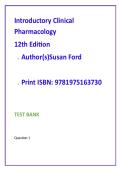
11th Edition
Author(s)Donna D. Ignatavicius;
Cherie R. Rebar; Nicole M.
Heimgartner
Print ISBN: 9780323878265
TEST BANK
Clinical Scenario: A patient with diabetic ketoacidosis is
breathing rapidly and deeply. The nurse reviews the ABG
results: pH 7.29, PaCO2 30 mm Hg, HCO3 16 mEq/L.
Question Stem: Which assessment finding best indicates the
,body is compensating for the acid-base imbalance?
Answer Options:
A. Slow, shallow respirations
B. Deep, rapid respirations
C. Decreased urine output
D. Bounding peripheral pulses
Correct Answer: B
Detailed Rationale: Deep, rapid respirations are Kussmaul
respirations and represent respiratory compensation for
metabolic acidosis by blowing off carbon dioxide. This is a
classic compensatory response in DKA.
Incorrect Option Analysis:
A. Slow, shallow respirations reduce CO2 excretion and worsen
acidosis; this is unsafe.
C. Decreased urine output may occur with dehydration but
does not indicate compensation.
D. Bounding pulses are not a typical compensatory sign of acid-
base imbalance.
Nursing Process Linkage: Assessment
Clinical Judgment Competencies (NCJMM): Recognize Cues;
Analyze Cues
Difficulty Level: Moderate
Bloom’s Cognitive Level: Analyze
NCLEX Client Needs Category: Physiological Adaptation
Key Learning Objective: Identify compensatory respiratory
patterns in metabolic acidosis.
,2) MCQ
Clinical Scenario: A postoperative patient has serum sodium of
122 mEq/L and reports headache and mild confusion.
Question Stem: What is the nurse’s priority intervention?
Answer Options:
A. Restrict all oral intake permanently
B. Initiate seizure precautions
C. Encourage the patient to ambulate
D. Administer potassium replacement
Correct Answer: B
Detailed Rationale: Severe hyponatremia can cause cerebral
edema and seizures. Seizure precautions address an immediate
patient safety risk while the team evaluates the cause and
treatment.
Incorrect Option Analysis:
A. Permanent fluid restriction is not an appropriate immediate
nursing action.
C. Ambulation does not address the neurologic risk and may
increase fall risk.
D. Potassium replacement does not treat hyponatremia and
may be harmful if unnecessary.
Nursing Process Linkage: Implementation
Clinical Judgment Competencies (NCJMM): Recognize Cues;
Take Action
Difficulty Level: Moderate
Bloom’s Cognitive Level: Apply
NCLEX Client Needs Category: Safety and Infection Control
, Key Learning Objective: Prioritize seizure prevention in severe
hyponatremia.
3) MCQ
Clinical Scenario: A patient on postoperative day 2 after hip
replacement reports sudden unilateral calf pain, warmth, and
swelling.
Question Stem: What should the nurse do first?
Answer Options:
A. Massage the affected calf to improve circulation
B. Encourage the patient to walk to prevent stiffness
C. Notify the provider and keep the patient on bed rest
D. Apply a heating pad to relieve discomfort
Correct Answer: C
Detailed Rationale: These findings suggest deep vein
thrombosis. The nurse should prevent embolization, avoid calf
massage, and notify the provider promptly.
Incorrect Option Analysis:
A. Massaging can dislodge a clot and cause a pulmonary
embolism.
B. Ambulation is unsafe until DVT is evaluated.
D. Heat may increase local blood flow and is not appropriate
when DVT is suspected.
Nursing Process Linkage: Implementation
Clinical Judgment Competencies (NCJMM): Recognize Cues;
Take Action
11th Edition
Author(s)Donna D. Ignatavicius;
Cherie R. Rebar; Nicole M.
Heimgartner
Print ISBN: 9780323878265
TEST BANK
Clinical Scenario: A patient with diabetic ketoacidosis is
breathing rapidly and deeply. The nurse reviews the ABG
results: pH 7.29, PaCO2 30 mm Hg, HCO3 16 mEq/L.
Question Stem: Which assessment finding best indicates the
,body is compensating for the acid-base imbalance?
Answer Options:
A. Slow, shallow respirations
B. Deep, rapid respirations
C. Decreased urine output
D. Bounding peripheral pulses
Correct Answer: B
Detailed Rationale: Deep, rapid respirations are Kussmaul
respirations and represent respiratory compensation for
metabolic acidosis by blowing off carbon dioxide. This is a
classic compensatory response in DKA.
Incorrect Option Analysis:
A. Slow, shallow respirations reduce CO2 excretion and worsen
acidosis; this is unsafe.
C. Decreased urine output may occur with dehydration but
does not indicate compensation.
D. Bounding pulses are not a typical compensatory sign of acid-
base imbalance.
Nursing Process Linkage: Assessment
Clinical Judgment Competencies (NCJMM): Recognize Cues;
Analyze Cues
Difficulty Level: Moderate
Bloom’s Cognitive Level: Analyze
NCLEX Client Needs Category: Physiological Adaptation
Key Learning Objective: Identify compensatory respiratory
patterns in metabolic acidosis.
,2) MCQ
Clinical Scenario: A postoperative patient has serum sodium of
122 mEq/L and reports headache and mild confusion.
Question Stem: What is the nurse’s priority intervention?
Answer Options:
A. Restrict all oral intake permanently
B. Initiate seizure precautions
C. Encourage the patient to ambulate
D. Administer potassium replacement
Correct Answer: B
Detailed Rationale: Severe hyponatremia can cause cerebral
edema and seizures. Seizure precautions address an immediate
patient safety risk while the team evaluates the cause and
treatment.
Incorrect Option Analysis:
A. Permanent fluid restriction is not an appropriate immediate
nursing action.
C. Ambulation does not address the neurologic risk and may
increase fall risk.
D. Potassium replacement does not treat hyponatremia and
may be harmful if unnecessary.
Nursing Process Linkage: Implementation
Clinical Judgment Competencies (NCJMM): Recognize Cues;
Take Action
Difficulty Level: Moderate
Bloom’s Cognitive Level: Apply
NCLEX Client Needs Category: Safety and Infection Control
, Key Learning Objective: Prioritize seizure prevention in severe
hyponatremia.
3) MCQ
Clinical Scenario: A patient on postoperative day 2 after hip
replacement reports sudden unilateral calf pain, warmth, and
swelling.
Question Stem: What should the nurse do first?
Answer Options:
A. Massage the affected calf to improve circulation
B. Encourage the patient to walk to prevent stiffness
C. Notify the provider and keep the patient on bed rest
D. Apply a heating pad to relieve discomfort
Correct Answer: C
Detailed Rationale: These findings suggest deep vein
thrombosis. The nurse should prevent embolization, avoid calf
massage, and notify the provider promptly.
Incorrect Option Analysis:
A. Massaging can dislodge a clot and cause a pulmonary
embolism.
B. Ambulation is unsafe until DVT is evaluated.
D. Heat may increase local blood flow and is not appropriate
when DVT is suspected.
Nursing Process Linkage: Implementation
Clinical Judgment Competencies (NCJMM): Recognize Cues;
Take Action