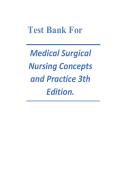
Test Bank for Davis Advantage for Townsend's Essentials of Psychiatric Mental Health
Nursing, 9th Edition by Karyn Morgan | All 1-32 Chapters Covered With Questions
And Verified Solutions With Detailed Rationales And Case Studies.
, TABLE OF CONTENT
1. Contents
2. Unit 1: Introduction to Psychiatric Mental Health Concepts
3. Chapter 1: Mental Health and Mental Illness
4. Introduction
5. Mental Health
6. Mental Illness
7. Physical and Psychological Responses to Stress
8. Physical Responses
9. Psychological Responses
10. Summary and Key Points
11. Chapter 2: Biological Implications
12. Introduction
13. The Nervous System: An Anatomical Review
14. The Brain
15. Nerve Tissue
16. Autonomic Nervous System
17. Neurotransmitters
18. Neuroendocrinology
19. Pituitary Gland
20. Circadian Rhythms
21. Genetics
22. Psychoneuroimmunology (PNI)
23. Normal Immune Response
24. Implications of the Immune System in Psychiatric Illness
25. Psychopharmacology and the Brain
26. Implications for Nursing
27. Summary and Key Points
28. Chapter 3: Ethical and Legal Issues
,29. Introduction
30. Ethical Considerations
31. Theoretical Perspectives
32. Ethical Dilemmas
33. Ethical Principles
34. A Model for Making Ethical Decisions
35. Ethical and Legal Issues in Psychiatric Mental Health Nursing
36. Legal Considerations
37. Patient Rights
38. Nurse Practice Acts
39. Types of Law
40. Classifications Within Statutory and Common Law
41. Legal Issues in Psychiatric Mental Health Nursing
42. Hospitalization
43. Nursing Liability
44. Summary and Key Points
45. Chapter 4: Psychopharmacology
46. Introduction
47. Historical Perspectives
48. The Role of the Nurse in Psychopharmacology
49. Ethical and Legal Implications
50. Assessment
51. Medication Administration and Evaluation
52. Patient Education
53. How Do Psychotropics Work?
54. Applying the Nursing Process in Psychopharmacological Therapy
55. Antianxiety Agents
56. Antidepressants
57. Mood-Stabilizing Agents
58. Antipsychotic Agents
59. Sedative-Hypnotics
, 60. Agents for Attention Deficit-Hyperactivity Disorder (ADHD)
61. Summary and Key Points
62. Unit 2: Psychiatric Mental Health Nursing Interventions
63. Chapter 5: Relationship Development and Therapeutic Communication
64. Introduction
65. The Therapeutic Nurse-Patient Relationship
66. Therapeutic Use of Self
67. Conditions Essential to Development of a Therapeutic Relationship
68. Rapport
69. Trust
70. Respect
71. Genuineness
72. Empathy
73. Phases of a Therapeutic Nurse-Patient Relationship
74. The Preinteraction Phase
75. The Orientation (Introductory) Phase
76. The Working Phase
77. The Termination Phase
78. Boundaries in the Nurse-Patient Relationship
79. Interpersonal Communication
80. The Impact of Pre-existing Conditions
81. Nonverbal Communication
82. Therapeutic Communication Techniques
83. Nontherapeutic Communication Techniques
84. Active Listening
85. Process Recordings
86. Feedback
87. Summary and Key Points
88. Chapter 6: The Nursing Process in Psychiatric Mental Health Nursing
89. Introduction
90. The Nursing Process
Nursing, 9th Edition by Karyn Morgan | All 1-32 Chapters Covered With Questions
And Verified Solutions With Detailed Rationales And Case Studies.
, TABLE OF CONTENT
1. Contents
2. Unit 1: Introduction to Psychiatric Mental Health Concepts
3. Chapter 1: Mental Health and Mental Illness
4. Introduction
5. Mental Health
6. Mental Illness
7. Physical and Psychological Responses to Stress
8. Physical Responses
9. Psychological Responses
10. Summary and Key Points
11. Chapter 2: Biological Implications
12. Introduction
13. The Nervous System: An Anatomical Review
14. The Brain
15. Nerve Tissue
16. Autonomic Nervous System
17. Neurotransmitters
18. Neuroendocrinology
19. Pituitary Gland
20. Circadian Rhythms
21. Genetics
22. Psychoneuroimmunology (PNI)
23. Normal Immune Response
24. Implications of the Immune System in Psychiatric Illness
25. Psychopharmacology and the Brain
26. Implications for Nursing
27. Summary and Key Points
28. Chapter 3: Ethical and Legal Issues
,29. Introduction
30. Ethical Considerations
31. Theoretical Perspectives
32. Ethical Dilemmas
33. Ethical Principles
34. A Model for Making Ethical Decisions
35. Ethical and Legal Issues in Psychiatric Mental Health Nursing
36. Legal Considerations
37. Patient Rights
38. Nurse Practice Acts
39. Types of Law
40. Classifications Within Statutory and Common Law
41. Legal Issues in Psychiatric Mental Health Nursing
42. Hospitalization
43. Nursing Liability
44. Summary and Key Points
45. Chapter 4: Psychopharmacology
46. Introduction
47. Historical Perspectives
48. The Role of the Nurse in Psychopharmacology
49. Ethical and Legal Implications
50. Assessment
51. Medication Administration and Evaluation
52. Patient Education
53. How Do Psychotropics Work?
54. Applying the Nursing Process in Psychopharmacological Therapy
55. Antianxiety Agents
56. Antidepressants
57. Mood-Stabilizing Agents
58. Antipsychotic Agents
59. Sedative-Hypnotics
, 60. Agents for Attention Deficit-Hyperactivity Disorder (ADHD)
61. Summary and Key Points
62. Unit 2: Psychiatric Mental Health Nursing Interventions
63. Chapter 5: Relationship Development and Therapeutic Communication
64. Introduction
65. The Therapeutic Nurse-Patient Relationship
66. Therapeutic Use of Self
67. Conditions Essential to Development of a Therapeutic Relationship
68. Rapport
69. Trust
70. Respect
71. Genuineness
72. Empathy
73. Phases of a Therapeutic Nurse-Patient Relationship
74. The Preinteraction Phase
75. The Orientation (Introductory) Phase
76. The Working Phase
77. The Termination Phase
78. Boundaries in the Nurse-Patient Relationship
79. Interpersonal Communication
80. The Impact of Pre-existing Conditions
81. Nonverbal Communication
82. Therapeutic Communication Techniques
83. Nontherapeutic Communication Techniques
84. Active Listening
85. Process Recordings
86. Feedback
87. Summary and Key Points
88. Chapter 6: The Nursing Process in Psychiatric Mental Health Nursing
89. Introduction
90. The Nursing Process