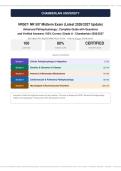
Solutions Manual Accounting 29th Edition Carl S. Warren | All 1-24
Chapters Covered With Questions And Verified Solutions With
Detailed Rationales And Case Studies.
, TABLE OF CONTENT
Chapter Outline
Part Focus Area Chapters
Ch. 1: Introduction to Accounting and Business
Ch. 2: Analyzing Transactions
Part The Accounting Cycle & Corporate
1 Basics
Ch. 3: The Adjusting Process
Ch. 4: The Accounting Cycle
Ch. 5: Accounting for Retail Businesses
Ch. 6: Inventories
Part
Operating Activities & Assets Ch. 7: Internal Controls and Cash
2
Ch. 8: Receivables
Ch. 9: Long-Term Assets: Fixed and Intangible
Ch. 10: Current Liabilities, Installment Notes, and
Contingencies
Part
Liabilities, Equity & Analysis
3
Ch. 11: Bonds Payable
,Part Focus Area Chapters
Ch. 12: Partnerships and Limited Liability Companies
Ch. 13: Corporations: Organization, Stock Transactions,
and Dividends
Ch. 14: Statement of Cash Flows
Ch. 15: Financial Statement Analysis
Ch. 16: Introduction to Managerial Accounting
Ch. 17: Job Order Costing
Part
Managerial & Cost Accounting Ch. 18: Process Costing
4
Ch. 19: Activity-Based Costing
Ch. 20: Cost-Volume-Profit Analysis
Ch. 21: Budgeting
Part
Planning, Variance & Decisions Ch. 22: Evaluating Variances from Standard Costs
5
Ch. 23: Differential Analysis and Product Pricing
, Part Focus Area Chapters
Ch. 24: Capital Investment Analysis
Chapter 1: Introduction to Accounting and Business
Multiple Choice Questions
1. What is the primary purpose of accounting?
• A) To calculate taxes
• B) To provide financial information for decision-making
• C) To record sales only
• D) To manage employee payroll
Rationale: Accounting identifies, records, and communicates financial information to help users
make informed decisions.
2. Which of the following is an internal user of accounting information?
• A) Creditor
• B) Investor
• C) Manager
• D) Tax authority
Rationale: Managers use accounting information internally to plan, control, and make business
decisions.
3. Which type of business has the simplest form of ownership?
• A) Sole proprietorship
• B) Partnership
• C) Corporation
• D) LLC
Rationale: A sole proprietorship is owned by one person and has the simplest structure.
4. What is the accounting equation?
• A) Assets = Liabilities + Owner's Equity
Chapters Covered With Questions And Verified Solutions With
Detailed Rationales And Case Studies.
, TABLE OF CONTENT
Chapter Outline
Part Focus Area Chapters
Ch. 1: Introduction to Accounting and Business
Ch. 2: Analyzing Transactions
Part The Accounting Cycle & Corporate
1 Basics
Ch. 3: The Adjusting Process
Ch. 4: The Accounting Cycle
Ch. 5: Accounting for Retail Businesses
Ch. 6: Inventories
Part
Operating Activities & Assets Ch. 7: Internal Controls and Cash
2
Ch. 8: Receivables
Ch. 9: Long-Term Assets: Fixed and Intangible
Ch. 10: Current Liabilities, Installment Notes, and
Contingencies
Part
Liabilities, Equity & Analysis
3
Ch. 11: Bonds Payable
,Part Focus Area Chapters
Ch. 12: Partnerships and Limited Liability Companies
Ch. 13: Corporations: Organization, Stock Transactions,
and Dividends
Ch. 14: Statement of Cash Flows
Ch. 15: Financial Statement Analysis
Ch. 16: Introduction to Managerial Accounting
Ch. 17: Job Order Costing
Part
Managerial & Cost Accounting Ch. 18: Process Costing
4
Ch. 19: Activity-Based Costing
Ch. 20: Cost-Volume-Profit Analysis
Ch. 21: Budgeting
Part
Planning, Variance & Decisions Ch. 22: Evaluating Variances from Standard Costs
5
Ch. 23: Differential Analysis and Product Pricing
, Part Focus Area Chapters
Ch. 24: Capital Investment Analysis
Chapter 1: Introduction to Accounting and Business
Multiple Choice Questions
1. What is the primary purpose of accounting?
• A) To calculate taxes
• B) To provide financial information for decision-making
• C) To record sales only
• D) To manage employee payroll
Rationale: Accounting identifies, records, and communicates financial information to help users
make informed decisions.
2. Which of the following is an internal user of accounting information?
• A) Creditor
• B) Investor
• C) Manager
• D) Tax authority
Rationale: Managers use accounting information internally to plan, control, and make business
decisions.
3. Which type of business has the simplest form of ownership?
• A) Sole proprietorship
• B) Partnership
• C) Corporation
• D) LLC
Rationale: A sole proprietorship is owned by one person and has the simplest structure.
4. What is the accounting equation?
• A) Assets = Liabilities + Owner's Equity