

HESI PHARMACOLOGY
OBJECTIVE ASSESSMENT - EXAM
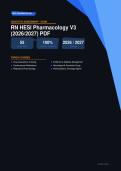
RN HESI Pharmacology V3
(2026/2027) PDF
Actual Exams with Rationales 2026/2027
55 100%
QUESTIONS VERIFIED ANSWERS EDITION
TOPICS COVERED
Drug Calculations & Dosing Endocrine & Diabetes Management
Cardiovascular Medications Neurological & Psychiatric Drugs
Respiratory Pharmacology Antimicrobials & Oncology Agents
COVER PAGE - 1
,SECTION 1 | Pharmacology Basics & Drug Calculations | Q1-Q11 | HESI Pharmacology V3 2026/2027
Q1 Question 1 of 55
A 68-year-old patient with chronic heart failure is prescribed furosemide 40 mg PO daily.
The available tablets are 20 mg each. The nurse verifies the order and prepares to
administer the medication. How many tablets should the nurse administer?
A. 1 tablet
B. 2 tablets
C. 3 tablets
D. 4 tablets
Correct Answer: B
Rationale:
The prescribed dose is 40 mg and each tablet is 20 mg, so 40 divided by 20 equals 2 tablets. The nurse should
always double-check calculations using the formula: desired dose divided by dose on hand, multiplied by quantity.
Q2 Question 2 of 55
A nurse is reviewing a medication order for a 5-year-old child weighing 22 kg. The pediatric
dose of acetaminophen is 15 mg/kg per dose. The liquid suspension contains 160 mg per 5
mL. How many mL should the nurse administer for one dose?
A. 8.2 mL
B. 10.3 mL
C. 12.5 mL
D. 15.0 mL
Correct Answer: B
Rationale:
The dose is 15 mg/kg x 22 kg = 330 mg. Using the formula (desired dose / dose on hand) x quantity: (330 mg / 160
mg) x 5 mL = 10.3 mL. Nurses must verify pediatric dosing carefully to prevent underdosing or toxicity.
Q3 Question 3 of 55
A 45-year-old patient receiving intravenous heparin has an aPTT result of 92 seconds. The
therapeutic range for this patient is 60 to 80 seconds. Based on this result, what is the most
appropriate nursing action?
A. Continue the current heparin infusion rate
B. Increase the heparin infusion rate by 2 units/kg/hr
C. Decrease the heparin infusion rate and notify the provider
D. Administer protamine sulfate immediately
Correct Answer: C
Rationale:
An aPTT of 92 seconds is above the therapeutic range of 60 to 80 seconds, indicating the patient is at increased
risk for bleeding. The nurse should decrease the infusion rate and notify the provider. Protamine sulfate is
reserved for severe heparin overdose, not mild elevations.
HESI Pharmacology V3 - 2026/2027 | Passing Score: 75% | Page 2 of 20
, SECTION 1 | Pharmacology Basics & Drug Calculations | Q1-Q11 | HESI Pharmacology V3 2026/2027
Q4 Question 4 of 55
A nurse is preparing to administer digoxin 0.125 mg PO to a 72-year-old patient. Before
giving the dose, the nurse checks the apical pulse and finds it to be 52 beats per minute.
What is the nurse's priority action?
A. Administer the digoxin with a full glass of water
B. Hold the dose and notify the prescriber immediately
C. Recheck the pulse in 15 minutes and then administer
D. Give the dose with food to improve absorption
Correct Answer: B
Rationale:
Digoxin should be withheld if the apical pulse is below 60 beats per minute in adults, as bradycardia increases the
risk of digoxin toxicity. The nurse must hold the dose and notify the prescriber. Rechecking the pulse does not
address the immediate safety concern.
Q5 Question 5 of 55
A patient with type 2 diabetes is prescribed metformin 1,000 mg PO twice daily. The
pharmacy supplies 500 mg tablets. The nurse is calculating the total daily dose. How many
tablets will the patient take in 24 hours?
A. 2 tablets
B. 3 tablets
C. 4 tablets
D. 5 tablets
Correct Answer: C
Rationale:
Each dose is 1,000 mg divided by 500 mg per tablet equals 2 tablets per dose. With two doses daily, the total is 4
tablets in 24 hours. Nurses must ensure patients understand their medication regimen to promote adherence.
HESI Pharmacology V3 - 2026/2027 | Passing Score: 75% | Page 3 of 20
OBJECTIVE ASSESSMENT - EXAM
RN HESI Pharmacology V3
(2026/2027) PDF
Actual Exams with Rationales 2026/2027
55 100%
QUESTIONS VERIFIED ANSWERS EDITION
TOPICS COVERED
Drug Calculations & Dosing Endocrine & Diabetes Management
Cardiovascular Medications Neurological & Psychiatric Drugs
Respiratory Pharmacology Antimicrobials & Oncology Agents
COVER PAGE - 1
,SECTION 1 | Pharmacology Basics & Drug Calculations | Q1-Q11 | HESI Pharmacology V3 2026/2027
Q1 Question 1 of 55
A 68-year-old patient with chronic heart failure is prescribed furosemide 40 mg PO daily.
The available tablets are 20 mg each. The nurse verifies the order and prepares to
administer the medication. How many tablets should the nurse administer?
A. 1 tablet
B. 2 tablets
C. 3 tablets
D. 4 tablets
Correct Answer: B
Rationale:
The prescribed dose is 40 mg and each tablet is 20 mg, so 40 divided by 20 equals 2 tablets. The nurse should
always double-check calculations using the formula: desired dose divided by dose on hand, multiplied by quantity.
Q2 Question 2 of 55
A nurse is reviewing a medication order for a 5-year-old child weighing 22 kg. The pediatric
dose of acetaminophen is 15 mg/kg per dose. The liquid suspension contains 160 mg per 5
mL. How many mL should the nurse administer for one dose?
A. 8.2 mL
B. 10.3 mL
C. 12.5 mL
D. 15.0 mL
Correct Answer: B
Rationale:
The dose is 15 mg/kg x 22 kg = 330 mg. Using the formula (desired dose / dose on hand) x quantity: (330 mg / 160
mg) x 5 mL = 10.3 mL. Nurses must verify pediatric dosing carefully to prevent underdosing or toxicity.
Q3 Question 3 of 55
A 45-year-old patient receiving intravenous heparin has an aPTT result of 92 seconds. The
therapeutic range for this patient is 60 to 80 seconds. Based on this result, what is the most
appropriate nursing action?
A. Continue the current heparin infusion rate
B. Increase the heparin infusion rate by 2 units/kg/hr
C. Decrease the heparin infusion rate and notify the provider
D. Administer protamine sulfate immediately
Correct Answer: C
Rationale:
An aPTT of 92 seconds is above the therapeutic range of 60 to 80 seconds, indicating the patient is at increased
risk for bleeding. The nurse should decrease the infusion rate and notify the provider. Protamine sulfate is
reserved for severe heparin overdose, not mild elevations.
HESI Pharmacology V3 - 2026/2027 | Passing Score: 75% | Page 2 of 20
, SECTION 1 | Pharmacology Basics & Drug Calculations | Q1-Q11 | HESI Pharmacology V3 2026/2027
Q4 Question 4 of 55
A nurse is preparing to administer digoxin 0.125 mg PO to a 72-year-old patient. Before
giving the dose, the nurse checks the apical pulse and finds it to be 52 beats per minute.
What is the nurse's priority action?
A. Administer the digoxin with a full glass of water
B. Hold the dose and notify the prescriber immediately
C. Recheck the pulse in 15 minutes and then administer
D. Give the dose with food to improve absorption
Correct Answer: B
Rationale:
Digoxin should be withheld if the apical pulse is below 60 beats per minute in adults, as bradycardia increases the
risk of digoxin toxicity. The nurse must hold the dose and notify the prescriber. Rechecking the pulse does not
address the immediate safety concern.
Q5 Question 5 of 55
A patient with type 2 diabetes is prescribed metformin 1,000 mg PO twice daily. The
pharmacy supplies 500 mg tablets. The nurse is calculating the total daily dose. How many
tablets will the patient take in 24 hours?
A. 2 tablets
B. 3 tablets
C. 4 tablets
D. 5 tablets
Correct Answer: C
Rationale:
Each dose is 1,000 mg divided by 500 mg per tablet equals 2 tablets per dose. With two doses daily, the total is 4
tablets in 24 hours. Nurses must ensure patients understand their medication regimen to promote adherence.
HESI Pharmacology V3 - 2026/2027 | Passing Score: 75% | Page 3 of 20


