

NUR 2101 Week 2 Exam | Questions and Answers |
Verified Solutions | 2026 Edition | Pass
Guaranteed
Save
Terms in this set (96)
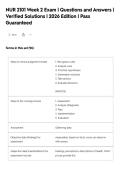
Steps to clinical judgement model 1. Recognize cutes
2. Analyze cues
3. Prioritize hypotheses
4. Generation solutions
5. Take actions
6. Evaluate decisions
(RAPGTE)
Steps to the nursing process 1. Assessment
2. Analysis (Diagnosis)
3. Plan
4. Implementation
5. Evaluation
Assessment Gathering data
Objective data (findings) for measurable, based on facts, nurse can observe
assessment with senses
Subjective data (manifestations) for Feelings, perceptions, descriptions of health, ONLY
assessment include pt can provide this
, When do you collect data? 1. Initial assessment
2. Focused assessment
3. Ongoing assessments
Methods to collecting data 1. interviews with pt/family
2. med history
3. comprehensive or focused physical examination
4. diagnostic and lab reports
5. collab with other members of health care team
Analysis Nursing diagnosis
In the analysis portion we link Client needs, concerns, or problems
assessment data to a clients clinical
presentation and establish
________________________
If pt exhibits facial grimacing, refuses pain
to move, rates pain at 8/10, reports
stabbing pain in left leg that worsens
with movement (all from assessment)
we can identify that _______ is client's
problem
Planning Identify expected goals/outcomes and related
nursing interventions to ensure clients needs are
met
SMART Goals 1. Specific
2. Measurable
3. Achievable
4. Relevant
5. TIme-bound
Verified Solutions | 2026 Edition | Pass
Guaranteed
Save
Terms in this set (96)
Steps to clinical judgement model 1. Recognize cutes
2. Analyze cues
3. Prioritize hypotheses
4. Generation solutions
5. Take actions
6. Evaluate decisions
(RAPGTE)
Steps to the nursing process 1. Assessment
2. Analysis (Diagnosis)
3. Plan
4. Implementation
5. Evaluation
Assessment Gathering data
Objective data (findings) for measurable, based on facts, nurse can observe
assessment with senses
Subjective data (manifestations) for Feelings, perceptions, descriptions of health, ONLY
assessment include pt can provide this
, When do you collect data? 1. Initial assessment
2. Focused assessment
3. Ongoing assessments
Methods to collecting data 1. interviews with pt/family
2. med history
3. comprehensive or focused physical examination
4. diagnostic and lab reports
5. collab with other members of health care team
Analysis Nursing diagnosis
In the analysis portion we link Client needs, concerns, or problems
assessment data to a clients clinical
presentation and establish
________________________
If pt exhibits facial grimacing, refuses pain
to move, rates pain at 8/10, reports
stabbing pain in left leg that worsens
with movement (all from assessment)
we can identify that _______ is client's
problem
Planning Identify expected goals/outcomes and related
nursing interventions to ensure clients needs are
met
SMART Goals 1. Specific
2. Measurable
3. Achievable
4. Relevant
5. TIme-bound


