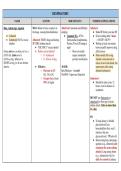
RESPIRATORY
NAME ACTION SIDE EFFECTS NURSING IMPLICATIONS
Beta2 Adrenergic Agonists MOA: Binds to beta2 receptors in AlbuTerol: Insomnia and difficulty Albuterol
the lungs, causing bronchodilation sleeping ● Shake IT before you take IT
● Albuterol ● Common SEs - 3 T’s: ● If not working after 3 doses
● Salmeterol (NOT a rescue Albuterol: FIRST drug used during Tachycardia & palpitations, → NOTIFY HCP!!!
inhaler) SEVERE asthma attacks Tremor, Toss & Turning at ● Waiting at least one minute
● THE ONLY “rescue inhaler” night between puffs improves drug
Eating salmon can help you live a ● Before steroid inhaler!! ○ Does not usually effectiveness
LONG life. Salmeterol is ○ S - Salmeterol require immediate ● Rinse mouth after using
LONG-acting. Albuterol is ○ S - Slower Acting provider notification. inhaled corticosteroids to
SHORT-acting, for Acute Asthma reduce risk of oral thrush, but
Attacks. ● Effective: AVOID: unnecessary after using
○ Decrease in RR Beta Blockers - Atenolol albuterol/salmeterol
(Ex: 34 to 24) NSAIDS - Naproxen, Ibuprofen
○ Oxygen Sat. at least Salmeterol
90% or higher ● Should be taken every 12
hours, even in absence of
symptoms
DO NOT use fluticasone or
salmeterol for first sign of acute
asthma attack; Take no more than
2x a day
PT:
● If using along w/ inhaled
glucocorticoid, use
bronchodilator first, wait 5
minutes, then use
glucocorticoid. *B before G
● Short-acting beta2 adrenergic
agonists (e.g., albuterol)-only
treatment for acute asthma
attacks! Long-acting forms
(e.g., salmeterol) only for
daily for control of asthma.
,Decongestants/Alpha-1 MOA: Vasoconstriction of Nervousness, palpitations, insomnia, NC: Monitor HR and BP, especially
Adrenergic Agonist respiratory tract mucosa rebound congestion (if used longer w/ IV use
than 3 days: nasal congestion ● Assess for CV conditions
● Phenylephrine Indications: Rhinitis (inflammation worsens or returns after using
● Pseudoephedrine of nasal passages) decongestant for an extended period) PT: Because of risk of rebound
congestion, use sparingly (no more
Contraindications: HTN, CAD → Leads to reduced nasal congestion, than 3 days)
use phenylephrine cautiously increased BP, and pupil dilation
Interactions: Caffeine, stimulants
→ AVOID
Antihistamines MOA: Blocks action of histamines 1st generation: sedation, NC: Implement fall precautions
anticholinergic effects (e.g., dry due to sedation
● 1st generation: Indications: Allergies, motion mouth, constipation, urinary
diphenhydramine sickness, urticaria (i.e., hives) retention, photosensitivity) PT: Do not drive or operate heavy
● 2nd generation: loratadine, machinery when taking 1st
cetirizine Contraindications: Use cautiously generation antihistamines
in patients w/ glaucoma
CARDIOVASCULAR
NAME ACTION SIDE EFFECTS NURSING IMPLICATIONS
ACE Inhibitors MOA: Inhibit/Block RAAS System; ACE: Angioedema NC: Monitor BP and pulse
(Lowers BP Only) 1st Choice Blocks conversion of angiotensin I (Life-threatening allergic reaction), frequently, as well as potassium and
(“-pril”) “chill pril” to angiotensin II, causing Cough, Elevated potassium, creatinine levels
vasodilation Hypotension, Dizziness, → Avoid potassium supplements or
● Lisinopril → Causes Na+ and H2O to not be Hyperkalemia, Renal impairment potassium-sparing diuretics unless
→ wo food retained, thus sodium and BP will advised by a provider
→ 12.5-25 mg 2-3x daily decrease Toxicity: Fetal toxicity • Assess patient for signs of
● Captopril angioedema
→ w/ food 10 mg once daily Indications: HTN, HF, MI, Diabetic CV: Orthostatic hypotension, (dyspnea, facial swelling).
● Enalapril Nephropathy syncope tachycardia, hypotension, → Immediately stop meds if
→ w/wo food chest pain symptoms develop!
→ 2.5-5 mg once daily Contraindications: ACE1/ARBs: CNS: Dizziness, fatigue, headache • Heart Failure: Monitor weight
● Ramipril renal artery stenosis, HF, salt or weakness and assess patient routinely for
→ w/wo 2.5 mg once daily volume depletion, bilateral stenosis, GI: Abdominal pain, diarrhea, resolution of fluid overload
● Trandolapril angioedema, pregnancy 2nd/3rd nausea, vomiting (peripheral edema, rales/crackles,
, trimester due to neonatal death GU: Erectile dysfunction, impaired dyspnea, weight gain, jugular
Playing cards: When you get an renal venous distention).
ACE you get a thrill, ACE inhibitors function.proteinuria • May cause hyperkalemia.
end in -pril. Derm: Rashes. F and E: • Instruct your clients to get up
hyperkalemia. slowly and avoid salt substitutes.
Misc: ANGIOEDEMA
RESP: Upper respiratory infections PT: Change positions slowly
and cough, (First-dose hypotension)
HEMAT: Neutropenia ● Take meds at same time each
day
Interactions: ● Stay hydrated but avoid
• NSAIDS: Reduced hypotensive excessive potassium intake
effects ● Report symptoms of facial
• Rifampin: Decreased ace1 effects swelling, persistent cough, or
• Allopurinol: Increased risk of lightheadedness
hypersensitivity
• Digoxin: Decreased dig levels
• Loop diuretics: Decrease diuretic
effects
• Lithium: Possible lithium toxicity
• Hypoglycemics(insulin): Increase
risk of hypoglycemia
• Potassium sparing diuretics:
Elevated potassium
levels (hyperkalemia)
Angiotensin II Blockers MOA: Inhibit/Block RAAS System; Hypotension, cough, fatigue, GI NC: Monitor BP and pulse
(Lowers BP Only) 2nd Choice Block binding of angiotensin 2 at upset, hyperkalemia, renal frequently
(“-sartan”) “relax man” various sites on smooth muscle, impairment • Assess patient for signs of
All ARBs end in “TAN” blocking vasoconstriction effects of angioedema
Replace ACE in african american RAAS CNS: dizziness, fatigue, headache, (dyspnea, facial swelling).
pop. and when SE of ACE become → Causes decrease in BP insomnia, weakness. • Heart Failure: Monitor weight
too much for the client CV: chest pain, edema, hypotension. and assess patient routinely for
Indications: HTN, Diabetic EENT: nasal congestion. resolution of fluid overload
● Losartan Nephropathy Endo: hypoglycemia, weight gain. (peripheral edema, rales/crackles,
→ 150 mg once daily GI: diarrhea, abdominal pain, dyspnea, weight gain, jugular
● Valsartan Contraindications: ACE1/ARBs: dyspepsia, nausea. venous distention).
→ 80 mg or 160 mg once HF, salt or volume depletion, GU: impaired renal function. • May cause hyperkalemia.
daily bilateral stenosis, angioedema, F and E: hyperkalemia. • Instruct your clients to get up
● Irbesartan pregnancy 2nd/3rd trimester due to MS: back pain, myalgia. slowly and avoid salt substitutes.
NAME ACTION SIDE EFFECTS NURSING IMPLICATIONS
Beta2 Adrenergic Agonists MOA: Binds to beta2 receptors in AlbuTerol: Insomnia and difficulty Albuterol
the lungs, causing bronchodilation sleeping ● Shake IT before you take IT
● Albuterol ● Common SEs - 3 T’s: ● If not working after 3 doses
● Salmeterol (NOT a rescue Albuterol: FIRST drug used during Tachycardia & palpitations, → NOTIFY HCP!!!
inhaler) SEVERE asthma attacks Tremor, Toss & Turning at ● Waiting at least one minute
● THE ONLY “rescue inhaler” night between puffs improves drug
Eating salmon can help you live a ● Before steroid inhaler!! ○ Does not usually effectiveness
LONG life. Salmeterol is ○ S - Salmeterol require immediate ● Rinse mouth after using
LONG-acting. Albuterol is ○ S - Slower Acting provider notification. inhaled corticosteroids to
SHORT-acting, for Acute Asthma reduce risk of oral thrush, but
Attacks. ● Effective: AVOID: unnecessary after using
○ Decrease in RR Beta Blockers - Atenolol albuterol/salmeterol
(Ex: 34 to 24) NSAIDS - Naproxen, Ibuprofen
○ Oxygen Sat. at least Salmeterol
90% or higher ● Should be taken every 12
hours, even in absence of
symptoms
DO NOT use fluticasone or
salmeterol for first sign of acute
asthma attack; Take no more than
2x a day
PT:
● If using along w/ inhaled
glucocorticoid, use
bronchodilator first, wait 5
minutes, then use
glucocorticoid. *B before G
● Short-acting beta2 adrenergic
agonists (e.g., albuterol)-only
treatment for acute asthma
attacks! Long-acting forms
(e.g., salmeterol) only for
daily for control of asthma.
,Decongestants/Alpha-1 MOA: Vasoconstriction of Nervousness, palpitations, insomnia, NC: Monitor HR and BP, especially
Adrenergic Agonist respiratory tract mucosa rebound congestion (if used longer w/ IV use
than 3 days: nasal congestion ● Assess for CV conditions
● Phenylephrine Indications: Rhinitis (inflammation worsens or returns after using
● Pseudoephedrine of nasal passages) decongestant for an extended period) PT: Because of risk of rebound
congestion, use sparingly (no more
Contraindications: HTN, CAD → Leads to reduced nasal congestion, than 3 days)
use phenylephrine cautiously increased BP, and pupil dilation
Interactions: Caffeine, stimulants
→ AVOID
Antihistamines MOA: Blocks action of histamines 1st generation: sedation, NC: Implement fall precautions
anticholinergic effects (e.g., dry due to sedation
● 1st generation: Indications: Allergies, motion mouth, constipation, urinary
diphenhydramine sickness, urticaria (i.e., hives) retention, photosensitivity) PT: Do not drive or operate heavy
● 2nd generation: loratadine, machinery when taking 1st
cetirizine Contraindications: Use cautiously generation antihistamines
in patients w/ glaucoma
CARDIOVASCULAR
NAME ACTION SIDE EFFECTS NURSING IMPLICATIONS
ACE Inhibitors MOA: Inhibit/Block RAAS System; ACE: Angioedema NC: Monitor BP and pulse
(Lowers BP Only) 1st Choice Blocks conversion of angiotensin I (Life-threatening allergic reaction), frequently, as well as potassium and
(“-pril”) “chill pril” to angiotensin II, causing Cough, Elevated potassium, creatinine levels
vasodilation Hypotension, Dizziness, → Avoid potassium supplements or
● Lisinopril → Causes Na+ and H2O to not be Hyperkalemia, Renal impairment potassium-sparing diuretics unless
→ wo food retained, thus sodium and BP will advised by a provider
→ 12.5-25 mg 2-3x daily decrease Toxicity: Fetal toxicity • Assess patient for signs of
● Captopril angioedema
→ w/ food 10 mg once daily Indications: HTN, HF, MI, Diabetic CV: Orthostatic hypotension, (dyspnea, facial swelling).
● Enalapril Nephropathy syncope tachycardia, hypotension, → Immediately stop meds if
→ w/wo food chest pain symptoms develop!
→ 2.5-5 mg once daily Contraindications: ACE1/ARBs: CNS: Dizziness, fatigue, headache • Heart Failure: Monitor weight
● Ramipril renal artery stenosis, HF, salt or weakness and assess patient routinely for
→ w/wo 2.5 mg once daily volume depletion, bilateral stenosis, GI: Abdominal pain, diarrhea, resolution of fluid overload
● Trandolapril angioedema, pregnancy 2nd/3rd nausea, vomiting (peripheral edema, rales/crackles,
, trimester due to neonatal death GU: Erectile dysfunction, impaired dyspnea, weight gain, jugular
Playing cards: When you get an renal venous distention).
ACE you get a thrill, ACE inhibitors function.proteinuria • May cause hyperkalemia.
end in -pril. Derm: Rashes. F and E: • Instruct your clients to get up
hyperkalemia. slowly and avoid salt substitutes.
Misc: ANGIOEDEMA
RESP: Upper respiratory infections PT: Change positions slowly
and cough, (First-dose hypotension)
HEMAT: Neutropenia ● Take meds at same time each
day
Interactions: ● Stay hydrated but avoid
• NSAIDS: Reduced hypotensive excessive potassium intake
effects ● Report symptoms of facial
• Rifampin: Decreased ace1 effects swelling, persistent cough, or
• Allopurinol: Increased risk of lightheadedness
hypersensitivity
• Digoxin: Decreased dig levels
• Loop diuretics: Decrease diuretic
effects
• Lithium: Possible lithium toxicity
• Hypoglycemics(insulin): Increase
risk of hypoglycemia
• Potassium sparing diuretics:
Elevated potassium
levels (hyperkalemia)
Angiotensin II Blockers MOA: Inhibit/Block RAAS System; Hypotension, cough, fatigue, GI NC: Monitor BP and pulse
(Lowers BP Only) 2nd Choice Block binding of angiotensin 2 at upset, hyperkalemia, renal frequently
(“-sartan”) “relax man” various sites on smooth muscle, impairment • Assess patient for signs of
All ARBs end in “TAN” blocking vasoconstriction effects of angioedema
Replace ACE in african american RAAS CNS: dizziness, fatigue, headache, (dyspnea, facial swelling).
pop. and when SE of ACE become → Causes decrease in BP insomnia, weakness. • Heart Failure: Monitor weight
too much for the client CV: chest pain, edema, hypotension. and assess patient routinely for
Indications: HTN, Diabetic EENT: nasal congestion. resolution of fluid overload
● Losartan Nephropathy Endo: hypoglycemia, weight gain. (peripheral edema, rales/crackles,
→ 150 mg once daily GI: diarrhea, abdominal pain, dyspnea, weight gain, jugular
● Valsartan Contraindications: ACE1/ARBs: dyspepsia, nausea. venous distention).
→ 80 mg or 160 mg once HF, salt or volume depletion, GU: impaired renal function. • May cause hyperkalemia.
daily bilateral stenosis, angioedema, F and E: hyperkalemia. • Instruct your clients to get up
● Irbesartan pregnancy 2nd/3rd trimester due to MS: back pain, myalgia. slowly and avoid salt substitutes.