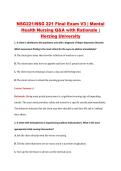
NSG221/NSG 221 Final Exam V3 | Mental
Health Nursing Q&A with Rationale |
Herzing University
1. A client is admitted to the psychiatric unit with a diagnosis of Major Depressive Disorder.
Which assessment finding is the most critical for the nurse to address immediately?
A. The client gives away their favorite collection of watches to a peer.
B. The client states they have no appetite and have lost 5 pounds in two weeks.
C. The client reports sleeping 12 hours a day and still feeling tired.
D. The client refuses to attend the morning group therapy session.
Correct Answer: A
Rationale: Giving away prized possessions is a significant warning sign of impending
suicide. The nurse must prioritize safety and assess for a specific suicide plan immediately.
This behavior indicates that the client may have decided to end their life and is ‘settling’
their affairs.
2. A client with Schizophrenia is experiencing auditory hallucinations. What is the most
appropriate initial nursing intervention?
A. Ask the client directly what the voices are saying.
B. Tell the client that there are no voices and it is just their imagination.
C. Turn up the television to drown out the internal noise.
,D. Leave the client alone in their room to provide quiet time.
Correct Answer: A
Rationale: The nurse should first determine the content of the hallucinations to assess for
command hallucinations that may be dangerous. Understanding what the voices are saying
allows the nurse to implement safety measures if the voices are telling the client to harm
themselves or others. This approach validates the client’s experience without agreeing that
the voices are real.
3. A nurse is caring for a client who has been taking Lithium Carbonate for Bipolar Disorder
for several months. Which laboratory result should be reported to the provider immediately?
A. Serum Lithium level of 1.0 mEq/L.
B. White blood cell count of 8,000/mm3.
C. Serum Sodium level of 140 mEq/L.
D. Serum Lithium level of 1.8 mEq/L.
Correct Answer: D
Rationale: The therapeutic range for lithium is 0.6 to 1.2 mEq/L; therefore, 1.8 mEq/L
indicates toxicity. Lithium toxicity can lead to severe complications such as seizures, coma,
or death if not addressed. The nurse must hold the medication and notify the healthcare
provider immediately for further orders.
, 4. A client with Anorexia Nervosa is being admitted to the inpatient unit. Which physical
assessment finding should the nurse anticipate?
A. Bradycardia and lanugo.
B. Hyperkalemia and metabolic acidosis.
C. Tachycardia and hypertension.
D. Heavy menstrual bleeding.
Correct Answer: A
Rationale: Clients with anorexia nervosa often exhibit bradycardia, hypotension, and the
growth of fine, downy hair called lanugo as a compensatory mechanism for malnutrition.
These findings reflect the body’s attempt to conserve energy and heat due to starvation.
Amenorrhea, rather than heavy bleeding, is also a classic sign of this disorder.
5. Which statement by a client diagnosed with Borderline Personality Disorder illustrates the
concept of ‘splitting’?
A. ‘I know I can get through this if I just work hard.’
B. ‘I am feeling very anxious about my discharge tomorrow.’
C. ‘The night nurse is an angel, but the day nurse is evil and incompetent.’
D. ‘I don’t think I really need this medication anymore.’
Correct Answer: C
Health Nursing Q&A with Rationale |
Herzing University
1. A client is admitted to the psychiatric unit with a diagnosis of Major Depressive Disorder.
Which assessment finding is the most critical for the nurse to address immediately?
A. The client gives away their favorite collection of watches to a peer.
B. The client states they have no appetite and have lost 5 pounds in two weeks.
C. The client reports sleeping 12 hours a day and still feeling tired.
D. The client refuses to attend the morning group therapy session.
Correct Answer: A
Rationale: Giving away prized possessions is a significant warning sign of impending
suicide. The nurse must prioritize safety and assess for a specific suicide plan immediately.
This behavior indicates that the client may have decided to end their life and is ‘settling’
their affairs.
2. A client with Schizophrenia is experiencing auditory hallucinations. What is the most
appropriate initial nursing intervention?
A. Ask the client directly what the voices are saying.
B. Tell the client that there are no voices and it is just their imagination.
C. Turn up the television to drown out the internal noise.
,D. Leave the client alone in their room to provide quiet time.
Correct Answer: A
Rationale: The nurse should first determine the content of the hallucinations to assess for
command hallucinations that may be dangerous. Understanding what the voices are saying
allows the nurse to implement safety measures if the voices are telling the client to harm
themselves or others. This approach validates the client’s experience without agreeing that
the voices are real.
3. A nurse is caring for a client who has been taking Lithium Carbonate for Bipolar Disorder
for several months. Which laboratory result should be reported to the provider immediately?
A. Serum Lithium level of 1.0 mEq/L.
B. White blood cell count of 8,000/mm3.
C. Serum Sodium level of 140 mEq/L.
D. Serum Lithium level of 1.8 mEq/L.
Correct Answer: D
Rationale: The therapeutic range for lithium is 0.6 to 1.2 mEq/L; therefore, 1.8 mEq/L
indicates toxicity. Lithium toxicity can lead to severe complications such as seizures, coma,
or death if not addressed. The nurse must hold the medication and notify the healthcare
provider immediately for further orders.
, 4. A client with Anorexia Nervosa is being admitted to the inpatient unit. Which physical
assessment finding should the nurse anticipate?
A. Bradycardia and lanugo.
B. Hyperkalemia and metabolic acidosis.
C. Tachycardia and hypertension.
D. Heavy menstrual bleeding.
Correct Answer: A
Rationale: Clients with anorexia nervosa often exhibit bradycardia, hypotension, and the
growth of fine, downy hair called lanugo as a compensatory mechanism for malnutrition.
These findings reflect the body’s attempt to conserve energy and heat due to starvation.
Amenorrhea, rather than heavy bleeding, is also a classic sign of this disorder.
5. Which statement by a client diagnosed with Borderline Personality Disorder illustrates the
concept of ‘splitting’?
A. ‘I know I can get through this if I just work hard.’
B. ‘I am feeling very anxious about my discharge tomorrow.’
C. ‘The night nurse is an angel, but the day nurse is evil and incompetent.’
D. ‘I don’t think I really need this medication anymore.’
Correct Answer: C