

CH APTER 30: ULTILITY
30.1: Utility an d dim in ishin g m ar gin al u tility
- Utility: The satisfaction received from consumption.
- Marginal utility: The additional utility that is derived from the consumption of one more unit of a good.
+ Marginal utility = ΔTU/ΔQ
= utility of current unit - utility of previous unit
- The total utility: The overall satisfaction that is derived from the consumption of all units of a good over a given
time period.
- The law of diminishing marginal utility: As the consumption of a good increases, the marginal utility will get
smaller.
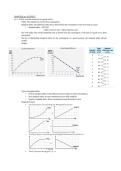
- Graphs:
- Types of marginal utility:
+ Positive marginal utility: Total utility increases (common in early consumption).
+ Zero marginal utility: No extra satisfaction (you’re fully satisfied).
+ Negative marginal utility: Extra consumption causes discomfort or loss.
- Marginal VS total:
+ Total Q increases at an increasing rate ⇄ marginal Q increases
+ Total Q increases at a decreasing rate ⇄ marginal Q decreases but remains +ve.
+ Total Q decreases ⇄ marginal Q is -ve.
, + Maximum utility: When MU = 0
30.2: The equ i-m ar gin al pr in ciple
- Consumer equilibrium: A situation where a consumer, given their income and the prices of goods, allocates their
spending in a way that maximizes total utility (satisfaction) and has no reason to change consumption.
+ Scenario 1: 1 good only
- Conditions:
+ Price is fixed.
+ Consumer gets less extra satisfaction with each bar (law of diminishing marginal
utility).
+ Consumer wants to maximize utility within a limited budget.
- MC = MB = MU = P
+ The satisfaction from the last unit consumed is exactly equal to the price paid
+ If MU>P: Consumer gets more satisfaction than it costs → they buy more.
+ If MU<P: Too expensive for little satisfaction → they buy less.
+ Scenario 2: Multiple goods
- Equimarginal principle: Consumers maximize their utility where their marginal valuation for
each product is the same.
+ If one good gives more utility per dollar than another, shift spending to it.
+ But as you consume more of one good, MU falls (diminishing returns).
+ Eventually, all goods give equal utility per dollar → that’s maximum total utility.
MUx MUy
- Formula: =
Px Py
- Assumptions:
+ Consumers have limited income (budget constraint).
+ Consumers always behave in a rational manner.
+ Consumers seek to maximise their utility.
, -
- Total utility = the sum of all MU of chosen units.
30.3: Der ivation of an in dividu al dem an d cu r ve
- Individual demand curve: Shows the relationship between the price of a good and the quantity demanded by a
single consumer, holding other factors constant (like income, tastes, and prices of other goods).
- Assumptions:
+ Consumers aim to maximize total utility
+ Each unit of a good provides less additional utility than the previous one (i.e., diminishing marginal
utility)
+ Consumers allocate their limited income across goods to maximize satisfaction
+ Only the price of the good changes, other things remain constant
- Application of the law of equi-marginal utility:
+ Equilibrium: MU=P
+ A rational consumer will purchase more of a good as long as the marginal utility (MU) they get from the
good is greater than or equal to the price (P) they pay for it.
+ Since MU falls as more units are consumed (diminishing returns), the consumer will only buy more if
price falls.
- Downward sloping:
+ MU=P at equilibrium
+ As Q increases, MU decreases
+ So, to keep MU=P, P must decrease as Q increases → giving the downward-sloping
demand curve
30.4: Lim itations of m ar ginal u tility theor y an d assu m ptions of r ation al behaviou r
- Cardinal measurement: The theory assumes utility can be measured in exact numbers (e.g., 10 utils, 20 utils),
which is unrealistic. In real life, utility is subjective and cannot be precisely quantified.
- Consumers may not always be rational: It assumes people always act rationally to maximize utility. But real-world
choices are influenced by emotion, habits, peer pressure, or limited information.
CH APTER 31: INDIFFERENCE CURVES AND BUDGET LINES
31.1: In diff eren ce cu r ves:
- Indifference curve: Shows all the combinations of two goods that give a consumer the same level of satisfaction or
utility.
, - Properties:
Property Explanation
1. Downward sloping To maintain the same utility, if you consume more of one good,
you must consume less of the other.
2. Convex to the origin Reflects the diminishing marginal rate of substitution (MRS) –
as you consume more of X, you're willing to give up less of Y.
3. Higher curves = higher Satisfaction Indifference curves farther from the origin represent higher
levels of utility.
4. Curves do not intersect Two curves cannot cross because it would violate the assumption
of consistent preferences → irrational → would not get the
maximum amount of satisfaction
5. No thickness A single point represents one level of utility; a curve cannot be
thick.
- Different types of special indifference curve:
+ Negative utility (eg. demerit goods):
+ Perfect substitutes:
30.1: Utility an d dim in ishin g m ar gin al u tility
- Utility: The satisfaction received from consumption.
- Marginal utility: The additional utility that is derived from the consumption of one more unit of a good.
+ Marginal utility = ΔTU/ΔQ
= utility of current unit - utility of previous unit
- The total utility: The overall satisfaction that is derived from the consumption of all units of a good over a given
time period.
- The law of diminishing marginal utility: As the consumption of a good increases, the marginal utility will get
smaller.
- Graphs:
- Types of marginal utility:
+ Positive marginal utility: Total utility increases (common in early consumption).
+ Zero marginal utility: No extra satisfaction (you’re fully satisfied).
+ Negative marginal utility: Extra consumption causes discomfort or loss.
- Marginal VS total:
+ Total Q increases at an increasing rate ⇄ marginal Q increases
+ Total Q increases at a decreasing rate ⇄ marginal Q decreases but remains +ve.
+ Total Q decreases ⇄ marginal Q is -ve.
, + Maximum utility: When MU = 0
30.2: The equ i-m ar gin al pr in ciple
- Consumer equilibrium: A situation where a consumer, given their income and the prices of goods, allocates their
spending in a way that maximizes total utility (satisfaction) and has no reason to change consumption.
+ Scenario 1: 1 good only
- Conditions:
+ Price is fixed.
+ Consumer gets less extra satisfaction with each bar (law of diminishing marginal
utility).
+ Consumer wants to maximize utility within a limited budget.
- MC = MB = MU = P
+ The satisfaction from the last unit consumed is exactly equal to the price paid
+ If MU>P: Consumer gets more satisfaction than it costs → they buy more.
+ If MU<P: Too expensive for little satisfaction → they buy less.
+ Scenario 2: Multiple goods
- Equimarginal principle: Consumers maximize their utility where their marginal valuation for
each product is the same.
+ If one good gives more utility per dollar than another, shift spending to it.
+ But as you consume more of one good, MU falls (diminishing returns).
+ Eventually, all goods give equal utility per dollar → that’s maximum total utility.
MUx MUy
- Formula: =
Px Py
- Assumptions:
+ Consumers have limited income (budget constraint).
+ Consumers always behave in a rational manner.
+ Consumers seek to maximise their utility.
, -
- Total utility = the sum of all MU of chosen units.
30.3: Der ivation of an in dividu al dem an d cu r ve
- Individual demand curve: Shows the relationship between the price of a good and the quantity demanded by a
single consumer, holding other factors constant (like income, tastes, and prices of other goods).
- Assumptions:
+ Consumers aim to maximize total utility
+ Each unit of a good provides less additional utility than the previous one (i.e., diminishing marginal
utility)
+ Consumers allocate their limited income across goods to maximize satisfaction
+ Only the price of the good changes, other things remain constant
- Application of the law of equi-marginal utility:
+ Equilibrium: MU=P
+ A rational consumer will purchase more of a good as long as the marginal utility (MU) they get from the
good is greater than or equal to the price (P) they pay for it.
+ Since MU falls as more units are consumed (diminishing returns), the consumer will only buy more if
price falls.
- Downward sloping:
+ MU=P at equilibrium
+ As Q increases, MU decreases
+ So, to keep MU=P, P must decrease as Q increases → giving the downward-sloping
demand curve
30.4: Lim itations of m ar ginal u tility theor y an d assu m ptions of r ation al behaviou r
- Cardinal measurement: The theory assumes utility can be measured in exact numbers (e.g., 10 utils, 20 utils),
which is unrealistic. In real life, utility is subjective and cannot be precisely quantified.
- Consumers may not always be rational: It assumes people always act rationally to maximize utility. But real-world
choices are influenced by emotion, habits, peer pressure, or limited information.
CH APTER 31: INDIFFERENCE CURVES AND BUDGET LINES
31.1: In diff eren ce cu r ves:
- Indifference curve: Shows all the combinations of two goods that give a consumer the same level of satisfaction or
utility.
, - Properties:
Property Explanation
1. Downward sloping To maintain the same utility, if you consume more of one good,
you must consume less of the other.
2. Convex to the origin Reflects the diminishing marginal rate of substitution (MRS) –
as you consume more of X, you're willing to give up less of Y.
3. Higher curves = higher Satisfaction Indifference curves farther from the origin represent higher
levels of utility.
4. Curves do not intersect Two curves cannot cross because it would violate the assumption
of consistent preferences → irrational → would not get the
maximum amount of satisfaction
5. No thickness A single point represents one level of utility; a curve cannot be
thick.
- Different types of special indifference curve:
+ Negative utility (eg. demerit goods):
+ Perfect substitutes:


