Page 1 of 150
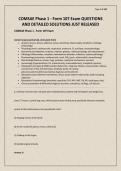
COMSAE Phase 1 - Form 107 Exam QUESTIONS
AND DETAILED SOLUTIONS JUST RELEASED
COMSAE Phase 1 - Form 107 Exam
Content areas (summarized, short point-form)
• Anatomy (neuro, thorax, abdomen, pelvis, extremities, blood supply, lymphatics, histology,
embryology)
• Physiology (renal, cardiovascular, respiratory, endocrine, GI, acid-base, neurophysiology)
• Biochemistry (metabolism, enzymes, vitamins, genetics, molecular biology, lab interpretation)
• Pathology (inflammation, neoplasia, hemodynamic disorders, infectious, systems pathology)
• Pharmacology (autonomic, cardiovascular, renal, CNS, psych, antimicrobial, chemotherapy)
• Microbiology (bacteria, viruses, fungi, parasites, resistance mechanisms, vaccines)
• Immunology (hypersensitivity I-IV, autoimmunity, immunodeficiency, transplant rejection)
• Osteopathic principles & OMM (somatic dysfunction, Chapman reflexes, viscerosomatic reflexes,
counterstrain, HVLA, Still technique, lymphatic pump, rib raising,
pelvic/sacral/cervical/thoracic/lumbar diagnosis and treatment)
• Behavioral science (defense mechanisms, ethics, doctor-patient relationship, death and dying,
addiction)
• Biostatistics & epidemiology (sensitivity, specificity, PPV, NPV, NNT, OR, RR, study types, bias)
• Clinical presentation & differential diagnosis (common complaints, red flags, risk factors)
1. A 58-year-old man with a 40-pack-year smoking history presents with hemoptysis and weight loss;
chest CT shows a central lung mass. Which physical exam finding most specifically indicates metastatic
spread to the brachial plexus and sympathetic chain?
A) Flapping tremor of the hands
B) Horner syndrome (ptosis, miosis, anhidrosis)
C) Clubbing of the fingers
D) Ipsilateral gynecomastia
Answer: B
, Page 2 of 150
Rationale: Pancoast tumor invades inferior brachial plexus and sympathetic chain → ipsilateral Horner
syndrome.
2. A 32-year-old woman presents with episodic palpitations, severe headache, and diaphoresis; plasma
metanephrines are markedly elevated. Which preoperative pharmacologic agent is required to prevent
intraoperative hypertensive crisis?
A) Propranolol
B) Phenoxybenzamine
C) Losartan
D) Hydralazine
Answer: B
Rationale: Phenoxybenzamine is an irreversible alpha-blocker that prevents catecholamine surge during
pheochromocytoma manipulation.
3. A 45-year-old man with hypertension and hypokalemia has a plasma aldosterone-to-renin ratio
greater than 30. Which medication directly antagonizes the pathologic receptor in this condition?
A) Spironolactone
B) Eplerenone
, Page 3 of 150
C) Amiloride
D) Triamterene
Answer: B
Rationale: Primary hyperaldosteronism causes mineralocorticoid receptor overactivation; eplerenone is
a selective mineralocorticoid receptor antagonist.
4. A 22-year-old college student reports low-grade fever, fatigue, and posterior cervical
lymphadenopathy; a Monospot test is positive. Which antiviral agent is indicated if symptoms persist
beyond six weeks?
A) Acyclovir
B) Ganciclovir
C) Valacyclovir
D) No antiviral; supportive care only
Answer: D
Rationale: Epstein-Barr virus infectious mononucleosis is self-limited; antivirals do not improve clinical
outcomes.
, Page 4 of 150
5. A 67-year-old woman with chronic atrial fibrillation on warfarin develops acute onset of severe left
leg pain, pallor, and pulselessness. What is the definitive management for this condition?
A) Intravenous heparin bolus
B) Tissue plasminogen activator
C) Surgical embolectomy
D) Compression stockings and elevation
Answer: C
Rationale: Acute limb ischemia from cardioembolism requires emergent surgical embolectomy to
restore perfusion.
6. A 28-year-old G1P0 at 32 weeks gestation presents with new-onset hypertension, proteinuria of 3
grams per 24 hours, and right upper quadrant pain. Which laboratory finding indicates progression to
HELLP syndrome?
A) Hematocrit 28%
B) Platelet count 60,000 per microliter
C) Serum creatinine 1.2 mg/dL
D) White blood cell count 15,000 per microliter
COMSAE Phase 1 - Form 107 Exam QUESTIONS
AND DETAILED SOLUTIONS JUST RELEASED
COMSAE Phase 1 - Form 107 Exam
Content areas (summarized, short point-form)
• Anatomy (neuro, thorax, abdomen, pelvis, extremities, blood supply, lymphatics, histology,
embryology)
• Physiology (renal, cardiovascular, respiratory, endocrine, GI, acid-base, neurophysiology)
• Biochemistry (metabolism, enzymes, vitamins, genetics, molecular biology, lab interpretation)
• Pathology (inflammation, neoplasia, hemodynamic disorders, infectious, systems pathology)
• Pharmacology (autonomic, cardiovascular, renal, CNS, psych, antimicrobial, chemotherapy)
• Microbiology (bacteria, viruses, fungi, parasites, resistance mechanisms, vaccines)
• Immunology (hypersensitivity I-IV, autoimmunity, immunodeficiency, transplant rejection)
• Osteopathic principles & OMM (somatic dysfunction, Chapman reflexes, viscerosomatic reflexes,
counterstrain, HVLA, Still technique, lymphatic pump, rib raising,
pelvic/sacral/cervical/thoracic/lumbar diagnosis and treatment)
• Behavioral science (defense mechanisms, ethics, doctor-patient relationship, death and dying,
addiction)
• Biostatistics & epidemiology (sensitivity, specificity, PPV, NPV, NNT, OR, RR, study types, bias)
• Clinical presentation & differential diagnosis (common complaints, red flags, risk factors)
1. A 58-year-old man with a 40-pack-year smoking history presents with hemoptysis and weight loss;
chest CT shows a central lung mass. Which physical exam finding most specifically indicates metastatic
spread to the brachial plexus and sympathetic chain?
A) Flapping tremor of the hands
B) Horner syndrome (ptosis, miosis, anhidrosis)
C) Clubbing of the fingers
D) Ipsilateral gynecomastia
Answer: B
, Page 2 of 150
Rationale: Pancoast tumor invades inferior brachial plexus and sympathetic chain → ipsilateral Horner
syndrome.
2. A 32-year-old woman presents with episodic palpitations, severe headache, and diaphoresis; plasma
metanephrines are markedly elevated. Which preoperative pharmacologic agent is required to prevent
intraoperative hypertensive crisis?
A) Propranolol
B) Phenoxybenzamine
C) Losartan
D) Hydralazine
Answer: B
Rationale: Phenoxybenzamine is an irreversible alpha-blocker that prevents catecholamine surge during
pheochromocytoma manipulation.
3. A 45-year-old man with hypertension and hypokalemia has a plasma aldosterone-to-renin ratio
greater than 30. Which medication directly antagonizes the pathologic receptor in this condition?
A) Spironolactone
B) Eplerenone
, Page 3 of 150
C) Amiloride
D) Triamterene
Answer: B
Rationale: Primary hyperaldosteronism causes mineralocorticoid receptor overactivation; eplerenone is
a selective mineralocorticoid receptor antagonist.
4. A 22-year-old college student reports low-grade fever, fatigue, and posterior cervical
lymphadenopathy; a Monospot test is positive. Which antiviral agent is indicated if symptoms persist
beyond six weeks?
A) Acyclovir
B) Ganciclovir
C) Valacyclovir
D) No antiviral; supportive care only
Answer: D
Rationale: Epstein-Barr virus infectious mononucleosis is self-limited; antivirals do not improve clinical
outcomes.
, Page 4 of 150
5. A 67-year-old woman with chronic atrial fibrillation on warfarin develops acute onset of severe left
leg pain, pallor, and pulselessness. What is the definitive management for this condition?
A) Intravenous heparin bolus
B) Tissue plasminogen activator
C) Surgical embolectomy
D) Compression stockings and elevation
Answer: C
Rationale: Acute limb ischemia from cardioembolism requires emergent surgical embolectomy to
restore perfusion.
6. A 28-year-old G1P0 at 32 weeks gestation presents with new-onset hypertension, proteinuria of 3
grams per 24 hours, and right upper quadrant pain. Which laboratory finding indicates progression to
HELLP syndrome?
A) Hematocrit 28%
B) Platelet count 60,000 per microliter
C) Serum creatinine 1.2 mg/dL
D) White blood cell count 15,000 per microliter