
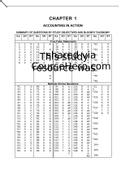
Accounting Test Bank Summary Of Questions By Study Objectives And Bloom’s Taxonomy
CHAPTER 1 ACCOUNTING IN ACTION SUMMARY OF QUESTIONS BY STUDY OBJECTIVES AND BLOOM’S TAXONOMY Ite SO BT Ite SO BT Ite SO BT Ite SO BT Ite SO BT True-False Statements 1. 1 2. 1 3. 1 4. 2 5. 2 6. 2 7. 2 8. 2 K K C K K C K C 9. 2 10. 2 11. 2 12. 2 13. 2 14. 2 15. 3 16. 4 K K K K K K K K 17. 4 18. 4 19. 4 20. 5 21. 5 22. 5 23. 5 24. 6 K K K C K K K K 25. 6 26. 6 27. 7 28. 7 29. 7 30. 7 31. 8 32. 8 K K K C C C K K sg33. sg34. sg35. sg36. sg37. sg38. sg39. sg40. 1 2 3 4 5 6 7 8 K K K C K K K K Multiple Choice Questions 41. 1 42. 1 43. 1 44. 1 45. 1 46. 1 47. 1 48. 1 49. 2 50. 2 51. 2 52. 2 53. 2 54. 2 a55. 9 a56. 9 a57. 9 a58. 9 59. 2 60. 2 61. 2 62. 3 63. 3 64. 4 65. 4 K K K C K K K K C C C C C C K K K C K K C K C K K 69. 4 70. 4 71. 4 72. 4 73. 4 74. 5 75. 5 76. 5 77. 5 78. 5 79. 5 80. 5 81. 5 82. 5 83. 5 84. 5 85. 5 86. 5 87. 5 88. 6 89. 6 90. 6 91. 6 92. 6 93. 6 C K K C K K K K K K C C K K C K K K K K K K C K K 97. 6 98. 6 99. 6 100. 6 101. 6 102. 6 103. 6 104. 6 105. 6 106. 6 107. 6 108. 7 109. 7 110. 7 111. 7 112. 7 113. 7 114. 7 115. 7 116. 7 117. 7 118. 7 119. 7 120. 7 121. 7 K K K C K C AP AP AP AP AP C AP C C C C C C K C C C AN C 125. 8 126. 8 127. 8 129. 8 129. 8 130. 8 131. 8 132. 8 133. 8 134. 8 135. 8 136. 8 137. 8 138. 8 139. 8 140. 8 141. 8 142. 8 143. 8 144. 8 145. 8 146. 8 147. 8 148. 8 149. 8 K K AP AP AP K C K K AP AP AP AP AP AP AP AP AP AP AP AP AP AN AN AN st153. st154. sg155. st156. sg157. st158. sg159. sg160. sg161. sg162. sg163. 164. 165. 166. 167. 168. 169. 170. 171. 172. 173. 174. 175. 176. 177. 1 1 2 2 4 5 5 6 7 7 8 K K K K K K K K C C K 66. 4 C 94. 6 C 122. 8 C 150. 8 AN 67. 4 K 95. 6 K 123. 8 C 151. 8 AN 68. 4 K 96. 6 K 124. 8 K sg15 1 K sg This question also appears in the Study Guide. 1 - 2 Test Bank for Accounting Principles, Tenth Edition st This question also appears in a self-test at the student companion website. a This question covers a topic in an appendix to the chapter. FOR INSTRUCTOR USE ONLY Accounting in Action 1 - 3 SUMMARY OF QUESTIONS BY STUDY OBJECTIVES AND BLOOM’S TAXONOMY Brief Exercises 178. 2 C 179. 6 K180. 6 K 181. 6 AP 182. 6 AP 182. 6 C 184. 7 C 185. 8 AP 418 8 C 187. 8 AP188. 8 AP 2,4 6 6 6 6 6 6 6 Exercises 189. 190. 191. 192. 193. 194. 195. 196. K C C AP C AP AN AN 197. 6 C 198. 6,7 C 199. 6,7 C 200. 6,7 AP 201. 7 AP 202. 7 AP 203. 7 C204. 7 AN 205. 7 C 206. 7 C 207. 7 AP 208. 7 C 209. 7 C 210. 7 C 211. 7 C212. 7 C 213. 8 AP 214. 8 AP 215. 8 AP 216. 8 AN 217. 8 AP 218. 8 AP 219. 8 C220. 8 AP 221. 8 AN 222. 8 C 223. 8 AP 224. 8 AP225. 8 AP Completion Statements 226. 1 K227. 2 K 228. 2 K229. 2 K 230. 4 K231. 4 K 232. 5 K233. 6 K 234. 6 K235. 8 K SUMMARY OF STUDY OBJECTIVES BY QUESTION TYPE Ite Ty Ite Ty Ite Ty Ite Ty Ite Ty Ite Ty Ite Typ Study Objective 1 1. TF 2. TF3. TF 33. TF 41. MC42. MC 43. MC 44. MC45. MC 46. MC 47. MC48. MC 152. MC 153. MC154. MC 226. C Study Objective 2 4. TF 5. TF 6. TF7. TF 8. TF 9. TF 10. TF11. TF 12. TF 13. TF 14. TF 34. TF 49. MC 50. MC 51. MC52. MC 53. MC 54. MC 59. MC60. MC 61. MC 155. MC 156. MC 178. BE 175. Ex 227. C228. C229. C Study Objective 3 15. TF 35. TF 62. MC 63. MC Study Objective 4 16. TF 17. TF18. TF 19. TF 36. TF 64. MC 65. MC 66. MC67. MC 68. MC 69. MC70. MC 71. MC 72. MC73. MC 157. MC 189. Ex 230. C 231. C Study Objective 5 20. TF 21. TF 22. TF23. TF 37. TF 74. MC 75. MC76. MC 77. MC 78. MC 79. MC80. MC 81. MC 82. MC 83. MC84. MC 85. MC 86. MC 87. MC 158. MC 159. MC 232. C 1 - 4 Test Bank for Accounting Principles, Tenth Edition SUMMARY OF STUDY OBJECTIVES BY QUESTION TYPE Study Objective 6 24. TF 25. TF 26. TF 38. TF 88. MC 89. MC90. MC 91. MC 92. MC 93. MC 94. MC 95. MC 96. MC97. MC 98. MC 99. MC 100. MC 101. MC 102. MC 103. MC104. MC 105. MC 106. MC 107. MC 160. MC 179. BE 180. BE181. BE 182. BE 183. BE 190. Ex 191. Ex 192. Ex 193. Ex194. Ex 195. Ex 196. Ex 197. Ex 198. Ex 199. Ex 200. Ex 233. C 234. C Study Objective 7 27. TF 28. TF 29. TF 30. TF 39. TF 108. MC 109. MC 110. MC 111. MC 112. MC 113. MC114. MC 115. MC 116. MC 117. MC 118. MC 119. MC120. MC 121. MC 161. MC 162. MC 184. BE 184. Ex185. Ex 186. Ex 201. Ex 202. Ex 203. Ex 204. Ex205. Ex 206. Ex 207. Ex 208. Ex 209. Ex 196. Ex197. Ex 198. Ex 213. Ex 214. Ex 215. Ex 216. Ex217. Ex Study Objective 8 31. TF 32. TF 40. TF 122. MC 123. MC 124. MC 125. MC126. MC 129. MC 130. MC 131. MC 132. MC 133. MC 134. MC 135. MC136. MC 139. MC 140. MC 141. MC 142. MC 143. MC 144. MC 145. MC146. MC 149. MC 150. MC 151. MC 163. MC 164. MC 165. MC 166. MC167. MC 170. MC 171. MC 172. MC 173. MC 174. MC 175. MC 176. MC177. MC 187. BE 188. BE 199. Ex 200. Ex 201. Ex 202. Ex 217. Ex218. Ex 221. Ex 222. Ex 223. Ex 224. Ex 225. Ex 235. C 127. MC 137. MC 147. MC 168. MC 185. BE 219. Ex 128. MC 138. MC 148. MC 169. MC 186. BE 220. Ex Study Objective 9 a55. MC a56. MC a57. MC a58. MC Note: TF = True-False BE = Brief Exercise C = Completion MC = Multiple Choice Ex = Exercise This chapter also contains one set of ten Matching questions and Short-Answer Essay questions. A summary table of all learning outcomes, including AACSB, AICPA, and IMA professional standards, is available on the Weygandt Accounting Principles 9e instructor web site. FOR INSTRUCTOR USE ONLY Accounting in Action CHAPTER STUDY OBJECTIVES 1 - 5 1. Explain what accounting is. Accounting is an information system that identifies, records, and communicates the economic events of an organization to interested users. 2. Identify the users and uses of accounting. The major users and uses of accounting are: (a) Management uses accounting information in planning, controlling, and evaluating business operations. (b) Investors (owners) decide whether to buy, hold, or sell their financial interests on the basis of accounting data. (c) Creditors (suppliers and bankers) evaluate the risks of granting credit or lending money on the basis of accounting information. Other groups that use accounting information are taxing authorities, regulatory agencies, customers, labor unions, and economic planners. 3. Understand why ethics is a fundamental business concept. Ethics are the standards of conduct by which actions are judged as right or wrong. If you cannot depend on the honesty of the individuals you deal with, effective communication and economic activity would be impossible, and information would have no credibility. 4. Explain generally accepted accounting principles and the cost principle. Generally accepted accounting principles are a common set of standards used by accountants. The cost principle states that companies should record assets at their cost. 5. Explain the monetary unit assumption and the economic entity assumption. The monetary unit assumption requires that companies include in the accounting records only transaction data that can be expressed in terms of money. The economic entity assumption requires that the activities of each economic entity be kept separate from the activities of its owner and other economic entities. 6. State the accounting equation, and define assets, liabilities, and owner's equity. The basic accounting equation is: Assets = Liabilities + Owner's Equity Assets are resources owned by a business. Liabilities are creditorship claims on total assets. Owner's equity is the ownership claim on total assets. 7. Analyze the effects of business transactions on the accounting equation. Each business transaction must have a dual effect on the accounting equation. For example, if an individual asset increases, there must be a corresponding (1) decrease in another asset, or (2) increase in a specific liability, or (3) increase in owner's equity. 8. Understand the four financial statements and how they are prepared. An income statement presents the revenues and expenses of a company for a specified period of time. An owner's equity statement summarizes the changes in owner's equity that have occurred for a specific period of time. A balance sheet reports the assets, liabilities, and owner's equity of a business at a specific date. A statement of cash flows summarizes information about the cash inflows (receipts) and outflows (payments) for a specific period of time. a9. Explain the career opportunities in accounting. Accounting offers many different jobs in fields such as public and private accounting, government, and forensic accounting. Accounting is a popular major because there are many different types of jobs, with unlimited potential for career advancement. ..........................................continued..............................................
Document information
- Uploaded on
- June 3, 2021
- Number of pages
- 135
- Written in
- 2020/2021
- Type
- Exam (elaborations)
- Contains
- Questions & answers


