

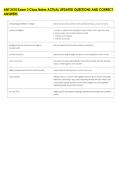
ANT 2410 Exam 3 Class Notes ACTUAL UPDATED QUESTIONS AND CORRECT
ANSWERS
anthropological definition of religion beliefs and practices concerned with supernatural beings, powers and forces
functions of religions 1. provide an ordered and meaningful universe, defines what is right and wrong
2. reduce anxiety and increase feelings of control
3. increase social solidarity
4. maintain social order
all relgions have the same set up and origin of sets out a blue print for how the universe is constructed
universe/world
functions of science does the same thing as religion but gives us a new perspective of how we are
we can never know the unknown is always expanding; the more science reveals, the more questions
arise; i.e. what happens when we die?
religion provides a sense that the world has order makes individuals feel important or special; have a soul
social solidarity feelings of each of us that we are together; where we go i.e. Church, the people
believe the same things - sing, chant; becoming attuned with each other; social
communities=express openness to each other, people who move together;
organizing people beyond the local level
since the 1970s religious groups have been increasingly politicized by being directed to political
parties
, social order religion is rarely used for revoluntionary purposes, the way the world is is the way
it should be because the supernatural created it that way; serves to maintain this;
"its harder for a rich man to get into heaven, then a camel to go through the eye
of a needle"; The Meek are supposed to inherit the Earth e.g. follow orders, don't
talk back
agent of change all religions have this if you look back far enough
1960s-1970s In central america, 9-11 families owned 90% of resources; unequal, unjust;
rebellious priests started preaching how Jesus turned the tables of the money
lenders; this is known as liberation theology
liberation theology used to challenge the social order when political rights, etc have great equity
imbalances [unjust]
What is religion? Wallace: belief and ritual concerned with supernatural beings, powers, and
forces; Durkheim: religious effervescence; Reese: bodies of people who gather
together regularly for worship; Turner: communitas=intense feelings of social
solidarity; religion is a cultural universal
Tylor religion evolved through stages
animism nature is impede in soul, spirit, or force; belief in spiritual beings; unlike us
Americans who "de-spirit" nature
animatism impersonal force that is believed to exist everywhere i.e. luck; e.g. Mana
mana sacred impersonal force existing in the universe [Polynesia, Melanesia]; some
people channel it better than others
taboo sacred and forbidden by supernatural forces
magic supernatural techniques intended to accomplish specific aims; may be imitative
[e.g. voodoo dolls] or contagious [e.g. through contact]
witchcraft vs. sorcery the attempt to do harm magically through psychic means that is an involuntary
state of being vs. intent to do harm but with the aid of material objects i.e.
something personal from them e.g. hair that purposely does this
religion and magic serve emotional and cognitive needs
Malinowski magic is used to establish control but religion is "born out of...the real tragedies of
human life"; magic serves to explain illnesses/negative instances
ritual definition of religious/scared=patterned act that involves the manipulation of
religious symbols; Harris=lots of ritual that is not sacred, i.e. lives are rituals
[bathing behavior]; convey information about participants and their culture; social
acts; patterned everyday rituals; religious rituals manipulate sacred objects
ANSWERS
anthropological definition of religion beliefs and practices concerned with supernatural beings, powers and forces
functions of religions 1. provide an ordered and meaningful universe, defines what is right and wrong
2. reduce anxiety and increase feelings of control
3. increase social solidarity
4. maintain social order
all relgions have the same set up and origin of sets out a blue print for how the universe is constructed
universe/world
functions of science does the same thing as religion but gives us a new perspective of how we are
we can never know the unknown is always expanding; the more science reveals, the more questions
arise; i.e. what happens when we die?
religion provides a sense that the world has order makes individuals feel important or special; have a soul
social solidarity feelings of each of us that we are together; where we go i.e. Church, the people
believe the same things - sing, chant; becoming attuned with each other; social
communities=express openness to each other, people who move together;
organizing people beyond the local level
since the 1970s religious groups have been increasingly politicized by being directed to political
parties
, social order religion is rarely used for revoluntionary purposes, the way the world is is the way
it should be because the supernatural created it that way; serves to maintain this;
"its harder for a rich man to get into heaven, then a camel to go through the eye
of a needle"; The Meek are supposed to inherit the Earth e.g. follow orders, don't
talk back
agent of change all religions have this if you look back far enough
1960s-1970s In central america, 9-11 families owned 90% of resources; unequal, unjust;
rebellious priests started preaching how Jesus turned the tables of the money
lenders; this is known as liberation theology
liberation theology used to challenge the social order when political rights, etc have great equity
imbalances [unjust]
What is religion? Wallace: belief and ritual concerned with supernatural beings, powers, and
forces; Durkheim: religious effervescence; Reese: bodies of people who gather
together regularly for worship; Turner: communitas=intense feelings of social
solidarity; religion is a cultural universal
Tylor religion evolved through stages
animism nature is impede in soul, spirit, or force; belief in spiritual beings; unlike us
Americans who "de-spirit" nature
animatism impersonal force that is believed to exist everywhere i.e. luck; e.g. Mana
mana sacred impersonal force existing in the universe [Polynesia, Melanesia]; some
people channel it better than others
taboo sacred and forbidden by supernatural forces
magic supernatural techniques intended to accomplish specific aims; may be imitative
[e.g. voodoo dolls] or contagious [e.g. through contact]
witchcraft vs. sorcery the attempt to do harm magically through psychic means that is an involuntary
state of being vs. intent to do harm but with the aid of material objects i.e.
something personal from them e.g. hair that purposely does this
religion and magic serve emotional and cognitive needs
Malinowski magic is used to establish control but religion is "born out of...the real tragedies of
human life"; magic serves to explain illnesses/negative instances
ritual definition of religious/scared=patterned act that involves the manipulation of
religious symbols; Harris=lots of ritual that is not sacred, i.e. lives are rituals
[bathing behavior]; convey information about participants and their culture; social
acts; patterned everyday rituals; religious rituals manipulate sacred objects


