

N3280 Exam 3 – Questions With Right Solutions
Save Groups
Terms in this set (42)
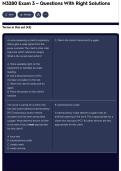
A nurse assessing a client's respiratory C. Warm the client's hands and try again.
status gets a weak signal from the
pulse oximeter. The client's other vital
signs are within reference ranges.
What is the nurse's best action?
A. Shine available light on the
equipment to facilitate accurate
reading.
B. Use a blood pressure cuff to
increase circulation to the site.
C. Warm the client's hands and try
again.
D. Place the probe on the client's
earlobe.
The nurse is caring for a client who B. tracheostomy collar
has had a percutaneous tracheostomy
(PCT) following a motor vehicle A tracheostomy collar delivers oxygen near an
accident and has been prescribed artificial opening in the neck. This is appropriate for a
oxygen. What delivery device will the client who has had a PCT. All other devices are less
nurse select that is most appropriate appropriate for this client.
for this client?
A. face tent
B. tracheostomy collar
C. simple mask
D. nasal cannula
,A nurse takes a client's pulse oximetry A.The client's available hemoglobin is adequately
reading and finds that it is normal. saturated with oxygen.
What does this finding indicate?
A.The client's available hemoglobin is Pulse oximetry is a noninvasive technique that
adequately saturated with oxygen. measures the arterial oxyhemoglobin saturation
B. The client's respiratory rate is in the (SaO2 or SpO2) of arterial blood. This test measures
normal range. only the percentage of oxygen carried by the
C. The client's red blood cell (RBC) available hemoglobin. Thus, even a client with a low
count is in the normal range. hemoglobin level could appear to have a normal
D. The client's oxygen demands are SpO2 because most of that hemoglobin is saturated.
being met. However, the client may not have enough oxygen to
meet body needs. A normal pulse oximetry reading
does not necessarily indicate a normal RBC count or
heart rate.
, Which should the nurse teach the (all the above)
family about caring for a client with Maintain a smoke-free environment.
emphysema at home? Select all that Follow health care provider's prescription for oxygen
apply. administration.
Watch for increased wheezing or signs of a flare-up.
Maintain a smoke-free environment. Take advantage of pulmonary rehabilitation
Follow health care provider's programs.
prescription for oxygen Create a long-term caregiving plan.
administration.
Watch for increased wheezing or
signs of a flare-up.
Take advantage of pulmonary
rehabilitation programs.
Create a long-term caregiving plan.
Even if the person with emphysema is
not smoking anymore, the person may
be living in a home where family
members still smoke. Family must
understand why it is important to keep
tobacco smoke out of the house.
Caregivers need to be ready and
know the signs of a flare-up. For
instance, the client may wheeze more,
get increasingly short of breath,
cough more than usual, or have more
or a change in color of mucus. If there
is a flare-up, the sooner the client can
get treatment, the less likely the client
will require hospitalization. It is
worthwhile for clients wi
Save Groups
Terms in this set (42)
A nurse assessing a client's respiratory C. Warm the client's hands and try again.
status gets a weak signal from the
pulse oximeter. The client's other vital
signs are within reference ranges.
What is the nurse's best action?
A. Shine available light on the
equipment to facilitate accurate
reading.
B. Use a blood pressure cuff to
increase circulation to the site.
C. Warm the client's hands and try
again.
D. Place the probe on the client's
earlobe.
The nurse is caring for a client who B. tracheostomy collar
has had a percutaneous tracheostomy
(PCT) following a motor vehicle A tracheostomy collar delivers oxygen near an
accident and has been prescribed artificial opening in the neck. This is appropriate for a
oxygen. What delivery device will the client who has had a PCT. All other devices are less
nurse select that is most appropriate appropriate for this client.
for this client?
A. face tent
B. tracheostomy collar
C. simple mask
D. nasal cannula
,A nurse takes a client's pulse oximetry A.The client's available hemoglobin is adequately
reading and finds that it is normal. saturated with oxygen.
What does this finding indicate?
A.The client's available hemoglobin is Pulse oximetry is a noninvasive technique that
adequately saturated with oxygen. measures the arterial oxyhemoglobin saturation
B. The client's respiratory rate is in the (SaO2 or SpO2) of arterial blood. This test measures
normal range. only the percentage of oxygen carried by the
C. The client's red blood cell (RBC) available hemoglobin. Thus, even a client with a low
count is in the normal range. hemoglobin level could appear to have a normal
D. The client's oxygen demands are SpO2 because most of that hemoglobin is saturated.
being met. However, the client may not have enough oxygen to
meet body needs. A normal pulse oximetry reading
does not necessarily indicate a normal RBC count or
heart rate.
, Which should the nurse teach the (all the above)
family about caring for a client with Maintain a smoke-free environment.
emphysema at home? Select all that Follow health care provider's prescription for oxygen
apply. administration.
Watch for increased wheezing or signs of a flare-up.
Maintain a smoke-free environment. Take advantage of pulmonary rehabilitation
Follow health care provider's programs.
prescription for oxygen Create a long-term caregiving plan.
administration.
Watch for increased wheezing or
signs of a flare-up.
Take advantage of pulmonary
rehabilitation programs.
Create a long-term caregiving plan.
Even if the person with emphysema is
not smoking anymore, the person may
be living in a home where family
members still smoke. Family must
understand why it is important to keep
tobacco smoke out of the house.
Caregivers need to be ready and
know the signs of a flare-up. For
instance, the client may wheeze more,
get increasingly short of breath,
cough more than usual, or have more
or a change in color of mucus. If there
is a flare-up, the sooner the client can
get treatment, the less likely the client
will require hospitalization. It is
worthwhile for clients wi


