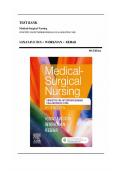
Brunner & Suddarth's Textbook of
Medical-Surgical Nursing
16th Edition
• Author(s)Janice L. Hinkle; Kerry H.
Cheever; Kristen J. Overbaugh; Carolyn
E. Bradley
ISBN: 9781975221133
Question 1:
Question Type: MCQ
Question Stem:
Which statement best reflects the professional role of the
nurse in today’s health care system?
Options:
A. The nurse primarily carries out the provider’s orders and
reports only abnormal findings.
B. The nurse uses clinical judgment, collaborates with the
,interprofessional team, and advocates for patient-centered
care.
C. The nurse focuses mainly on technical procedures because
complex decision-making is reserved for providers.
D. The nurse’s main responsibility is to complete
documentation after all care has been delivered.
Correct Answer:
B
Rationale for A:
This statement reflects an outdated and limited view of
nursing. Nurses do carry out prescribed interventions, but
professional practice also includes assessment, clinical
judgment, teaching, coordination, advocacy, and evaluation of
outcomes.
Rationale for B:
This is correct because professional nursing practice is
grounded in clinical judgment, collaboration, advocacy, and
patient-centered care. The nurse is responsible for integrating
assessment data, planning care, implementing safe
interventions, and evaluating responses.
Rationale for C:
This is incorrect because nursing is not limited to task
performance. Nurses make decisions within their scope,
recognize changes in condition, prioritize care, and participate
in quality and safety activities.
,Rationale for D:
Documentation is important, but it is not the nurse’s main
responsibility. Safe and effective practice requires ongoing
assessment, intervention, communication, and evaluation, not
just charting after the fact.
Key Takeaway:
Professional nursing combines knowledge, judgment,
communication, advocacy, and safe clinical action.
Question 2:
Question Type: MCQ
Question Stem:
A patient says, “I do not think I need to ask questions because
the provider already explained everything.” Which nursing
response best supports the patient’s role as a consumer of
health care?
Options:
A. “You should wait until discharge to ask any questions.”
B. “It is best not to challenge the provider’s plan of care.”
C. “Your questions are important because you have the right to
understand and participate in decisions about your care.”
D. “Most patients do better when they simply follow
instructions without discussion.”
Correct Answer:
C
, Rationale for A:
Delaying questions can increase misunderstanding and reduce
adherence. Patients are encouraged to ask questions
throughout care, not only at discharge.
Rationale for B:
This discourages participation and undermines patient
autonomy. Patients have the right to be informed and involved
in decisions about their treatment.
Rationale for C:
This is correct because the patient is an active consumer of
health care with rights to information, participation, and
informed decision-making. Supporting questions improves
understanding, safety, and adherence.
Rationale for D:
This is unsafe and dismissive. Patient teaching is most effective
when it includes dialogue, clarification, and shared decision-
making.
Key Takeaway:
Patients are partners in care, not passive recipients.
Question 3:
Question Type: MCQ
Question Stem:
Which factor is the strongest example of a social determinant
of health?
Medical-Surgical Nursing
16th Edition
• Author(s)Janice L. Hinkle; Kerry H.
Cheever; Kristen J. Overbaugh; Carolyn
E. Bradley
ISBN: 9781975221133
Question 1:
Question Type: MCQ
Question Stem:
Which statement best reflects the professional role of the
nurse in today’s health care system?
Options:
A. The nurse primarily carries out the provider’s orders and
reports only abnormal findings.
B. The nurse uses clinical judgment, collaborates with the
,interprofessional team, and advocates for patient-centered
care.
C. The nurse focuses mainly on technical procedures because
complex decision-making is reserved for providers.
D. The nurse’s main responsibility is to complete
documentation after all care has been delivered.
Correct Answer:
B
Rationale for A:
This statement reflects an outdated and limited view of
nursing. Nurses do carry out prescribed interventions, but
professional practice also includes assessment, clinical
judgment, teaching, coordination, advocacy, and evaluation of
outcomes.
Rationale for B:
This is correct because professional nursing practice is
grounded in clinical judgment, collaboration, advocacy, and
patient-centered care. The nurse is responsible for integrating
assessment data, planning care, implementing safe
interventions, and evaluating responses.
Rationale for C:
This is incorrect because nursing is not limited to task
performance. Nurses make decisions within their scope,
recognize changes in condition, prioritize care, and participate
in quality and safety activities.
,Rationale for D:
Documentation is important, but it is not the nurse’s main
responsibility. Safe and effective practice requires ongoing
assessment, intervention, communication, and evaluation, not
just charting after the fact.
Key Takeaway:
Professional nursing combines knowledge, judgment,
communication, advocacy, and safe clinical action.
Question 2:
Question Type: MCQ
Question Stem:
A patient says, “I do not think I need to ask questions because
the provider already explained everything.” Which nursing
response best supports the patient’s role as a consumer of
health care?
Options:
A. “You should wait until discharge to ask any questions.”
B. “It is best not to challenge the provider’s plan of care.”
C. “Your questions are important because you have the right to
understand and participate in decisions about your care.”
D. “Most patients do better when they simply follow
instructions without discussion.”
Correct Answer:
C
, Rationale for A:
Delaying questions can increase misunderstanding and reduce
adherence. Patients are encouraged to ask questions
throughout care, not only at discharge.
Rationale for B:
This discourages participation and undermines patient
autonomy. Patients have the right to be informed and involved
in decisions about their treatment.
Rationale for C:
This is correct because the patient is an active consumer of
health care with rights to information, participation, and
informed decision-making. Supporting questions improves
understanding, safety, and adherence.
Rationale for D:
This is unsafe and dismissive. Patient teaching is most effective
when it includes dialogue, clarification, and shared decision-
making.
Key Takeaway:
Patients are partners in care, not passive recipients.
Question 3:
Question Type: MCQ
Question Stem:
Which factor is the strongest example of a social determinant
of health?