

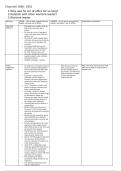
Churchill 1930- 1951
1.Why was he out of office for so long?
2.Relation with other wartime leaders
3.Wartime leader
Ranking GOOD - Yes he was a good wartime LIMITED – no he was a bad wartime Justification of position …
leader and was out of office… leader, and wasn’t out of office…
Churchill Churchill was in conflict with the
different bulk of his own party and it
leaders.
He took up a series of unpopular
causes and spoke about them in a
reckless way.
He became a more isolated figure
in Britain, relying on loyal advisers
who were seen as outsiders and
eccentrics.
In an age of radio and cinema,
Churchill’s style of speaking was
old-fashioned and out of touch.
By 1931, the key issues were
economic, foreign investors and
markets needed a calm confident
united government.
Gallipoli campaign = reckless
India – Churchill saw it as his duty to launch a - When the Government of May have only done all that stuff
unpopular personal crusade to defend Britain’s India act was passed, after as he had no choice but to
opinion interest which found him allied with Churchill stopped agitating accept it all.
the most reactionary elements in and invited a close friend and
Britain. political supporter of Gandhi
Churchill’s extreme public to lunch saying that he
statements and his support of wished India well.
eccentric and racist organisations
isolated him from more moderate
Conservatives.
1934 - Churchill was bitter in his
attacks on the gov ministers over
India reform proposals.
In aiming to make Sir Samuel
Hoare, the secretary of India resign
he threatened to shatter the
Conservative party but this earned
him ridicule and deep distrust of
the Conservative leadership.
Churchill had served in India as a
young officer
Believed India was ‘the jewel in
the crown’ of the British empire
and had to be protected to maintain
the empire.
British rule had ensured the end of
what Churchill saw as barbaric
practises and meant economic and
social progress.
he had a strong belief in the racial
superiority of the Anglo-Saxons
and in their destiny to rule over and
develop the lesser people.
The Rowlatt Acts 1919 increased
police powers by allowing
imprisonment without trial.
But the 1919 Montagu-Chelmsford
measures gave locally elected
councils a measure of control over
some internal matters.
April 1919 - Gandhi led a mass
campaign against the Rowlatt Acts
and troops fired on a protesting
crowd at Amritsar causing the
Amritsar Massacre where 400 died
and 1200 were wounded.
This brutality gave Indian
nationalism a huge number of new
supporters.
Late 1920 the British gov faced
calls for independence.
, The Rowlatt Acts 1919 increased
police powers by allowing
imprisonment without trial.
But the 1919 Montagu-Chelmsford
measures gave locally elected
councils a measure of control over
some internal matters.
April 1919 - Gandhi led a mass
campaign against the Rowlatt Acts
and troops fired on a protesting
crowd at Amritsar causing the
Amritsar Massacre where 400 died
and 1200 were wounded.
This brutality gave Indian
nationalism a huge number of new
supporters.
Late 1920 the British gov faced
calls for independence.
The Rowlatt Acts 1919 increased
police powers by allowing
imprisonment without trial.
But the 1919 Montagu-Chelmsford
measures gave locally elected
councils a measure of control over
some internal matters.
April 1919 - Gandhi led a mass
campaign against the Rowlatt Acts
and troops fired on a protesting
crowd at Amritsar causing the
Amritsar Massacre where 400 died
and 1200 were wounded.
This brutality gave Indian
nationalism a huge number of new
supporters.
Late 1920 the British gov faced
calls for independence.
Abdication Churchill took up a minority -
Crisis 1936 position.
He was a member of a little
informal group ‘The King’s
Friend’s’ who undertook the
support of the monarch for reasons
of personal loyalty.
The bulk of parliament didn’t take
this view.
Churchill misjudged the mood of
the House of Commons and made
a speech in favour of the King that
was shut down.
Churchill took up a minority
position.
He was a member of a little
informal group ‘The King’s
Friend’s’ who undertook the
support of the monarch for reasons
of personal loyalty.
The bulk of parliament didn’t take
this view.
Churchill misjudged the mood of
the House of Commons and made
a speech in favour of the King that
was shut down.
Germany – Objected German Rearmament bcos: - When Hitler’s policies became
Rearmament Churchill saw the new regime more aggressive the gov did
and as brutal, he dislike the rearm on an extensive scale
Appeasement violence and racism. and it seemed they acted at
– minority Churchill feared a repeat of the right time.
the situation prior to 1914 - Britain’s rearmament
when Germany had been a now accelerated and a
threat to the peace of Europe growing number of
and had challenged Britain by people lost faith in any
building a new naval fleet. attempt to negotiate
Churchill had been in support with Hitler.
of the Treaty of Versailles - Churchill had stopped
which Hitler now wanted to his criticisms of the gov
break. and was doing best to
Churchill was worried about
1.Why was he out of office for so long?
2.Relation with other wartime leaders
3.Wartime leader
Ranking GOOD - Yes he was a good wartime LIMITED – no he was a bad wartime Justification of position …
leader and was out of office… leader, and wasn’t out of office…
Churchill Churchill was in conflict with the
different bulk of his own party and it
leaders.
He took up a series of unpopular
causes and spoke about them in a
reckless way.
He became a more isolated figure
in Britain, relying on loyal advisers
who were seen as outsiders and
eccentrics.
In an age of radio and cinema,
Churchill’s style of speaking was
old-fashioned and out of touch.
By 1931, the key issues were
economic, foreign investors and
markets needed a calm confident
united government.
Gallipoli campaign = reckless
India – Churchill saw it as his duty to launch a - When the Government of May have only done all that stuff
unpopular personal crusade to defend Britain’s India act was passed, after as he had no choice but to
opinion interest which found him allied with Churchill stopped agitating accept it all.
the most reactionary elements in and invited a close friend and
Britain. political supporter of Gandhi
Churchill’s extreme public to lunch saying that he
statements and his support of wished India well.
eccentric and racist organisations
isolated him from more moderate
Conservatives.
1934 - Churchill was bitter in his
attacks on the gov ministers over
India reform proposals.
In aiming to make Sir Samuel
Hoare, the secretary of India resign
he threatened to shatter the
Conservative party but this earned
him ridicule and deep distrust of
the Conservative leadership.
Churchill had served in India as a
young officer
Believed India was ‘the jewel in
the crown’ of the British empire
and had to be protected to maintain
the empire.
British rule had ensured the end of
what Churchill saw as barbaric
practises and meant economic and
social progress.
he had a strong belief in the racial
superiority of the Anglo-Saxons
and in their destiny to rule over and
develop the lesser people.
The Rowlatt Acts 1919 increased
police powers by allowing
imprisonment without trial.
But the 1919 Montagu-Chelmsford
measures gave locally elected
councils a measure of control over
some internal matters.
April 1919 - Gandhi led a mass
campaign against the Rowlatt Acts
and troops fired on a protesting
crowd at Amritsar causing the
Amritsar Massacre where 400 died
and 1200 were wounded.
This brutality gave Indian
nationalism a huge number of new
supporters.
Late 1920 the British gov faced
calls for independence.
, The Rowlatt Acts 1919 increased
police powers by allowing
imprisonment without trial.
But the 1919 Montagu-Chelmsford
measures gave locally elected
councils a measure of control over
some internal matters.
April 1919 - Gandhi led a mass
campaign against the Rowlatt Acts
and troops fired on a protesting
crowd at Amritsar causing the
Amritsar Massacre where 400 died
and 1200 were wounded.
This brutality gave Indian
nationalism a huge number of new
supporters.
Late 1920 the British gov faced
calls for independence.
The Rowlatt Acts 1919 increased
police powers by allowing
imprisonment without trial.
But the 1919 Montagu-Chelmsford
measures gave locally elected
councils a measure of control over
some internal matters.
April 1919 - Gandhi led a mass
campaign against the Rowlatt Acts
and troops fired on a protesting
crowd at Amritsar causing the
Amritsar Massacre where 400 died
and 1200 were wounded.
This brutality gave Indian
nationalism a huge number of new
supporters.
Late 1920 the British gov faced
calls for independence.
Abdication Churchill took up a minority -
Crisis 1936 position.
He was a member of a little
informal group ‘The King’s
Friend’s’ who undertook the
support of the monarch for reasons
of personal loyalty.
The bulk of parliament didn’t take
this view.
Churchill misjudged the mood of
the House of Commons and made
a speech in favour of the King that
was shut down.
Churchill took up a minority
position.
He was a member of a little
informal group ‘The King’s
Friend’s’ who undertook the
support of the monarch for reasons
of personal loyalty.
The bulk of parliament didn’t take
this view.
Churchill misjudged the mood of
the House of Commons and made
a speech in favour of the King that
was shut down.
Germany – Objected German Rearmament bcos: - When Hitler’s policies became
Rearmament Churchill saw the new regime more aggressive the gov did
and as brutal, he dislike the rearm on an extensive scale
Appeasement violence and racism. and it seemed they acted at
– minority Churchill feared a repeat of the right time.
the situation prior to 1914 - Britain’s rearmament
when Germany had been a now accelerated and a
threat to the peace of Europe growing number of
and had challenged Britain by people lost faith in any
building a new naval fleet. attempt to negotiate
Churchill had been in support with Hitler.
of the Treaty of Versailles - Churchill had stopped
which Hitler now wanted to his criticisms of the gov
break. and was doing best to
Churchill was worried about


