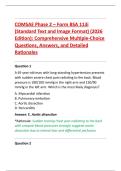
COMSAE Phase 2 – Form BSA 113i
(Standard Text and Image Format) (2026
Edition): Comprehensive Multiple-Choice
Questions, Answers, and Detailed
Rationales
Question 1
A 65-year-old man with long-standing hypertension presents
with sudden severe chest pain radiating to the back. Blood
pressure is 180/100 mmHg in the right arm and 150/90
mmHg in the left arm. Which is the most likely diagnosis?
A. Myocardial infarction
B. Pulmonary embolism
C. Aortic dissection
D. Pericarditis
Answer: C. Aortic dissection
*Rationale: Sudden tearing chest pain radiating to the back
with unequal blood pressures strongly suggests aortic
dissection due to intimal tear and differential perfusion.
Question 2
,A 24-year-old woman presents with exophthalmos, heat
intolerance, and weight loss. Labs show low TSH and elevated
free T4. What is the most likely mechanism?
A. Thyroid hormone receptor resistance
B. Autoantibodies stimulating TSH receptor
C. Thyroid follicular destruction
D. Iodine deficiency
Answer: B. Autoantibodies stimulating TSH receptor
*Rationale: Graves disease is caused by TSI antibodies that
activate TSH receptors, leading to hyperthyroidism.
Question 3
A patient develops sudden shortness of breath and pleuritic
chest pain after surgery. He is tachycardic and hypoxic. Most
likely diagnosis?
A. Pneumonia
B. Pulmonary embolism
C. Asthma exacerbation
D. Myocardial infarction
Answer: B. Pulmonary embolism
*Rationale: Postoperative immobilization increases risk of
DVT leading to PE, presenting with sudden hypoxia and
pleuritic pain.
Question 4
,A 55-year-old alcoholic presents with tremors, confusion, and
ophthalmoplegia. What vitamin deficiency is most likely?
A. Vitamin B12
B. Thiamine (B1)
C. Folate
D. Vitamin B6
Answer: B. Thiamine (B1)
*Rationale: Wernicke encephalopathy is due to thiamine
deficiency, classically triad of confusion, ophthalmoplegia,
and ataxia.
Question 5
A child presents with barking cough, inspiratory stridor, and
hoarseness. Most likely diagnosis?
A. Epiglottitis
B. Croup
C. Asthma
D. Bronchiolitis
Answer: B. Croup
*Rationale: Parainfluenza virus causes subglottic edema
leading to barking cough and stridor.
Question 6
A patient has chronic cough and night sweats. Chest X-ray
shows upper lobe cavitation. Most likely organism?
, A. Streptococcus pneumoniae
B. Mycobacterium tuberculosis
C. Klebsiella pneumoniae
D. Legionella pneumophila
Answer: B. Mycobacterium tuberculosis
*Rationale: TB classically affects upper lobes due to high
oxygen tension favoring mycobacterial growth.
Question 7
A woman presents with polyuria and polydipsia. Urine is
dilute despite high serum osmolality. After desmopressin,
urine concentrates. Diagnosis?
A. Central diabetes insipidus
B. Nephrogenic diabetes insipidus
C. SIADH
D. Psychogenic polydipsia
Answer: A. Central diabetes insipidus
*Rationale: Response to desmopressin indicates ADH
deficiency (central DI).
Question 8
A 70-year-old man has resting tremor, bradykinesia, and
shuffling gait. Deficiency of which neurotransmitter?
A. Serotonin
B. Dopamine
(Standard Text and Image Format) (2026
Edition): Comprehensive Multiple-Choice
Questions, Answers, and Detailed
Rationales
Question 1
A 65-year-old man with long-standing hypertension presents
with sudden severe chest pain radiating to the back. Blood
pressure is 180/100 mmHg in the right arm and 150/90
mmHg in the left arm. Which is the most likely diagnosis?
A. Myocardial infarction
B. Pulmonary embolism
C. Aortic dissection
D. Pericarditis
Answer: C. Aortic dissection
*Rationale: Sudden tearing chest pain radiating to the back
with unequal blood pressures strongly suggests aortic
dissection due to intimal tear and differential perfusion.
Question 2
,A 24-year-old woman presents with exophthalmos, heat
intolerance, and weight loss. Labs show low TSH and elevated
free T4. What is the most likely mechanism?
A. Thyroid hormone receptor resistance
B. Autoantibodies stimulating TSH receptor
C. Thyroid follicular destruction
D. Iodine deficiency
Answer: B. Autoantibodies stimulating TSH receptor
*Rationale: Graves disease is caused by TSI antibodies that
activate TSH receptors, leading to hyperthyroidism.
Question 3
A patient develops sudden shortness of breath and pleuritic
chest pain after surgery. He is tachycardic and hypoxic. Most
likely diagnosis?
A. Pneumonia
B. Pulmonary embolism
C. Asthma exacerbation
D. Myocardial infarction
Answer: B. Pulmonary embolism
*Rationale: Postoperative immobilization increases risk of
DVT leading to PE, presenting with sudden hypoxia and
pleuritic pain.
Question 4
,A 55-year-old alcoholic presents with tremors, confusion, and
ophthalmoplegia. What vitamin deficiency is most likely?
A. Vitamin B12
B. Thiamine (B1)
C. Folate
D. Vitamin B6
Answer: B. Thiamine (B1)
*Rationale: Wernicke encephalopathy is due to thiamine
deficiency, classically triad of confusion, ophthalmoplegia,
and ataxia.
Question 5
A child presents with barking cough, inspiratory stridor, and
hoarseness. Most likely diagnosis?
A. Epiglottitis
B. Croup
C. Asthma
D. Bronchiolitis
Answer: B. Croup
*Rationale: Parainfluenza virus causes subglottic edema
leading to barking cough and stridor.
Question 6
A patient has chronic cough and night sweats. Chest X-ray
shows upper lobe cavitation. Most likely organism?
, A. Streptococcus pneumoniae
B. Mycobacterium tuberculosis
C. Klebsiella pneumoniae
D. Legionella pneumophila
Answer: B. Mycobacterium tuberculosis
*Rationale: TB classically affects upper lobes due to high
oxygen tension favoring mycobacterial growth.
Question 7
A woman presents with polyuria and polydipsia. Urine is
dilute despite high serum osmolality. After desmopressin,
urine concentrates. Diagnosis?
A. Central diabetes insipidus
B. Nephrogenic diabetes insipidus
C. SIADH
D. Psychogenic polydipsia
Answer: A. Central diabetes insipidus
*Rationale: Response to desmopressin indicates ADH
deficiency (central DI).
Question 8
A 70-year-old man has resting tremor, bradykinesia, and
shuffling gait. Deficiency of which neurotransmitter?
A. Serotonin
B. Dopamine