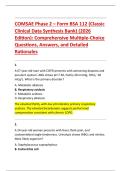
COMSAE Phase 2 – Form BSA 112 (Classic
Clinical Data Synthesis Bank) (2026
Edition): Comprehensive Multiple-Choice
Questions, Answers, and Detailed
Rationales
1.
A 67-year-old man with COPD presents with worsening dyspnea and
purulent sputum. ABG shows pH 7.30, PaCO₂ 58 mmHg, HCO₃⁻ 28
mEq/L. What is the primary disorder?
A. Metabolic alkalosis
B. Respiratory acidosis
C. Metabolic acidosis
D. Respiratory alkalosis
The elevated PaCO₂ with low pH indicates primary respiratory
acidosis. The elevated bicarbonate suggests partial renal
compensation consistent with chronic COPD.
2.
A 24-year-old woman presents with fever, flank pain, and
costovertebral angle tenderness. Urinalysis shows WBCs and nitrites.
Most likely organism?
A. Staphylococcus saprophyticus
B. Escherichia coli
,C. Proteus mirabilis
D. Klebsiella pneumoniae
E. coli is the most common cause of ascending urinary tract infections
and pyelonephritis, especially in young women.
3.
A 58-year-old man has crushing chest pain radiating to the left arm.
ECG shows ST elevation in II, III, aVF. Which artery is occluded?
A. LAD
B. Left circumflex
C. Right coronary artery
D. Left main coronary artery
Inferior wall MI (II, III, aVF) is most commonly due to right coronary
artery occlusion.
4.
A child presents with barking cough and inspiratory stridor. Most
likely diagnosis?
A. Epiglottitis
B. Croup (laryngotracheobronchitis)
C. Bronchiolitis
D. Foreign body aspiration
Classic presentation of croup includes a “seal-like bark” cough and
stridor due to parainfluenza virus infection.
5.
,A patient has jaundice, elevated AST/ALT, and positive anti-HBc IgM.
Diagnosis?
A. Hepatitis A
B. Acute hepatitis B infection
C. Chronic hepatitis C
D. Autoimmune hepatitis
IgM anti-HBc indicates acute hepatitis B infection.
6.
A 32-year-old woman has exophthalmos, weight loss, and heat
intolerance. Lab shows low TSH and high T3/T4. Mechanism?
A. Thyroid destruction
B. TSH-secreting pituitary tumor
C. TSH receptor stimulation by antibodies
D. Iodine deficiency
Graves disease is caused by TSH receptor–stimulating antibodies
leading to hyperthyroidism.
7.
A patient presents with severe epigastric pain radiating to the back
and elevated lipase. Most likely diagnosis?
A. Cholecystitis
B. Acute pancreatitis
C. Peptic ulcer disease
D. Hepatitis
Elevated lipase with characteristic pain radiating to the back is
diagnostic of acute pancreatitis.
, 8.
A 45-year-old alcoholic presents with confusion, ophthalmoplegia,
and ataxia. Deficiency?
A. Vitamin B12
B. Thiamine (B1)
C. Niacin
D. Folate
Wernicke encephalopathy is due to thiamine deficiency, commonly in
alcohol use disorder.
9.
A patient has prolonged PT, normal PTT, and bleeding gums after
antibiotic use. Deficiency?
A. Vitamin K
B. Factor VIII
C. Vitamin K–dependent clotting factors depletion due to gut flora
suppression
D. Platelet dysfunction
Broad-spectrum antibiotics reduce gut flora that synthesize vitamin K,
leading to increased PT.
10.
A newborn has projectile vomiting and a palpable olive-shaped mass.
Diagnosis?
A. Intussusception
B. Pyloric stenosis
C. Duodenal atresia
D. Hirschsprung disease
Clinical Data Synthesis Bank) (2026
Edition): Comprehensive Multiple-Choice
Questions, Answers, and Detailed
Rationales
1.
A 67-year-old man with COPD presents with worsening dyspnea and
purulent sputum. ABG shows pH 7.30, PaCO₂ 58 mmHg, HCO₃⁻ 28
mEq/L. What is the primary disorder?
A. Metabolic alkalosis
B. Respiratory acidosis
C. Metabolic acidosis
D. Respiratory alkalosis
The elevated PaCO₂ with low pH indicates primary respiratory
acidosis. The elevated bicarbonate suggests partial renal
compensation consistent with chronic COPD.
2.
A 24-year-old woman presents with fever, flank pain, and
costovertebral angle tenderness. Urinalysis shows WBCs and nitrites.
Most likely organism?
A. Staphylococcus saprophyticus
B. Escherichia coli
,C. Proteus mirabilis
D. Klebsiella pneumoniae
E. coli is the most common cause of ascending urinary tract infections
and pyelonephritis, especially in young women.
3.
A 58-year-old man has crushing chest pain radiating to the left arm.
ECG shows ST elevation in II, III, aVF. Which artery is occluded?
A. LAD
B. Left circumflex
C. Right coronary artery
D. Left main coronary artery
Inferior wall MI (II, III, aVF) is most commonly due to right coronary
artery occlusion.
4.
A child presents with barking cough and inspiratory stridor. Most
likely diagnosis?
A. Epiglottitis
B. Croup (laryngotracheobronchitis)
C. Bronchiolitis
D. Foreign body aspiration
Classic presentation of croup includes a “seal-like bark” cough and
stridor due to parainfluenza virus infection.
5.
,A patient has jaundice, elevated AST/ALT, and positive anti-HBc IgM.
Diagnosis?
A. Hepatitis A
B. Acute hepatitis B infection
C. Chronic hepatitis C
D. Autoimmune hepatitis
IgM anti-HBc indicates acute hepatitis B infection.
6.
A 32-year-old woman has exophthalmos, weight loss, and heat
intolerance. Lab shows low TSH and high T3/T4. Mechanism?
A. Thyroid destruction
B. TSH-secreting pituitary tumor
C. TSH receptor stimulation by antibodies
D. Iodine deficiency
Graves disease is caused by TSH receptor–stimulating antibodies
leading to hyperthyroidism.
7.
A patient presents with severe epigastric pain radiating to the back
and elevated lipase. Most likely diagnosis?
A. Cholecystitis
B. Acute pancreatitis
C. Peptic ulcer disease
D. Hepatitis
Elevated lipase with characteristic pain radiating to the back is
diagnostic of acute pancreatitis.
, 8.
A 45-year-old alcoholic presents with confusion, ophthalmoplegia,
and ataxia. Deficiency?
A. Vitamin B12
B. Thiamine (B1)
C. Niacin
D. Folate
Wernicke encephalopathy is due to thiamine deficiency, commonly in
alcohol use disorder.
9.
A patient has prolonged PT, normal PTT, and bleeding gums after
antibiotic use. Deficiency?
A. Vitamin K
B. Factor VIII
C. Vitamin K–dependent clotting factors depletion due to gut flora
suppression
D. Platelet dysfunction
Broad-spectrum antibiotics reduce gut flora that synthesize vitamin K,
leading to increased PT.
10.
A newborn has projectile vomiting and a palpable olive-shaped mass.
Diagnosis?
A. Intussusception
B. Pyloric stenosis
C. Duodenal atresia
D. Hirschsprung disease