

Mobility HESI Exam 1 & 2 — 2026/2027
MOBILITY HESI EXAM 1 & 2
Comprehensive Musculoskeletal, Mobility, and Nursing Interventions
Elsevier Evolve / HESI Mobility Module Alignment
━━━━━━━━━━━━━━━━━━━━━━━━━━━━━━━━━━━━━━━━━━━━━━
━━━━━━━━━━━━━━
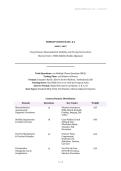
Total Questions: 100 Multiple-Choice Questions (MCQ)
Testing Time: 120 Minutes (2 Hours)
Format: Computer-Based | Elsevier Evolve Platform / Institutional LMS
Passing Score: 850 HESI Score or 75–80% per Program Policy
Answer Format: Single-Best-Answer (4 Options: A, B, C, D)
Item Types: Standard MCQ, SATA, Prioritization, Clinical Judgment Vignettes
Content Domain Distribution
Domain Questions Key Topics Weight
Musculoskeletal 15 Physical Assessment, 15%
Assessment & ROM, Muscle Strength
Diagnostic Procedures Grading, Imaging, Lab
Values
Mobility Impairments 18 Cane/Walker/Crutch 18%
& Assistive Devices Fitting & Gait,
Wheelchair Safety,
Transfers, Fall
Prevention
Fracture Management 20 Fracture Types, 20%
& Traction Principles Compartment
Syndrome, Fat
Embolism, Traction,
Cast Care
Perioperative 15 Pre/Post-Op Care, 15%
Orthopedic Care & DVT/PE Prevention,
Complication Infection Prevention,
Page 1
, Mobility HESI Exam 1 & 2 — 2026/2027
Prevention Joint Replacement
Pain Management & 12 Pain Assessment Tools, 12%
Pharmacologic Opioid/NSAID/Muscle
Interventions Relaxant Management,
Non-Pharmacologic
Rehabilitation & 10 PT/OT Collaboration, 10%
Discharge Planning Home Safety, Patient
Education, Community
Resources
Nursing Interventions 10 Immobility 10%
for Mobility & Safety Complications,
Positioning, Skin
Integrity, ROM
Exercises
TOTAL 100 100%
EXAM INSTRUCTIONS
• This Mobility HESI Exam 1 & 2 consists of 100 multiple-choice questions designed to assess your
competency across seven core domains of musculoskeletal and mobility nursing for pre-licensure
nursing students, aligned with the HESI Mobility Module and AACN Essentials for 2026/2027.
• Each question has four answer options (A, B, C, D). Select the single best answer for each question.
Select-All-That-Apply (SATA) questions are clearly marked and require identification of all correct
options. There is no penalty for guessing.
• The correct answer for each question is displayed in bold purple text (#BC13FE) immediately below
the question options. A detailed rationale written in italic font with a lavender background (#F5EDF9)
follows each question, explaining the evidence-based reasoning.
• The total testing time is 120 minutes (2 hours). Pace yourself at approximately 1.2 minutes per
question. Prioritize completing all questions within the allotted time.
• Questions include standard MCQ items, SATA items, prioritization scenarios (e.g., 'Which action
should the nurse take FIRST?'), clinical judgment vignettes, nursing intervention application items,
and mobility safety decision questions.
• After completing the exam, use the Domain Score Tracker at the end of this document to calculate
your performance by domain. Identify domains scoring below 75% for focused remediation.
Page 2
, Mobility HESI Exam 1 & 2 — 2026/2027
Musculoskeletal Assessment & Diagnostic Procedures (Q1–Q15 | 15%)
──────────────────────────────────────────────────────────────────
──────────────
1. A nurse is performing a neurovascular assessment on a patient with a fractured femur.
Which finding requires immediate notification of the provider?
A. Capillary refill of 2 seconds in the affected extremity
B. Patient reports numbness and tingling in the affected toes
C. Mild edema at the fracture site
D. Peripheral pulses rated at +2 bilaterally
Rationale: Numbness and tingling indicate paresthesia, one of the 6 P's of neurovascular
compromise, and require immediate provider notification as they suggest nerve compression
or ischemia. Capillary refill of 2 seconds (A) is normal. Mild edema (C) is an expected finding
after fracture. Pulses at +2 (D) are within normal limits.
2. A nurse assesses a patient's muscle strength and documents it as grade 3 on the 0–5
scale. Which finding best corresponds to this grade?
A. No muscle contraction detected
B. Muscle contraction palpated but no joint movement
C. Active movement against gravity but not against resistance
D. Active movement against gravity and some resistance
Rationale: Grade 3 muscle strength indicates the patient can move the joint through its full
range of motion against gravity but cannot resist additional force. Grade 0 (A) means no
contraction, grade 1 (B) means trace contraction without movement, and grade 4 (D)
indicates movement against gravity with some resistance.
3. During a musculoskeletal assessment, the nurse inspects a patient's spine and notes an
exaggerated lumbar curvature. Which term should the nurse use to document this finding?
A. Kyphosis
B. Lordosis
C. Scoliosis
D. Ankylosis
Rationale: Lordosis is an exaggerated concave curvature of the lumbar spine, commonly seen
in pregnancy, obesity, or muscular weakness. Kyphosis (A) is an exaggerated thoracic
curvature. Scoliosis (C) is a lateral spinal curvature. Ankylosis (D) refers to joint stiffening or
fusion, not a spinal curvature.
4. A nurse is performing range of motion (ROM) assessment on an older adult patient.
Which action should the nurse take FIRST before beginning the assessment?
A. Instruct the patient to perform active ROM exercises independently
B. Determine whether the patient has any joint replacements or surgical hardware
C. Apply warm compresses to all major joints for 15 minutes
D. Administer a prescribed analgesic 30 minutes before the assessment
Rationale: The nurse must first determine if the patient has joint replacements or hardware,
as certain ROM movements may be contraindicated (e.g., hip flexion beyond 90 degrees after
Page 3
, Mobility HESI Exam 1 & 2 — 2026/2027
posterior hip replacement). While analgesics (D) may be helpful, safety screening takes
priority. Active ROM (A) should follow assessment of limitations. Warm compresses (C) are
not a standard prerequisite.
5. A patient with suspected osteoporosis is scheduled for a dual-energy x-ray
absorptiometry (DXA) scan. Which T-score result indicates osteoporosis?
A. T-score of −0.8
B. T-score of −1.5
C. T-score of −2.8
D. T-score of +0.5
Rationale: A T-score of −2.5 or lower indicates osteoporosis per World Health Organization
criteria. A T-score of −1.0 or above (A, D) is normal, and a T-score between −1.0 and −2.5 (B)
indicates osteopenia. The DXA scan is the gold standard for measuring bone mineral density.
6. A nurse is caring for a patient who just returned from an MRI of the lumbar spine. The
patient asks why this test was ordered instead of a standard X-ray. Which response by the
nurse is most accurate?
A. MRI uses less radiation and is safer than X-ray for repeated imaging
B. MRI provides superior visualization of soft tissue structures such as intervertebral
discs and spinal cord
C. MRI is less expensive and more readily available than X-ray
D. MRI is the preferred test for detecting acute bone fractures
Rationale: MRI provides excellent soft tissue contrast, making it ideal for visualizing
intervertebral discs, ligaments, spinal cord, and nerve roots—structures not well seen on X-
ray. MRI does not use ionizing radiation (A is partially true but not the primary reason). MRI
is more expensive and less available than X-ray (C). X-ray or CT is preferred for acute
fractures (D).
7. A patient with a suspected herniated disc is scheduled for a CT scan with contrast. Which
information in the patient's history requires the nurse to notify the provider before the
procedure?
A. History of type 2 diabetes mellitus managed with metformin
B. Allergy to shellfish or iodine-based contrast media
C. Previous lumbar laminectomy 5 years ago
D. Current use of acetaminophen for mild back pain
Rationale: An allergy to shellfish or iodine-based contrast media indicates high risk for
anaphylactic reaction during contrast-enhanced CT and must be reported immediately so
alternative imaging or premedication can be arranged. While metformin (A) may need to be
held post-contrast due to renal risk, it is not an immediate contraindication. Prior surgery (C)
and acetaminophen use (D) do not contraindicate CT with contrast.
8. A nurse reviews laboratory results for a patient with suspected rheumatoid arthritis.
Which result is most specific for confirming the diagnosis?
A. Elevated erythrocyte sedimentation rate (ESR)
B. Elevated C-reactive protein (CRP)
C. Positive anti-cyclic citrullinated peptide (anti-CCP) antibody
D. Elevated alkaline phosphatase (ALP)
Page 4
MOBILITY HESI EXAM 1 & 2
Comprehensive Musculoskeletal, Mobility, and Nursing Interventions
Elsevier Evolve / HESI Mobility Module Alignment
━━━━━━━━━━━━━━━━━━━━━━━━━━━━━━━━━━━━━━━━━━━━━━
━━━━━━━━━━━━━━
Total Questions: 100 Multiple-Choice Questions (MCQ)
Testing Time: 120 Minutes (2 Hours)
Format: Computer-Based | Elsevier Evolve Platform / Institutional LMS
Passing Score: 850 HESI Score or 75–80% per Program Policy
Answer Format: Single-Best-Answer (4 Options: A, B, C, D)
Item Types: Standard MCQ, SATA, Prioritization, Clinical Judgment Vignettes
Content Domain Distribution
Domain Questions Key Topics Weight
Musculoskeletal 15 Physical Assessment, 15%
Assessment & ROM, Muscle Strength
Diagnostic Procedures Grading, Imaging, Lab
Values
Mobility Impairments 18 Cane/Walker/Crutch 18%
& Assistive Devices Fitting & Gait,
Wheelchair Safety,
Transfers, Fall
Prevention
Fracture Management 20 Fracture Types, 20%
& Traction Principles Compartment
Syndrome, Fat
Embolism, Traction,
Cast Care
Perioperative 15 Pre/Post-Op Care, 15%
Orthopedic Care & DVT/PE Prevention,
Complication Infection Prevention,
Page 1
, Mobility HESI Exam 1 & 2 — 2026/2027
Prevention Joint Replacement
Pain Management & 12 Pain Assessment Tools, 12%
Pharmacologic Opioid/NSAID/Muscle
Interventions Relaxant Management,
Non-Pharmacologic
Rehabilitation & 10 PT/OT Collaboration, 10%
Discharge Planning Home Safety, Patient
Education, Community
Resources
Nursing Interventions 10 Immobility 10%
for Mobility & Safety Complications,
Positioning, Skin
Integrity, ROM
Exercises
TOTAL 100 100%
EXAM INSTRUCTIONS
• This Mobility HESI Exam 1 & 2 consists of 100 multiple-choice questions designed to assess your
competency across seven core domains of musculoskeletal and mobility nursing for pre-licensure
nursing students, aligned with the HESI Mobility Module and AACN Essentials for 2026/2027.
• Each question has four answer options (A, B, C, D). Select the single best answer for each question.
Select-All-That-Apply (SATA) questions are clearly marked and require identification of all correct
options. There is no penalty for guessing.
• The correct answer for each question is displayed in bold purple text (#BC13FE) immediately below
the question options. A detailed rationale written in italic font with a lavender background (#F5EDF9)
follows each question, explaining the evidence-based reasoning.
• The total testing time is 120 minutes (2 hours). Pace yourself at approximately 1.2 minutes per
question. Prioritize completing all questions within the allotted time.
• Questions include standard MCQ items, SATA items, prioritization scenarios (e.g., 'Which action
should the nurse take FIRST?'), clinical judgment vignettes, nursing intervention application items,
and mobility safety decision questions.
• After completing the exam, use the Domain Score Tracker at the end of this document to calculate
your performance by domain. Identify domains scoring below 75% for focused remediation.
Page 2
, Mobility HESI Exam 1 & 2 — 2026/2027
Musculoskeletal Assessment & Diagnostic Procedures (Q1–Q15 | 15%)
──────────────────────────────────────────────────────────────────
──────────────
1. A nurse is performing a neurovascular assessment on a patient with a fractured femur.
Which finding requires immediate notification of the provider?
A. Capillary refill of 2 seconds in the affected extremity
B. Patient reports numbness and tingling in the affected toes
C. Mild edema at the fracture site
D. Peripheral pulses rated at +2 bilaterally
Rationale: Numbness and tingling indicate paresthesia, one of the 6 P's of neurovascular
compromise, and require immediate provider notification as they suggest nerve compression
or ischemia. Capillary refill of 2 seconds (A) is normal. Mild edema (C) is an expected finding
after fracture. Pulses at +2 (D) are within normal limits.
2. A nurse assesses a patient's muscle strength and documents it as grade 3 on the 0–5
scale. Which finding best corresponds to this grade?
A. No muscle contraction detected
B. Muscle contraction palpated but no joint movement
C. Active movement against gravity but not against resistance
D. Active movement against gravity and some resistance
Rationale: Grade 3 muscle strength indicates the patient can move the joint through its full
range of motion against gravity but cannot resist additional force. Grade 0 (A) means no
contraction, grade 1 (B) means trace contraction without movement, and grade 4 (D)
indicates movement against gravity with some resistance.
3. During a musculoskeletal assessment, the nurse inspects a patient's spine and notes an
exaggerated lumbar curvature. Which term should the nurse use to document this finding?
A. Kyphosis
B. Lordosis
C. Scoliosis
D. Ankylosis
Rationale: Lordosis is an exaggerated concave curvature of the lumbar spine, commonly seen
in pregnancy, obesity, or muscular weakness. Kyphosis (A) is an exaggerated thoracic
curvature. Scoliosis (C) is a lateral spinal curvature. Ankylosis (D) refers to joint stiffening or
fusion, not a spinal curvature.
4. A nurse is performing range of motion (ROM) assessment on an older adult patient.
Which action should the nurse take FIRST before beginning the assessment?
A. Instruct the patient to perform active ROM exercises independently
B. Determine whether the patient has any joint replacements or surgical hardware
C. Apply warm compresses to all major joints for 15 minutes
D. Administer a prescribed analgesic 30 minutes before the assessment
Rationale: The nurse must first determine if the patient has joint replacements or hardware,
as certain ROM movements may be contraindicated (e.g., hip flexion beyond 90 degrees after
Page 3
, Mobility HESI Exam 1 & 2 — 2026/2027
posterior hip replacement). While analgesics (D) may be helpful, safety screening takes
priority. Active ROM (A) should follow assessment of limitations. Warm compresses (C) are
not a standard prerequisite.
5. A patient with suspected osteoporosis is scheduled for a dual-energy x-ray
absorptiometry (DXA) scan. Which T-score result indicates osteoporosis?
A. T-score of −0.8
B. T-score of −1.5
C. T-score of −2.8
D. T-score of +0.5
Rationale: A T-score of −2.5 or lower indicates osteoporosis per World Health Organization
criteria. A T-score of −1.0 or above (A, D) is normal, and a T-score between −1.0 and −2.5 (B)
indicates osteopenia. The DXA scan is the gold standard for measuring bone mineral density.
6. A nurse is caring for a patient who just returned from an MRI of the lumbar spine. The
patient asks why this test was ordered instead of a standard X-ray. Which response by the
nurse is most accurate?
A. MRI uses less radiation and is safer than X-ray for repeated imaging
B. MRI provides superior visualization of soft tissue structures such as intervertebral
discs and spinal cord
C. MRI is less expensive and more readily available than X-ray
D. MRI is the preferred test for detecting acute bone fractures
Rationale: MRI provides excellent soft tissue contrast, making it ideal for visualizing
intervertebral discs, ligaments, spinal cord, and nerve roots—structures not well seen on X-
ray. MRI does not use ionizing radiation (A is partially true but not the primary reason). MRI
is more expensive and less available than X-ray (C). X-ray or CT is preferred for acute
fractures (D).
7. A patient with a suspected herniated disc is scheduled for a CT scan with contrast. Which
information in the patient's history requires the nurse to notify the provider before the
procedure?
A. History of type 2 diabetes mellitus managed with metformin
B. Allergy to shellfish or iodine-based contrast media
C. Previous lumbar laminectomy 5 years ago
D. Current use of acetaminophen for mild back pain
Rationale: An allergy to shellfish or iodine-based contrast media indicates high risk for
anaphylactic reaction during contrast-enhanced CT and must be reported immediately so
alternative imaging or premedication can be arranged. While metformin (A) may need to be
held post-contrast due to renal risk, it is not an immediate contraindication. Prior surgery (C)
and acetaminophen use (D) do not contraindicate CT with contrast.
8. A nurse reviews laboratory results for a patient with suspected rheumatoid arthritis.
Which result is most specific for confirming the diagnosis?
A. Elevated erythrocyte sedimentation rate (ESR)
B. Elevated C-reactive protein (CRP)
C. Positive anti-cyclic citrullinated peptide (anti-CCP) antibody
D. Elevated alkaline phosphatase (ALP)
Page 4


