

Written by students who passed Immediately available after payment Read online or as PDF Wrong document? Swap it for free 4.6 TrustPilot
logo-home
Document preview thumbnail
Preview 2 out of 11 pages
Exam (elaborations)

Pharmacology Chapters 18–21 Study Guide 2026 | 300+ Exam Questions & Already Graded A+ | Adrenergic Drugs, Beta Blockers, Cholinergic Agents & Autonomic Nervous System

Document preview thumbnail
Preview 2 out of 11 pages

This comprehensive Pharmacology Chapters 18–21 Study Guide for 2026 contains more than 300 verified exam questions and already graded A+ answers covering adrenergic drugs, beta blockers, cholinergic medications, anticholinergic agents, autonomic nervous system functions, cardiovascular pharmacology, respiratory pharmacology, and medication nursing implications. The material provides extensive review content on alpha and beta adrenergic agonists, sympathetic nervous system stimulation, beta-blocking drugs, cholinergic agonists, parasympathomimetics, parasympatholytics, anticholinergics, autonomic nervous system regulation, bronchospasm treatment, blood pressure control, cardiac dysrhythmias, and nursing safety considerations commonly taught in nursing pharmacology and medical-surgical nursing courses. This study guide is highly relevant for students enrolled in Pharmacology, Fundamentals of Nursing, Medical-Surgical Nursing, Practical Nursing (PN), Licensed Practical Nursing (LPN), Associate Degree Nursing (ADN), Registered Nursing (RN), Respiratory Therapy, Allied Health, and pre-NCLEX nursing preparation programs at colleges and universities. It is especially useful for nursing students preparing for pharmacology examinations, cardiovascular medication competency assessments, autonomic nervous system reviews, medication safety testing, and NCLEX-style pharmacology questions. The content aligns closely with concepts discussed in Pharmacology and the Nursing Process by Lilley, Rainforth Collins, and Snyder, Lehne’s Pharmacology for Nursing Care, Basic and Clinical Pharmacology by Katzung, and evidence-based medication safety standards established by organizations such as the American Nurses Association (ANA), National Council of State Boards of Nursing (NCSBN), Institute for Safe Medication Practices (ISMP), American Heart Association (AHA), and the Food and Drug Administration (FDA). The material also reflects modern cardiovascular, neurologic, and autonomic pharmacology practices used in acute care, outpatient, and long-term healthcare environments. The document extensively reviews adrenergic drugs and sympathetic nervous system concepts including alpha-adrenergic agonist responses such as vasoconstriction and central nervous system stimulation, as well as beta-adrenergic agonist responses involving bronchial, gastrointestinal, and uterine smooth muscle relaxation, glycogenolysis, and cardiac stimulation. Additional pharmacology concepts include catecholamines such as dopamine, norepinephrine, and epinephrine, along with the physiologic “fight or flight” response regulated by the sympathetic nervous system. The guide also explains adrenergic receptor classifications including alpha-1, alpha-2, beta-1, and beta-2 receptors, with beta-1 receptors primarily affecting the heart and beta-2 receptors affecting the lungs. Clinical medication applications discussed include albuterol use for acute bronchospasm and beta blockers for angina, hypertension, dysrhythmias, cardioprotection after myocardial infarction, glaucoma, migraines, tremors, and stage fright. The study guide further provides detailed review material on beta blockers and adrenergic-blocking medications including propranolol, nebivolol, atenolol, metoprolol, timolol, pindolol, oxprenolol, and nadolol. Additional nursing implications include rebound hypertension risks with abrupt discontinuation, orthostatic hypotension precautions, exercise intolerance, syncope, edema monitoring, excessive fatigue, shortness of breath, and patient teaching regarding blood pressure management. The material also reviews first-dose phenomenon, intrinsic sympathomimetic activity, lipophilicity, pheochromocytoma, Raynaud’s disease, dysrhythmias, acrocyanosis, and extravasation. Adverse effects associated with alpha-adrenergic agonists and beta-adrenergic agonists include hypertension, tachycardia, palpitations, insomnia, tremors, nausea, dizziness, muscle cramps, vasoconstriction, dry mouth, and appetite changes. The guide also explores parasympathetic nervous system pharmacology including cholinergic agonists, cholinesterase inhibitors, anticholinergics, and parasympatholytic drugs. Additional concepts include acetylcholine neurotransmission, acetylcholinesterase enzyme activity, muscarinic receptors, nicotinic receptors, cholinergic crisis, miosis, mydriasis, atony, and autonomic nervous system regulation of cardiovascular, respiratory, digestive, urinary, and reproductive functions. The material reviews important medications such as bethanechol, donepezil, memantine (Namenda), pyridostigmine (Mestinon), atropine, dicyclomine (Bentyl), glycopyrrolate (Robinul), oxybutynin (Ditropan), scopolamine (Transderm Scop), and tolterodine (Detrol). Clinical indications discussed include Alzheimer’s disease, postoperative ileus, neurogenic bladder, overactive bladder, peptic ulcer disease, myasthenia gravis, urinary incontinence, irritable bowel syndrome (IBS), and motion sickness. Additional nursing and pharmacology concepts reviewed include autonomic nervous system functions, parasympathetic “rest and digest” responses, agonist versus antagonist medications, smooth muscle stimulation, bowel and bladder activation, respiratory paralysis associated with cholinergic crisis, medication contraindications in severe hypertension, and nursing monitoring for cardiovascular and neurologic adverse effects. Students using this resource will strengthen their understanding of adrenergic pharmacology, beta blockers, cholinergic agents, autonomic nervous system regulation, cardiovascular medications, respiratory medications, and evidence-based nursing pharmacology practices necessary for success in pharmacology coursework, NCLEX preparation, and modern healthcare environments. Keywords Pharmacology chapters 18 21, adrenergic drugs, beta blockers, cholinergic agonists, anticholinergic drugs, autonomic nervous system, sympathetic nervous system, parasympathetic nervous system, alpha adrenergic agonists, beta adrenergic agonists, alpha receptors, beta 1 receptors, beta 2 receptors, catecholamines, dopamine, norepinephrine, epinephrine, albuterol inhaler, bronchospasm treatment, adrenergic blocking drugs, sympatholytics, propranolol, metoprolol, atenolol, nebivolol, timolol, nadolol, pindolol, oxprenolol, angina treatment, antihypertensive drugs, cardiac dysrhythmias, rebound hypertension, orthostatic hypotension, first dose phenomenon, intrinsic sympathomimetic activity, acrocyanosis, Raynaud disease, pheochromocytoma, dysrhythmias, cholinergic crisis, acetylcholine, acetylcholinesterase, muscarinic receptors, nicotinic receptors, miosis, mydriasis, atropine, bethanechol, donepezil, memantine, pyridostigmine, dicyclomine, glycopyrrolate, oxybutynin, scopolamine, tolterodine, Alzheimer disease medications, myasthenia gravis treatment, postoperative ileus, urinary incontinence medications, overactive bladder drugs, motion sickness treatment, parasympathomimetics, parasympatholytics, agonist medications, antagonist medications, cardiovascular pharmacology, respiratory pharmacology, nursing pharmacology exam prep, NCLEX pharmacology questions, medication adverse effects, medication contraindications, nursing medication implications, pharmacology study guide, healthcare medication safety

Content preview

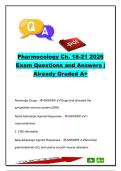
Pharmocology Ch. 18-21 2026
Exam Questions and Answers |
Already Graded A+


Adrenergic Drugs - ANSWER ✔✔Drugs that stimulate the

sympathetic nervous system (SNS)


Alpha-Adrenergic Agonist Responses - ANSWER ✔✔1.

vasoconstriction

2. CNS stimulation


Beta-Adrenergic Agonist Responses - ANSWER ✔✔Bronchial,

gastrointestinal (GI), and uterine smooth muscle relaxation

, Glycogenolysis

Cardiac stimulation


Catecholamines - ANSWER ✔✔dopamine, norepinephrine,

epinephrine

A patient is experiencing bronchospasms after running half a mile. He

has several inhalers with him. Which one would be appropriate for

treatment at this time? - ANSWER ✔✔Albuterol


Adrenergic Drugs Contraindications - ANSWER ✔✔Allergy


Severe HTN


Alpha-adrenergic adverse effects - ANSWER ✔✔CNS


Headache, restlessness, excitement, insomnia, euphoria

Cardiovascular

Palpitations (dysrhythmias), tachycardia, vasoconstriction, hypertension

Other

Loss of appetite, dry mouth, nausea, vomiting, taste changes (rare)


Beta-adrenergic drugs adverse effects - ANSWER ✔✔Mild tremors,

headache, nervousness, dizziness

Increased heart rate, palpitations, fluctuations of blood pressure

Document information

Uploaded on
May 28, 2026
Number of pages
11
Written in
2025/2026
Type
Exam (elaborations)
Contains
Questions & answers
$18.99

Wrong document? Swap it for free Within 14 days of purchase and before downloading, you can choose a different document. You can simply spend the amount again.
Written by students who passed
Immediately available after payment
Read online or as PDF

Seller avatar
Reputation scores are based on the amount of documents a seller has sold for a fee and the reviews they have received for those documents. There are three levels: Bronze, Silver and Gold. The better the reputation, the more your can rely on the quality of the sellers work.
NinjaNerd
3.4
(76)
Sold
401
Followers
6
Items
15349
Last sold
1 day ago


Why students choose Stuvia

Created by fellow students, verified by reviews

Quality you can trust: written by students who passed their tests and reviewed by others who've used these notes.

Didn't get what you expected? Choose another document

No worries! You can instantly pick a different document that better fits what you're looking for.

Pay as you like, start learning right away

No subscription, no commitments. Pay the way you're used to via credit card and download your PDF document instantly.

Student with book image

“Bought, downloaded, and aced it. It really can be that simple.”

Alisha Student

Working on your references?

Create accurate citations in APA, MLA and Harvard with our free citation generator.

Working on your references?

Frequently asked questions

