,
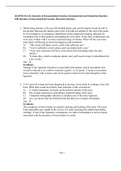
, Test Bank z!
to accompany
z!
Animal Behavior, Twelfth Edition z! z! z!
John Alcock, Linda Green, Paul Nolan, Stefanie Siller, and Dustin Rubenstein
z! z! z! z! z! z! z! z! z! z!
Chapter 1: An Introduction to Animal Behavior z! z! z! z! z! z!
Multiple Choice Questions z! z!
1. “If female lizards with reddish throats produce more eggs than females with orangish throats,
z! z! z! z! z! z! z! z! z! z! z! z! z! z!
then the reddish throat is an evolved adaptation.” This statement
z! z! z! z! z! z! z! z! z!
a. is true, because this species has variation, a critical requirement for the evolution of
z! z! z! z! z! z! z! z! z! z! z! z! z! z
adaptations by natural selection.
! z! z! z!
b. is false, because females with orangish throats could still have more offspring that live to
z! z! z! z! z! z! z! z! z! z! z! z! z! z! z!
reproduce than females with reddish throats.
z! z! z! z! z!
c. is false, because there is no guarantee that females with reddish throats are the best for the
z! z! z! z! z! z! z! z! z! z! z! z! z! z! z! z! z
long-term preservation of this species.
! z! z! z! z!
d. could be true or false, because we cannot tell without knowing whether reddish females
z! z! z! z! z! z! z! z! z! z! z! z! z! z
outnumber orangish females in this species.
! z! z! z! z! z!
Answer: b z!
Learning Objective: 1.1.1 Identify the conditions required to produce evolutionary change throug
z! z! z! z! z! z! z! z! z! z! z!
h natural selection and examine these conditions using the gene’s eye view.
z! z! z! z! z! z! z! z! z! z! z!
Bloom’s Level: 2. Understanding
z! z! z!
2. The statement “Lemmings disperse from areas of high population density because they
z! z! z! z! z! z! z! z! z! z! z! z!
inherited this ability from a lemming-like ancestor in the past” is a hypothesis about
z! z! z! z! z! z! z! z! z! z! z! z! z!
a. evolved function. z!
b. genetics and development. z! z!
c. evolutionary history. z!
d. adaptive value. z!
Answer: c z!
Learning Objective: 1.1.3 Consider how proximate and ultimate levels of analysis can be used to pro
z! z! z! z! z! z! z! z! z! z! z! z! z! z! z!
vide an integrative understanding of the development, mechanism, adaptive value, and evolutionary
z! z! z! z! z! z! z! z! z! z! z! z!
history of a behavior.
z! z! z!
Bloom’s Level: 2. Understanding
z! z! z!
3. The infanticide hypothesis, which posits that infanticide is a reproduction-
z! z! z! z! z! z! z! z! z!
enhancing tactic practiced by males, is called a hypothesis because it
z! z! z! z! z! z! z! z! z! z!
a. can be proven.
z! z!
b. is an explanation based on limited evidence that can be tested.
z! z! z! z! z! z! z! z! z! z!
c. is mutually exclusive to any other potential explanations.
z! z! z! z! z! z! z!
d. is a basic principle that can be applied widely.
z! z! z! z! z! z! z! z! z!
Answer: b z!
, Learning Objective: 1.1.2 Review how researchers use the scientific method to test hypotheses a
z! z! z! z! z! z! z! z! z! z! z! z! z!
nd predictions related to a potentially adaptive behavior in order to consider its fitness costs and
z! z! z! z! z! z! z! z! z! z! z! z! z! z! z! z!
benefits, evaluate its adaptive value, and identify why it evolved.
z! z! z! z! z! z! z! z! z!
Bloom’s Level: 2. Understanding z! z! z!
4. In order for Darwinian natural selection to cause evolutionary change, a population must
z! z! z! z! z! z! z! z! z! z! z! z! z
contain individuals that differ hereditarily in some characteristic because
! z! z! z! z! z! z! z! z!
a. in a population without this kind of variation, the species is doomed to extinction.
z! z! z! z! z! z! z! z! z! z! z! z! z!
b. when all individuals have the same genes, then all individuals are exactly alike in all respects.
z! z! z! z! z! z! z! z! z! z! z! z! z! z! z!
c. uniform populations are evolutionary dead ends. z! z! z! z! z!
d. unless there is variation of this sort, parents cannot pass on their advantageous attributes to
z! z! z! z! z! z! z! z! z! z! z! z! z! z! z!
their offspring. z!
Answer: d z!
Learning Objective: 1.1.1 Identify the conditions required to produce evolutionary change throug
z! z! z! z! z! z! z! z! z! z! z!
h natural selection and examine these conditions using the gene’s eye view.
z! z! z! z! z! z! z! z! z! z! z!
Bloom’s Level: 2. Understanding z! z! z!
5. We observe variation in a population of lizard with respect to how fast individuals can run.
z! z! z! z! z! z! z! z! z! z! z! z! z! z! z! z!
We attempt to select for the ability to run slowly, not quickly. After six generations of selective
z! z! z! z! z! z! z! z! z! z! z! z! z! z! z! z! z
breeding of only the slowest with the slowest, the mean running speed of the lizards has not ch
! z! z! z! z! z! z! z! z! z! z! z! z! z! z! z! z! z!
anged. What is the appropriate scientific conclusion based on this work?
z! z! z! z! z! z! z! z! z! z!
a. After six generations of artificial selection, the frequency of slow runners in the population has
z! z! z! z! z! z! z! z! z! z! z! z! z! z! z!
remained unchanged. z!
b. After six generations of artificial selection, the frequency of slow runners in the population has
z! z! z! z! z! z! z! z! z! z! z! z! z! z! z!
increased.
c. The differences between the lizards in running speed in the original population were not
z! z! z! z! z! z! z! z! z! z! z! z! z! z!
caused by genetic differences among them.
z! z! z! z! z!
d. The results are invalid because the researchers failed to maintain enough variation in running
z! z! z! z! z! z! z! z! z! z! z! z! z! z!
speed in their selected lineage, so evolutionary change was impossible.
z! z! z! z! z! z! z! z! z!
Answer: c z!
Learning Objective: 1.1.1 Identify the conditions required to produce evolutionary change throug
z! z! z! z! z! z! z! z! z! z! z!
h natural selection and examine these conditions using the gene’s eye view.
z! z! z! z! z! z! z! z! z! z! z!
Bloom’s Level: 3. Applying z! z! z!
6. We observe a frog that carries its babies on its back away from where the eggs hatched. Here
z! z! z! z! z! z! z! z! z! z! z! z! z! z! z! z! z! z!
are two questions about this observation:
z! z! z! z! z!
X. Does the frog do this to move the babies to a place where they will be safer and more likely to sur
z! z! z! z! z! z! z! z! z! z! z! z! z! z! z! z! z! z! z! z! z! z!
vive?
Y. Does the frog have specific morphological traits that enable it to hold and transfer its babies in
z! z! z! z! z! z! z! z! z! z! z! z! z! z! z! z! z! z!
this way? z!
Which of the two is a proximate question?
z! z! z! z! z! z! z!
a. X, because it considers the adaptive value or function of the trait
z! z! z! z! z! z! z! z! z! z! z!
b. Y, because it asks about the developmental mechanisms that influence the components of the
z! z! z! z! z! z! z! z! z! z! z! z! z! z
animal
!
, Test Bank z!
to accompany
z!
Animal Behavior, Twelfth Edition z! z! z!
John Alcock, Linda Green, Paul Nolan, Stefanie Siller, and Dustin Rubenstein
z! z! z! z! z! z! z! z! z! z!
Chapter 1: An Introduction to Animal Behavior z! z! z! z! z! z!
Multiple Choice Questions z! z!
1. “If female lizards with reddish throats produce more eggs than females with orangish throats,
z! z! z! z! z! z! z! z! z! z! z! z! z! z!
then the reddish throat is an evolved adaptation.” This statement
z! z! z! z! z! z! z! z! z!
a. is true, because this species has variation, a critical requirement for the evolution of
z! z! z! z! z! z! z! z! z! z! z! z! z! z
adaptations by natural selection.
! z! z! z!
b. is false, because females with orangish throats could still have more offspring that live to
z! z! z! z! z! z! z! z! z! z! z! z! z! z! z!
reproduce than females with reddish throats.
z! z! z! z! z!
c. is false, because there is no guarantee that females with reddish throats are the best for the
z! z! z! z! z! z! z! z! z! z! z! z! z! z! z! z! z
long-term preservation of this species.
! z! z! z! z!
d. could be true or false, because we cannot tell without knowing whether reddish females
z! z! z! z! z! z! z! z! z! z! z! z! z! z
outnumber orangish females in this species.
! z! z! z! z! z!
Answer: b z!
Learning Objective: 1.1.1 Identify the conditions required to produce evolutionary change throug
z! z! z! z! z! z! z! z! z! z! z!
h natural selection and examine these conditions using the gene’s eye view.
z! z! z! z! z! z! z! z! z! z! z!
Bloom’s Level: 2. Understanding
z! z! z!
2. The statement “Lemmings disperse from areas of high population density because they
z! z! z! z! z! z! z! z! z! z! z! z!
inherited this ability from a lemming-like ancestor in the past” is a hypothesis about
z! z! z! z! z! z! z! z! z! z! z! z! z!
a. evolved function. z!
b. genetics and development. z! z!
c. evolutionary history. z!
d. adaptive value. z!
Answer: c z!
Learning Objective: 1.1.3 Consider how proximate and ultimate levels of analysis can be used to pro
z! z! z! z! z! z! z! z! z! z! z! z! z! z! z!
vide an integrative understanding of the development, mechanism, adaptive value, and evolutionary
z! z! z! z! z! z! z! z! z! z! z! z!
history of a behavior.
z! z! z!
Bloom’s Level: 2. Understanding
z! z! z!
3. The infanticide hypothesis, which posits that infanticide is a reproduction-
z! z! z! z! z! z! z! z! z!
enhancing tactic practiced by males, is called a hypothesis because it
z! z! z! z! z! z! z! z! z! z!
a. can be proven.
z! z!
b. is an explanation based on limited evidence that can be tested.
z! z! z! z! z! z! z! z! z! z!
c. is mutually exclusive to any other potential explanations.
z! z! z! z! z! z! z!
d. is a basic principle that can be applied widely.
z! z! z! z! z! z! z! z! z!
Answer: b z!
, Learning Objective: 1.1.2 Review how researchers use the scientific method to test hypotheses a
z! z! z! z! z! z! z! z! z! z! z! z! z!
nd predictions related to a potentially adaptive behavior in order to consider its fitness costs and
z! z! z! z! z! z! z! z! z! z! z! z! z! z! z! z!
benefits, evaluate its adaptive value, and identify why it evolved.
z! z! z! z! z! z! z! z! z!
Bloom’s Level: 2. Understanding z! z! z!
4. In order for Darwinian natural selection to cause evolutionary change, a population must
z! z! z! z! z! z! z! z! z! z! z! z! z
contain individuals that differ hereditarily in some characteristic because
! z! z! z! z! z! z! z! z!
a. in a population without this kind of variation, the species is doomed to extinction.
z! z! z! z! z! z! z! z! z! z! z! z! z!
b. when all individuals have the same genes, then all individuals are exactly alike in all respects.
z! z! z! z! z! z! z! z! z! z! z! z! z! z! z!
c. uniform populations are evolutionary dead ends. z! z! z! z! z!
d. unless there is variation of this sort, parents cannot pass on their advantageous attributes to
z! z! z! z! z! z! z! z! z! z! z! z! z! z! z!
their offspring. z!
Answer: d z!
Learning Objective: 1.1.1 Identify the conditions required to produce evolutionary change throug
z! z! z! z! z! z! z! z! z! z! z!
h natural selection and examine these conditions using the gene’s eye view.
z! z! z! z! z! z! z! z! z! z! z!
Bloom’s Level: 2. Understanding z! z! z!
5. We observe variation in a population of lizard with respect to how fast individuals can run.
z! z! z! z! z! z! z! z! z! z! z! z! z! z! z! z!
We attempt to select for the ability to run slowly, not quickly. After six generations of selective
z! z! z! z! z! z! z! z! z! z! z! z! z! z! z! z! z
breeding of only the slowest with the slowest, the mean running speed of the lizards has not ch
! z! z! z! z! z! z! z! z! z! z! z! z! z! z! z! z! z!
anged. What is the appropriate scientific conclusion based on this work?
z! z! z! z! z! z! z! z! z! z!
a. After six generations of artificial selection, the frequency of slow runners in the population has
z! z! z! z! z! z! z! z! z! z! z! z! z! z! z!
remained unchanged. z!
b. After six generations of artificial selection, the frequency of slow runners in the population has
z! z! z! z! z! z! z! z! z! z! z! z! z! z! z!
increased.
c. The differences between the lizards in running speed in the original population were not
z! z! z! z! z! z! z! z! z! z! z! z! z! z!
caused by genetic differences among them.
z! z! z! z! z!
d. The results are invalid because the researchers failed to maintain enough variation in running
z! z! z! z! z! z! z! z! z! z! z! z! z! z!
speed in their selected lineage, so evolutionary change was impossible.
z! z! z! z! z! z! z! z! z!
Answer: c z!
Learning Objective: 1.1.1 Identify the conditions required to produce evolutionary change throug
z! z! z! z! z! z! z! z! z! z! z!
h natural selection and examine these conditions using the gene’s eye view.
z! z! z! z! z! z! z! z! z! z! z!
Bloom’s Level: 3. Applying z! z! z!
6. We observe a frog that carries its babies on its back away from where the eggs hatched. Here
z! z! z! z! z! z! z! z! z! z! z! z! z! z! z! z! z! z!
are two questions about this observation:
z! z! z! z! z!
X. Does the frog do this to move the babies to a place where they will be safer and more likely to sur
z! z! z! z! z! z! z! z! z! z! z! z! z! z! z! z! z! z! z! z! z! z!
vive?
Y. Does the frog have specific morphological traits that enable it to hold and transfer its babies in
z! z! z! z! z! z! z! z! z! z! z! z! z! z! z! z! z! z!
this way? z!
Which of the two is a proximate question?
z! z! z! z! z! z! z!
a. X, because it considers the adaptive value or function of the trait
z! z! z! z! z! z! z! z! z! z! z!
b. Y, because it asks about the developmental mechanisms that influence the components of the
z! z! z! z! z! z! z! z! z! z! z! z! z! z
animal
!