

Stuvia.com - The Marketplace to Buy and Sell your Study Material
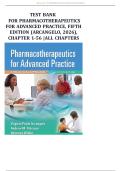
TEST BANK
FOR PHARMACOTHERAPEUTICS
FOR ADVANCED PRACTICE, FIFTH
EDITION (ARCANGELO, 2026),
CHAPTER 1-56 |ALL CHAPTERS
, Stuvia.com - The Marketplace to Buy and Sell your Study Material
46 allergies and allergic reactions
Table of contents 47 human immunodeficiency virus
48 organ transplantation
Unit 14 pharmacotherapy for
Unit 1 principles of therapeutics thromboembolic disorders
1 issues for the practitioner in drug therapy 49 thromboembolic disorders
2 pharmacokinetic basis of therapeutics and pharmacodynamic principles 50 anemias
3 impact of drug interactions and adverse events on therapeutics Unit 15 pharmacotherapy for health
4 principles of pharmacotherapy in pediatrics, pregnancy, and lactation promotion
5 pharmacotherapy principles in older adults 51 immunizations
6 principles of antimicrobial therapy 52 smoking cessation
7 pharmacogenomics 53 weight loss
8 the economics of pharmacotherapeutics Unit 16 pharmacotherapy for women’s
Unit 2 principles of pain management health
9 pharmacotherapy of pain management 54 contraception
10 pain management in opioid use disorder (oud) patients 55 menopause
11 cannabis and pain management 56 vaginitis
Unit 3 pharmacotherapy for skin disorders
12 contact dermatitis
13 fungal, viral, and bacterial infections of the skin
14 psoriasis
15 acne vulgaris and rosacea
Unit 4 pharmacotherapy for eye and ear disorders
16 ophthalmic disorders
17 otitis media and otitis externa
Unit 5 pharmacotherapy for cardiovascular disorders
18 hypertension
19 hyperlipidemia
20 chronic stable angina and myocardial infarction
21 heart failure
22 arrhythmias
Unit 6 pharmacotherapy for respiratory disorders
23 respiratory infections
24 asthma and chronic obstructive pulmonary disease
Unit 7 pharmacotherapy for gastrointestinal disorders
25 gastric, functional, and inflammatory bowel disorders
26 gastroesophageal reflux disease and peptic ulcer disease
27 liver diseases
Unit 8 pharmacotherapy for genitourinary tract disorders
28 urinary tract infection
29 prostatic disorders and erectile dysfunction
30 overactive bladder
31 sexually transmitted infections
Unit 9 pharmacology for musculoskeletal disorders
32 osteoarthritis and gout
33 osteoporosis
34 rheumatoid arthritis
Unit 10 pharmacotherapy for neurological disorders
35 headaches
36 seizure disorders
37 alzheimer’s disease
38 parkinson’s disease
Unit 11 pharmacotherapy for mental health disorders
39 major depressive disorder and bipolar disorders
40 anxiety disorders
41 sleep disorders
42 attention deficit hyperactivity disorder
43 substance use disorders
Unit 12 pharmacotherapy for endocrine disorders
44 diabetes mellitus
45 thyroid and parathyroid disorders
Unit 13 pharmacotherapy for immunology
, lO M oARcPSD| 21007
614
Stuvia.com - The Marketplace to Buy and Sell your Study Material
Lom oarcpsd| 21007614
chapter 1 issues for the practitioner in drug therapy
Multiple choice
1. Nurse practitioner prescriptive authority is regulated by:
A. The national council of state boards of nursing
B. The u.s. Drug enforcement administration
C. The state board of nursing for each state
D. The state board of pharmacyma
Ans: c pts: 1
2. Physician assistant (pa) prescriptive authority is regulated by:
A. The national council of state boards of nursing
B. The u.s. Drug enforcement administration
C. The state board of nursing
D. The state board of medical examiners
Ans: d pts: 1
3. Clinical judgment in prescribing includes:
A. Factoring in the cost to the patient of the medication prescribed
B. Always prescribing the newest medication available for the disease process
C. Handing out drug samples to poor patients
D. Prescribing all generic medications to cut costs
Ans: a pts: 1
4. Criteria for choosing an effective drug for a disorder include:
A. Asking the patient what drug they think would work best for them
B. Consulting nationally recognized guidelines for disease management
C. Prescribing medications that are available as samples before writing a prescription
D. Following u.s. Drug enforcement administration (dea)
guidelines for prescribing
Ans: b pts: 1
5. Nurse practitioner practice may thrive under health-care reform due to:
A. The demonstrated ability of nurse practitioners to control costs and
improve patient outcomes
B. The fact that nurse practitioners will be able to practice independently
C. The fact that nurse practitioners will have full reimbursement
under health-care reform
D. The ability to shift accountability for medicaid to the state level
Ans: a pts: 1
, lO M oARcPSD| 21007
614
Stuvia.com - The Marketplace to Buy and Sell your Study Material
chapter 2.pharmacokinetic basis of therapeutics and pharmacodynamic
Multiple choice
1. A patient's nutritional intake and lab work reflects hypoalbuminemia. This
is critical to prescribing because:
A. Distribution of drugs to target tissue may be affected
B. The solubility of the drug will not match the site of absorption
C. There will be less free drug available to generate an effect
D. Drugs bound to albumin are readily excreted by the kidney
Ans: a pts: 1
2. Drugs that have a significant first-pass effect:
A. Must be given by the enteral (oral) route only
B. Bypass the hepatic circulation
C. Are rapidly metabolized by the liver and may have little if any desired action
D. Are converted by the liver to more active and fat-soluble forms
Ans: c pts: 1
3. The route of excretion of a volatile drug will likely be:
A. The kidneys
B. The lungs
C. The bile and feces
D. The skin
Ans: b pts: 1
4. Medroxyprogesterone (depo provera) is prescribed im to create a storage
reservoir of the drug. Storage reservoirs:
A. Assure that the drug will reach its intended target tissue
B. Are the reason for giving loading doses
C. Increase the length of time a drug is available and active
D. Are most common in collagen tissues
Ans: c pts: 1
5. The np chooses to give cephalexin every 8 hours based on knowledge of the drug's:
A. Propensity to go to the target receptor
B. Biological half-life
C. Pharmacodynamics
D. Safety and side effects
Ans: b pts: 1
6. Azithromycin dosing requires the first day's dose be twice those of the other 4
days of the prescription. This is considered a loading dose. A loading dose:
A. Rapidly achieves drug levels in the therapeutic range
B. Requires four to five half-lives to attain
C. Is influenced by renal function
TEST BANK
FOR PHARMACOTHERAPEUTICS
FOR ADVANCED PRACTICE, FIFTH
EDITION (ARCANGELO, 2026),
CHAPTER 1-56 |ALL CHAPTERS
, Stuvia.com - The Marketplace to Buy and Sell your Study Material
46 allergies and allergic reactions
Table of contents 47 human immunodeficiency virus
48 organ transplantation
Unit 14 pharmacotherapy for
Unit 1 principles of therapeutics thromboembolic disorders
1 issues for the practitioner in drug therapy 49 thromboembolic disorders
2 pharmacokinetic basis of therapeutics and pharmacodynamic principles 50 anemias
3 impact of drug interactions and adverse events on therapeutics Unit 15 pharmacotherapy for health
4 principles of pharmacotherapy in pediatrics, pregnancy, and lactation promotion
5 pharmacotherapy principles in older adults 51 immunizations
6 principles of antimicrobial therapy 52 smoking cessation
7 pharmacogenomics 53 weight loss
8 the economics of pharmacotherapeutics Unit 16 pharmacotherapy for women’s
Unit 2 principles of pain management health
9 pharmacotherapy of pain management 54 contraception
10 pain management in opioid use disorder (oud) patients 55 menopause
11 cannabis and pain management 56 vaginitis
Unit 3 pharmacotherapy for skin disorders
12 contact dermatitis
13 fungal, viral, and bacterial infections of the skin
14 psoriasis
15 acne vulgaris and rosacea
Unit 4 pharmacotherapy for eye and ear disorders
16 ophthalmic disorders
17 otitis media and otitis externa
Unit 5 pharmacotherapy for cardiovascular disorders
18 hypertension
19 hyperlipidemia
20 chronic stable angina and myocardial infarction
21 heart failure
22 arrhythmias
Unit 6 pharmacotherapy for respiratory disorders
23 respiratory infections
24 asthma and chronic obstructive pulmonary disease
Unit 7 pharmacotherapy for gastrointestinal disorders
25 gastric, functional, and inflammatory bowel disorders
26 gastroesophageal reflux disease and peptic ulcer disease
27 liver diseases
Unit 8 pharmacotherapy for genitourinary tract disorders
28 urinary tract infection
29 prostatic disorders and erectile dysfunction
30 overactive bladder
31 sexually transmitted infections
Unit 9 pharmacology for musculoskeletal disorders
32 osteoarthritis and gout
33 osteoporosis
34 rheumatoid arthritis
Unit 10 pharmacotherapy for neurological disorders
35 headaches
36 seizure disorders
37 alzheimer’s disease
38 parkinson’s disease
Unit 11 pharmacotherapy for mental health disorders
39 major depressive disorder and bipolar disorders
40 anxiety disorders
41 sleep disorders
42 attention deficit hyperactivity disorder
43 substance use disorders
Unit 12 pharmacotherapy for endocrine disorders
44 diabetes mellitus
45 thyroid and parathyroid disorders
Unit 13 pharmacotherapy for immunology
, lO M oARcPSD| 21007
614
Stuvia.com - The Marketplace to Buy and Sell your Study Material
Lom oarcpsd| 21007614
chapter 1 issues for the practitioner in drug therapy
Multiple choice
1. Nurse practitioner prescriptive authority is regulated by:
A. The national council of state boards of nursing
B. The u.s. Drug enforcement administration
C. The state board of nursing for each state
D. The state board of pharmacyma
Ans: c pts: 1
2. Physician assistant (pa) prescriptive authority is regulated by:
A. The national council of state boards of nursing
B. The u.s. Drug enforcement administration
C. The state board of nursing
D. The state board of medical examiners
Ans: d pts: 1
3. Clinical judgment in prescribing includes:
A. Factoring in the cost to the patient of the medication prescribed
B. Always prescribing the newest medication available for the disease process
C. Handing out drug samples to poor patients
D. Prescribing all generic medications to cut costs
Ans: a pts: 1
4. Criteria for choosing an effective drug for a disorder include:
A. Asking the patient what drug they think would work best for them
B. Consulting nationally recognized guidelines for disease management
C. Prescribing medications that are available as samples before writing a prescription
D. Following u.s. Drug enforcement administration (dea)
guidelines for prescribing
Ans: b pts: 1
5. Nurse practitioner practice may thrive under health-care reform due to:
A. The demonstrated ability of nurse practitioners to control costs and
improve patient outcomes
B. The fact that nurse practitioners will be able to practice independently
C. The fact that nurse practitioners will have full reimbursement
under health-care reform
D. The ability to shift accountability for medicaid to the state level
Ans: a pts: 1
, lO M oARcPSD| 21007
614
Stuvia.com - The Marketplace to Buy and Sell your Study Material
chapter 2.pharmacokinetic basis of therapeutics and pharmacodynamic
Multiple choice
1. A patient's nutritional intake and lab work reflects hypoalbuminemia. This
is critical to prescribing because:
A. Distribution of drugs to target tissue may be affected
B. The solubility of the drug will not match the site of absorption
C. There will be less free drug available to generate an effect
D. Drugs bound to albumin are readily excreted by the kidney
Ans: a pts: 1
2. Drugs that have a significant first-pass effect:
A. Must be given by the enteral (oral) route only
B. Bypass the hepatic circulation
C. Are rapidly metabolized by the liver and may have little if any desired action
D. Are converted by the liver to more active and fat-soluble forms
Ans: c pts: 1
3. The route of excretion of a volatile drug will likely be:
A. The kidneys
B. The lungs
C. The bile and feces
D. The skin
Ans: b pts: 1
4. Medroxyprogesterone (depo provera) is prescribed im to create a storage
reservoir of the drug. Storage reservoirs:
A. Assure that the drug will reach its intended target tissue
B. Are the reason for giving loading doses
C. Increase the length of time a drug is available and active
D. Are most common in collagen tissues
Ans: c pts: 1
5. The np chooses to give cephalexin every 8 hours based on knowledge of the drug's:
A. Propensity to go to the target receptor
B. Biological half-life
C. Pharmacodynamics
D. Safety and side effects
Ans: b pts: 1
6. Azithromycin dosing requires the first day's dose be twice those of the other 4
days of the prescription. This is considered a loading dose. A loading dose:
A. Rapidly achieves drug levels in the therapeutic range
B. Requires four to five half-lives to attain
C. Is influenced by renal function


