Written by students who passed Immediately available after payment Read online or as PDF Wrong document? Swap it for free 4.6 TrustPilot
logo-home
Exam (elaborations)

HED4813 Assignment 2 (ANSWERS) 2026 - Due June 2026

Rating
3.0
(1)
Sold
1
Pages
19
Grade
A+
Uploaded on
21-05-2026
Written in
2025/2026

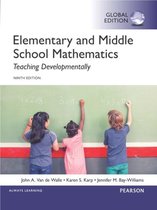
HED4813 Assignment 2 (ANSWERS) 2026 - Due June 2026. Guaranteed distinction quality with trusted academic solutions, clear explanations, professional formatting, and reliable support.... Read each question carefully and select the one correct answer from the options provided (A–D). 1.1. In Learning Unit 1, problem solving in mathematics education is best described as: A. The ability to apply memorised formulas correctly B. A higher order cognitive process that involves reasoning and decision making C. Completing word problems at the end of an exercise D. Following a prescribed routine procedure (2) 1.2. According to CAPS, which percentage of formal assessment tasks should assess problem solving at the highest cognitive level? A. 45% B. 30% C. 20% D. 10% (2) 1.3. Which of the following is NOT a characteristic of mathematical problem solving at the highest cognitive level? A. The problem is non routine B. The problem is necessarily difficult C. The problem often requires decomposition D. The problem demands higher order thinking (2) 1.4. Which statement best explains why finding the correct answer alone is insufficient to demonstrate understanding? A. Learners may memorise procedures without conceptual insight B. Correct answers eliminate the need for justification C. Teachers prioritise speed over reasoning D. Correct answers guarantee transfer to new contexts (2) 1.5. In Learning Unit 1, word problems are criticised mainly because they: A. Always test problem-solving skills B. Focus too heavily on abstract reasoning C. Often test language proficiency instead of mathematical understanding D. Are unsuitable for assessment (2) 1.6. Problem solving as a mathematical action refers to: A. A fixed algorithmic procedure B. The cognitive level of recall C. A systematic process of reasoning through a problem D. Reproducing learnt examples (2) 1.7. Which distinction is emphasised in Learning Unit 1 regarding problem solving? A. Problem solving vs calculation B. Problem solving as process vs problem solving as cognitive level C. Teacher led vs learner led problem solving D. Formal vs informal problem solving (2) 1.8. Problem solving in mathematics education should be: A. Restricted to gifted learners B. Taught as an isolated topic C. Integrated into all content areas D. Practised only after mastery (2) 1.9. According to Polya, what is the first phase of problem solving? A. Devising a plan B. Carrying out the plan C. Understanding the problem D. Reviewing the solution (2) 1.10. Which phase of Polya’s model focuses on selecting strategies and methods? A. Understanding the problem B. Devising a plan C. Carrying out the plan D. Looking back (2) 1.11. Which of the following activities best aligns with the “looking back” phase? A. Identifying relevant data B. Checking the correctness of calculations C. Drawing a diagram D. Writing down known formulas (2) 1.12. Polya’s model is still relevant today mainly because it: A. Applies only to algebra B. Emphasises memorisation C. Supports metacognitive reflection D. Eliminates learner errors (2) 1.13. Which strategy is most appropriate during the “understanding the problem” phase? A. Performing calculations B. Seeking similar previously solved problems C. Asking clarifying questions D. Applying a formula (2) 1.14. According to Learning Unit 1, one limitation of treating Polya’s steps rigidly is that: A. It discourages discussion B. It ignores learner diversity C. It assumes a single problem-solving pathway D. It eliminates modelling (2) 1.15. Which modern educational emphasis does Polya's work support? A. Examination driven teaching B. Transmission teaching C. Constructivist learning D. Behaviourist reinforcement (2) 1.16. A problem centred mathematics classroom is characterised primarily by: A. Teacher explanations B. Learners engaging with meaningful problems C. Frequent testing D. Drill and practice (2) 1.17. Mathematical modelling is best defined as: A. Manipulating physical objects B. Translating real world situations into mathematical representations C. Drawing diagrams only D. Using technology in lessons (2) 1.18. Which step is essential in the mathematical modelling process? A. Guessing the correct answer B. Making assumptions C. Memorising formulas D. Copying examples (2) 1.19. According to Hartono (2020), mathematical modelling primarily supports the development of: A. Routine procedural fluency B. Examination performance C. Real-world problem-solving competence D. Teacher control (2) 1.20. Which representation is NOT a valid mathematical model according to Learning Unit 1? A. Physical model B. Mental image C. Pen and paper diagram D. Memorised formula without context (2) 1.21. One essential characteristic of effective mathematical models is that they are: A. Linear and fixed B. Cyclic and iterative C. Teacher controlled D. Independent of context (2) 1.22. In modelling, horizontal mathematisation refers to: A. Formal symbolic reasoning B. Learners’ informal problem-solving strategies C. Teacher demonstrations D. Assessment standardisation (2) 1.23. Vertical mathematisation involves: A. Returning to concrete materials B. Formalising learners’ informal reasoning C. Guess and check strategies D. Physical manipulation only (2) 1.24. A teacher centred teaching style is characterised by: A. Learner autonomy B. Teacher as authority and knowledge source C. Peer collaboration D. Discovery learning (2) 1.25. Which teaching style integrates learner activity and teacher guidance equally? A. Authority style B. Subject centred style C. Interactive/participatory style D. Transmission style (2) 1.26. Teaching as transaction is most closely aligned with: A. Behaviourism B. Constructivism C. Formalism D. Examination driven teaching (2) 1.27. Which learning preference is dominant when learners need to talk through a problem to understand it? A. Visual B. Kinaesthetic C. Auditory D. Reading/writing (2) 1.28. According to Piaget, learners who rely heavily on physical manipulatives are most likely in the: A. Formal operational stage B. Preoperational stage C. Concrete operational stage D. Sensorimotor stage (2) 1.29. Learning Unit 1 suggests that effective teaching styles should: A. Be consistent across all classes B. Match learners’ cognitive development and preferences C. Avoid modelling D. Emphasise silence and discipline only (2) 1.30. Which factor does NOT significantly influence learning styles? A. Cognitive development B. Personality C. Real life exposure D. Examination timetable (2) [60] Question 2 In not more than 1500 words, critically discuss the relationship between cognition and modelling, drawing from the cognitive modelling of the learning process and the subjective perception of cognition. Furthermore, investigate the role of modelling in the formulation of pedagogical content knowledge, considering the perspectives presented in the textbook 'Elementary and Middle School Mathematics: Teaching Developmentally' by Van De Walle, JA. (2013) and its impact on teacher knowledge and learner learning.

Show more Read less
Institution
Course

Content preview

HED4813
Assignement 2 2026
Unique number: 862308
Due date: June 2026
QUESTION 1


1.1. In Learning Unit 1, problem solving in mathematics education is best
described as:
A. The ability to apply memorised formulas correctly
B. A higher order cognitive process that involves reasoning and decision making
C. Completing word problems at the end of an exercise
D. Following a prescribed routine procedure
Explanation: Problem-solving involves reasoning, decision-making, and higher-order
thinking beyond routine calculations .


1.2. According to CAPS, which percentage of formal assessment tasks should
assess problem solving at the highest cognitive level?

,QUESTION 1


1.1. In Learning Unit 1, problem solving in mathematics education is best
described as:
A. The ability to apply memorised formulas correctly
B. A higher order cognitive process that involves reasoning and decision
making
C. Completing word problems at the end of an exercise
D. Following a prescribed routine procedure
Explanation: Problem-solving involves reasoning, decision-making, and higher-
order thinking beyond routine calculations .


1.2. According to CAPS, which percentage of formal assessment tasks
should assess problem solving at the highest cognitive level?
A. 45%
B. 30%
C. 20%
D. 10%
Explanation: CAPS specifies that 10% of assessments should target the
problem-solving cognitive level, emphasizing higher-order thinking rather than
procedural fluency .


1.3. Which of the following is NOT a characteristic of mathematical
problem solving at the highest cognitive level?
A. The problem is non routine
B. The problem is necessarily difficult
C. The problem often requires decomposition

, D. The problem demands higher order thinking
Explanation: High-level problems are not necessarily difficult; they are unseen,
non-routine, and require reasoning .


1.4. Which statement best explains why finding the correct answer alone is
insufficient to demonstrate understanding?
A. Learners may memorise procedures without conceptual insight
B. Correct answers eliminate the need for justification
C. Teachers prioritise speed over reasoning
D. Correct answers guarantee transfer to new contexts
Explanation: Understanding requires reasoning and conceptual insight, not just
memorised answers .


1.5. In Learning Unit 1, word problems are criticised mainly because they:
A. Always test problem-solving skills
B. Focus too heavily on abstract reasoning
C. Often test language proficiency instead of mathematical understanding
D. Are unsuitable for assessment
Explanation: Word problems can unintentionally assess language skills rather
than purely mathematical reasoning .


1.6. Problem solving as a mathematical action refers to:
A. A fixed algorithmic procedure
B. The cognitive level of recall
C. A systematic process of reasoning through a problem
Connected book

Written for

Institution
Course

Document information

Uploaded on
May 21, 2026
Number of pages
19
Written in
2025/2026
Type
Exam (elaborations)
Contains
Questions & answers

Subjects

$4.76
Get access to the full document:

Wrong document? Swap it for free Within 14 days of purchase and before downloading, you can choose a different document. You can simply spend the amount again.
Written by students who passed
Immediately available after payment
Read online or as PDF

Reviews from verified buyers

Showing all reviews
1 month ago

3.0

1 reviews

5
0
4
0
3
1
2
0
1
0
Trustworthy reviews on Stuvia

All reviews are made by real Stuvia users after verified purchases.

Get to know the seller

Seller avatar
Reputation scores are based on the amount of documents a seller has sold for a fee and the reviews they have received for those documents. There are three levels: Bronze, Silver and Gold. The better the reputation, the more your can rely on the quality of the sellers work.
Gradify University of South Africa (Unisa)
Follow You need to be logged in order to follow users or courses
Sold
154
Member since
1 month
Number of followers
0
Documents
72
Last sold
10 hours ago

4.2

29 reviews

5
21
4
1
3
3
2
1
1
3

Recently viewed by you

Why students choose Stuvia

Created by fellow students, verified by reviews

Quality you can trust: written by students who passed their tests and reviewed by others who've used these notes.

Didn't get what you expected? Choose another document

No worries! You can instantly pick a different document that better fits what you're looking for.

Pay as you like, start learning right away

No subscription, no commitments. Pay the way you're used to via credit card and download your PDF document instantly.

Student with book image

“Bought, downloaded, and aced it. It really can be that simple.”

Alisha Student

Working on your references?

Create accurate citations in APA, MLA and Harvard with our free citation generator.

Working on your references?

Frequently asked questions