Peace Movements: Anti-War Movement
Context
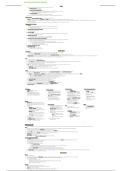
• Started on US university campuses and then spread to other sector of US society.
• Student Peace Union (SPU) 1959-1964:
- Wanted US society restructured.
• Students for a Democratic Society (SDS) 1960:
- Supported Johnson's 'Great Society' initiative, so initially didn't want to protest against him and the war
- Participated in CRM actions and later used CRM tactics to protest the war
• Free Speech Movement (FSM) 1964:
- Savio spoke of dangers of the link between academia and military.
• Before the Vietnam War, the peace movements were small and not widely participated in (largely Quaker-based)
Who was Involved?
• Comprised of several independent groupings united by their opposition to the war:
• Alliances between different groups were temporary and strategic. Alliance did not imply that groups followed the same ideologies in other areas.
• Protestors included: Students, conscientious objectors, academics, war veterans, members of the middle class, trade unions, creatives (authors, musicians and actors_, CRM & BPM activists, soldiers in Vietnam, women and
government institutions.
• Many groups loosely affiliated to the war were anti-authoritarian and, despite all being against the war, their ideologies were unclear.
Why Opposition to War Increased
1. The Draft:
• Young men conscripted once a month to fight. Many were reluctant (increasing death toll).
• 1964-1968: 300 000 drafted per year.
• War affected the youth personally: Friends killed/ injured and fear instilled of a similar fate.
2. Increasing number of US troops and casualties:
• 1967: Over 11 000 US troops died.
• 1968: 16 500 died.
3. Unfair conscriptions:
• Poor people and African Americans could not defer conscription like the wealthy could (couldn't go to university/emigrate).
• 80% of those conscripted were black/poor.
4. Opposition to expense of war:
• Amount spent on war seen as diverted from the promised 'Great Society'.
• Billions spent on war that could have been used on reducing US poverty.
5. Questioning premise of US involvement and unethical tactics
• War seen as racist and perpetuated by a Superpower against a fragile peasant nation just struggling for self-determination.
• War seen as pointless, unjust and unnecessary.
• US war tactics regarded as reprehensible and media coverage started showing this.
§ More conventional bombs were dropped on Vietnam than dropped on Europe and Asia together in WW2.
§ Civilians killed from heavy bombardment.
§ Use of chemicals like napalm was very controversial.
6. US became increasingly unable to win.
7. Loss of soldier morale:
• About 20% of new recruits deserted.
• Drug use increased (marijuana and heroin)
Methods / Actions
General tactics
• Protests usually peaceful as they were based on CRM. However, some protestors strayed away from non-violence.
• E.g. Protestors resisted arrested and stormed at police from behind street barricades.
• E.g. Students protesting at the Uni of Michigan against Dow Chemical used violence in response to police attacking them with Mace & clubs.
• Protests included: Targeting of Dow Chemical, rallies, speeches, lobbying members of Congress, civil disobedience, draft dodging, teach-ins involving academics and students, self-immolation in the US, legal demonstrations in the
streets and on campuses, providing medical assistance to Vietnamese citizens, anti-war concerts, hunger strikes
1965
-Anti- war movement grew after war escalated.
•Feb-Mar 1965: SDS marched to Oakland Army Terminal.
•Mar 1965: Teach-ins staged by faculty at Univ. of Michigan to question moral & political basis. - Approach increased faculty-involvement as it was copied on other campuses.
•Mar: 82 year old Alice Jeanette Strauss was first person to self-immolate against the war.
•Nov: Norman Morrison self-immolated at the Pentagon.
•April: 15 000 - 25 000 gathered in Washington against war. (long-standing pacifists disliked lack of criticism on Ho Chi Minh's communism).
• Largest anti-war movement to date and encouraged larger more ambitious protests.
• Oct: Vietnam Day - Conference held at Berkely to debate moral basis of war.
• Nov: Vietnam Day Committee: 40 000 marched from White House to Lincoln Memorial against war.
1966-68
• Organisations established to focus spreading information on protests: - Underground Press Syndicate (1966) and Liberation News Services (1967).
• Thousands wrote to Robert McNamara - Secretary of Defense - argued that conscientious objectors should have right to refuse conscription.
• 1967: 2-day march with 30 000 people to the Pentagon gained widespread media coverage (organised by the National Mobilisation Committee to End the war in Vietnam - MOBE))
• Organised by a coalition of 150 groups - included pacifists, old and new left, young people & CRM activists.
• Poet Robert Lowell and linguist/political analyst Noam Chomsky attended - clear display of the movement's diversity.
• Author Norman Mailer attended and wrote about it in his much-read book, Armies in the Night.
• CRM activist Abbie Hoffman had said that he would levitate and exorcise the Pentagon
• 1967: Stop the Draft week: 10 000 protested in Oakland - clashed with police.
• 1967: Human be-in: 30 000 people came together against the war. Was a hippy happening.
• Oct and Nov 1967: Of 71 student protests on 62 campuses, 27 targeted Dow Chemical.
• 1968: Students from Harvard, Radcliffe and Boston University staged a 40 day hunger strike against the war.
• Harvard Law School professor Alan Dershowitz set up a cause on how to legally resist the war.
• 500 law professors petitioned for all others in legal professions to oppose the war.
Draft Dodgers Martin Luther King Yippes - Youth International Party
• Emigrated to Canada or Sweden. Veterans and Soldiers • Criticised expense of war. • 1967: Assisted with march on
• Burnt draft cards. • Soldiers in Vietnam opposed war - some • Criticised disproportionate number of Pentagon.
• Spock (peediatrician) and Coffin (Yale refused to follow orders, drew peace African Americans being drafted: At only • 1968: Suggested a pig as a
chaplain) led the challenge to the draft symbols on their helmets and fragging of 10% of the population, 21% of those drafted candidate during the presidential
and were indicted with conspiring men to officers occurred. were African Americans election.
advise men on how to violate draft law). • Formed: Vietnam Veterans Against the • Commented on unjust nature of African • Anti-authoritarian,.
War (VVAW) Americans fighting for a country in which • Prominent advocates: Abbie
• Veterans not seen as heroic. they did not enjoy equal rights. Hoffman, Anita Hoffman and
• In 1971, over 1000 veterans threw their • His moral stand gained African American Jerry Rubin.
military medals at the Capitol in support for the anti-war movement (but • Yippies were more politically
Washington while denouncing the war. some in the CRM criticised him). active than hippies
• His stance helped spread movement
Celebrities beyond university campuses.
• Muhammed Ali: Stripped of his world boxing tittle for • 1967: King led 1 march in Chicago (2000
refusing the draft. He exclaimed how he had no ill feeling marchers) and 1 in New York against war.
towards the Vietnamese because they did not use racial Government Bodies Women
slurs against him. • Congress & Senate representatives started CRM • 1968: March by 5000 women
• Musicians: openly questioning US prospects in war. • SNCC joined teach-ins. led by Jeannette Rankin (first
- Pete Seeger produced protest songs. • 8 Feb 1968: Robert Kennedy gave the • King and Carmichael spoke out against woman representative in US
- Joan Baez & Bob Dylan: Songs of political and 'Unwinnable Speech" after the Tet Offense - war. Congress)
personal freedom grew in popularity (e.g. Masters of Argued US had no realistic prospect of
War and With God on Our Side) winning the war.
- Woodstock Festival Businessmen
• Some within Johnson's administration began • Wall Street brokers advertised
- Songs released in response to on-going war and questioning the war:
Kent State shootings (by band: Crosby, Stills, Nash in newspapers how peace would
- McNamara (US Defense Secretary) benefit investors.
and Young). fired after voicing concerns on war's
- 1969-1974: 26 anti-war songs made US charts • 1968: At a Chamber of
moral basis. Commerce dinner - most diners
• Jane Fonda, Allen Ginsberg, Timothy Leary among others - Others concerned about escalating
actively protested. indicated they were against the
cost. war.
- Fonda posed with North Vietnamese troops. • By 1968: Clear signs of opposition in
• 1968 Broadway for Peace: Many stars performed in New government circles.
York (e.g. Barbra Streisand & Paul Newman)
Tet Offensive: Jan-Sep 1968
What the Tet Offense was:
- North Vietnamese forces launched a coordinated attack against a number of targets in South Vietnam. The U.S. and South Vietnamese militaries sustained heavy losses before finally repelling the communist assault.
Impact
• Military failure for North (as half of force was lost) but media success for anti-war movement: US forces seen panicked and confused from unexpected attack.
• More Americans became alarmed by the credibility gap and more questions were raised.
• Increased realisation that government was lying and their glowing account was overly sanitised.
• Afterwards, half of citizens polled were against escalation and wanted troops to return: Shows both the support of movement & the growing divide in US society.
• April 1968: Protestors took over Columbia Uni's administration building - forcibly removed by police.
• Draft boards attacked - blood smeared and documents shredded.
• Dow Chemicals was sabotaged
• Aug 1968: Demonstrators at Democratic National Convention violently removed by police.
Further Growth of Movement 1969-1973
• 1969: 500 000 marched in Washington DC
- Strong hippie presence, with nonconformist habits of drugs and casual sex, and youth rallies like Woodstock alienated mainstream Americans from the movement.
• 1970: Movement united again following My Lai Massacre.
• Protests against Nixon sending troops to Cambodia.
• Murders on US soil:
○ 4 May 1970: Kent State University shooting:
§ 4 students dead, 16 injured.
§ Students had been protesting against extension of the war into Cambodia and were fired at by the National Guard.
§ In response, over 400 universities closed and 2 million students went on strike.
○ 14 May 1970: 2 black students killed and others injured at Jackson State College- less media attention though..
- Impact: Heightened movement - Nobel Science Laureates, State Department officers & US Civil Liberties Union joined.
• 1971: Pentagon Papers exposed by Daniel Ellsberg and Newspapers: Revealed truth about the war (e.g. random bombings and drug trafficking) and lost further credibility for US military and government.
• As Nixon lost face, the anti-war movement gained credibility.
Extent of Success
Failures
• Little concrete victories.
• Nixon, who had won on the basis of Vietnamisation, a withdrawal of US troops and decreased US involvement, did not fulfil his promises and sent troops to Cambodia,
• Failed to change many Americans views on the war and on the protestors. Many saw protestors as unpatriotic.
• Little impact between 1965-1970.
- Media deemed protestors as radical.
- 1965-1970: Only 76 of 2300 news programmes aired footage of dead/injured soldiers - found it upsetting.
- By 1968, only 28% of Americans actively opposed the war.
- Johnson kept sending more troops.
Successes
• Can be argued that government took notice of protests.
• Number of protestors increased after media reports from Tet Offensive.
• Johnson chose to not seek re-election.
• Nixon won 1968 elections on basis of 'bringing the boys home' = response to anti-war movement.
• Protests played a role in the ultimate withdrawal from Vietnam, Laos and Cambodia in 1973.
Context
• Started on US university campuses and then spread to other sector of US society.
• Student Peace Union (SPU) 1959-1964:
- Wanted US society restructured.
• Students for a Democratic Society (SDS) 1960:
- Supported Johnson's 'Great Society' initiative, so initially didn't want to protest against him and the war
- Participated in CRM actions and later used CRM tactics to protest the war
• Free Speech Movement (FSM) 1964:
- Savio spoke of dangers of the link between academia and military.
• Before the Vietnam War, the peace movements were small and not widely participated in (largely Quaker-based)
Who was Involved?
• Comprised of several independent groupings united by their opposition to the war:
• Alliances between different groups were temporary and strategic. Alliance did not imply that groups followed the same ideologies in other areas.
• Protestors included: Students, conscientious objectors, academics, war veterans, members of the middle class, trade unions, creatives (authors, musicians and actors_, CRM & BPM activists, soldiers in Vietnam, women and
government institutions.
• Many groups loosely affiliated to the war were anti-authoritarian and, despite all being against the war, their ideologies were unclear.
Why Opposition to War Increased
1. The Draft:
• Young men conscripted once a month to fight. Many were reluctant (increasing death toll).
• 1964-1968: 300 000 drafted per year.
• War affected the youth personally: Friends killed/ injured and fear instilled of a similar fate.
2. Increasing number of US troops and casualties:
• 1967: Over 11 000 US troops died.
• 1968: 16 500 died.
3. Unfair conscriptions:
• Poor people and African Americans could not defer conscription like the wealthy could (couldn't go to university/emigrate).
• 80% of those conscripted were black/poor.
4. Opposition to expense of war:
• Amount spent on war seen as diverted from the promised 'Great Society'.
• Billions spent on war that could have been used on reducing US poverty.
5. Questioning premise of US involvement and unethical tactics
• War seen as racist and perpetuated by a Superpower against a fragile peasant nation just struggling for self-determination.
• War seen as pointless, unjust and unnecessary.
• US war tactics regarded as reprehensible and media coverage started showing this.
§ More conventional bombs were dropped on Vietnam than dropped on Europe and Asia together in WW2.
§ Civilians killed from heavy bombardment.
§ Use of chemicals like napalm was very controversial.
6. US became increasingly unable to win.
7. Loss of soldier morale:
• About 20% of new recruits deserted.
• Drug use increased (marijuana and heroin)
Methods / Actions
General tactics
• Protests usually peaceful as they were based on CRM. However, some protestors strayed away from non-violence.
• E.g. Protestors resisted arrested and stormed at police from behind street barricades.
• E.g. Students protesting at the Uni of Michigan against Dow Chemical used violence in response to police attacking them with Mace & clubs.
• Protests included: Targeting of Dow Chemical, rallies, speeches, lobbying members of Congress, civil disobedience, draft dodging, teach-ins involving academics and students, self-immolation in the US, legal demonstrations in the
streets and on campuses, providing medical assistance to Vietnamese citizens, anti-war concerts, hunger strikes
1965
-Anti- war movement grew after war escalated.
•Feb-Mar 1965: SDS marched to Oakland Army Terminal.
•Mar 1965: Teach-ins staged by faculty at Univ. of Michigan to question moral & political basis. - Approach increased faculty-involvement as it was copied on other campuses.
•Mar: 82 year old Alice Jeanette Strauss was first person to self-immolate against the war.
•Nov: Norman Morrison self-immolated at the Pentagon.
•April: 15 000 - 25 000 gathered in Washington against war. (long-standing pacifists disliked lack of criticism on Ho Chi Minh's communism).
• Largest anti-war movement to date and encouraged larger more ambitious protests.
• Oct: Vietnam Day - Conference held at Berkely to debate moral basis of war.
• Nov: Vietnam Day Committee: 40 000 marched from White House to Lincoln Memorial against war.
1966-68
• Organisations established to focus spreading information on protests: - Underground Press Syndicate (1966) and Liberation News Services (1967).
• Thousands wrote to Robert McNamara - Secretary of Defense - argued that conscientious objectors should have right to refuse conscription.
• 1967: 2-day march with 30 000 people to the Pentagon gained widespread media coverage (organised by the National Mobilisation Committee to End the war in Vietnam - MOBE))
• Organised by a coalition of 150 groups - included pacifists, old and new left, young people & CRM activists.
• Poet Robert Lowell and linguist/political analyst Noam Chomsky attended - clear display of the movement's diversity.
• Author Norman Mailer attended and wrote about it in his much-read book, Armies in the Night.
• CRM activist Abbie Hoffman had said that he would levitate and exorcise the Pentagon
• 1967: Stop the Draft week: 10 000 protested in Oakland - clashed with police.
• 1967: Human be-in: 30 000 people came together against the war. Was a hippy happening.
• Oct and Nov 1967: Of 71 student protests on 62 campuses, 27 targeted Dow Chemical.
• 1968: Students from Harvard, Radcliffe and Boston University staged a 40 day hunger strike against the war.
• Harvard Law School professor Alan Dershowitz set up a cause on how to legally resist the war.
• 500 law professors petitioned for all others in legal professions to oppose the war.
Draft Dodgers Martin Luther King Yippes - Youth International Party
• Emigrated to Canada or Sweden. Veterans and Soldiers • Criticised expense of war. • 1967: Assisted with march on
• Burnt draft cards. • Soldiers in Vietnam opposed war - some • Criticised disproportionate number of Pentagon.
• Spock (peediatrician) and Coffin (Yale refused to follow orders, drew peace African Americans being drafted: At only • 1968: Suggested a pig as a
chaplain) led the challenge to the draft symbols on their helmets and fragging of 10% of the population, 21% of those drafted candidate during the presidential
and were indicted with conspiring men to officers occurred. were African Americans election.
advise men on how to violate draft law). • Formed: Vietnam Veterans Against the • Commented on unjust nature of African • Anti-authoritarian,.
War (VVAW) Americans fighting for a country in which • Prominent advocates: Abbie
• Veterans not seen as heroic. they did not enjoy equal rights. Hoffman, Anita Hoffman and
• In 1971, over 1000 veterans threw their • His moral stand gained African American Jerry Rubin.
military medals at the Capitol in support for the anti-war movement (but • Yippies were more politically
Washington while denouncing the war. some in the CRM criticised him). active than hippies
• His stance helped spread movement
Celebrities beyond university campuses.
• Muhammed Ali: Stripped of his world boxing tittle for • 1967: King led 1 march in Chicago (2000
refusing the draft. He exclaimed how he had no ill feeling marchers) and 1 in New York against war.
towards the Vietnamese because they did not use racial Government Bodies Women
slurs against him. • Congress & Senate representatives started CRM • 1968: March by 5000 women
• Musicians: openly questioning US prospects in war. • SNCC joined teach-ins. led by Jeannette Rankin (first
- Pete Seeger produced protest songs. • 8 Feb 1968: Robert Kennedy gave the • King and Carmichael spoke out against woman representative in US
- Joan Baez & Bob Dylan: Songs of political and 'Unwinnable Speech" after the Tet Offense - war. Congress)
personal freedom grew in popularity (e.g. Masters of Argued US had no realistic prospect of
War and With God on Our Side) winning the war.
- Woodstock Festival Businessmen
• Some within Johnson's administration began • Wall Street brokers advertised
- Songs released in response to on-going war and questioning the war:
Kent State shootings (by band: Crosby, Stills, Nash in newspapers how peace would
- McNamara (US Defense Secretary) benefit investors.
and Young). fired after voicing concerns on war's
- 1969-1974: 26 anti-war songs made US charts • 1968: At a Chamber of
moral basis. Commerce dinner - most diners
• Jane Fonda, Allen Ginsberg, Timothy Leary among others - Others concerned about escalating
actively protested. indicated they were against the
cost. war.
- Fonda posed with North Vietnamese troops. • By 1968: Clear signs of opposition in
• 1968 Broadway for Peace: Many stars performed in New government circles.
York (e.g. Barbra Streisand & Paul Newman)
Tet Offensive: Jan-Sep 1968
What the Tet Offense was:
- North Vietnamese forces launched a coordinated attack against a number of targets in South Vietnam. The U.S. and South Vietnamese militaries sustained heavy losses before finally repelling the communist assault.
Impact
• Military failure for North (as half of force was lost) but media success for anti-war movement: US forces seen panicked and confused from unexpected attack.
• More Americans became alarmed by the credibility gap and more questions were raised.
• Increased realisation that government was lying and their glowing account was overly sanitised.
• Afterwards, half of citizens polled were against escalation and wanted troops to return: Shows both the support of movement & the growing divide in US society.
• April 1968: Protestors took over Columbia Uni's administration building - forcibly removed by police.
• Draft boards attacked - blood smeared and documents shredded.
• Dow Chemicals was sabotaged
• Aug 1968: Demonstrators at Democratic National Convention violently removed by police.
Further Growth of Movement 1969-1973
• 1969: 500 000 marched in Washington DC
- Strong hippie presence, with nonconformist habits of drugs and casual sex, and youth rallies like Woodstock alienated mainstream Americans from the movement.
• 1970: Movement united again following My Lai Massacre.
• Protests against Nixon sending troops to Cambodia.
• Murders on US soil:
○ 4 May 1970: Kent State University shooting:
§ 4 students dead, 16 injured.
§ Students had been protesting against extension of the war into Cambodia and were fired at by the National Guard.
§ In response, over 400 universities closed and 2 million students went on strike.
○ 14 May 1970: 2 black students killed and others injured at Jackson State College- less media attention though..
- Impact: Heightened movement - Nobel Science Laureates, State Department officers & US Civil Liberties Union joined.
• 1971: Pentagon Papers exposed by Daniel Ellsberg and Newspapers: Revealed truth about the war (e.g. random bombings and drug trafficking) and lost further credibility for US military and government.
• As Nixon lost face, the anti-war movement gained credibility.
Extent of Success
Failures
• Little concrete victories.
• Nixon, who had won on the basis of Vietnamisation, a withdrawal of US troops and decreased US involvement, did not fulfil his promises and sent troops to Cambodia,
• Failed to change many Americans views on the war and on the protestors. Many saw protestors as unpatriotic.
• Little impact between 1965-1970.
- Media deemed protestors as radical.
- 1965-1970: Only 76 of 2300 news programmes aired footage of dead/injured soldiers - found it upsetting.
- By 1968, only 28% of Americans actively opposed the war.
- Johnson kept sending more troops.
Successes
• Can be argued that government took notice of protests.
• Number of protestors increased after media reports from Tet Offensive.
• Johnson chose to not seek re-election.
• Nixon won 1968 elections on basis of 'bringing the boys home' = response to anti-war movement.
• Protests played a role in the ultimate withdrawal from Vietnam, Laos and Cambodia in 1973.