

5/16/26, 12:27 PM NURS 5315: Advanced Pathophysiology 2026 UTA Exam 1 , comprehensive questions and verified answers || QUESTIONS WIT…
NURS 5315: Advanced Pathophysiology 2026 UTA
Exam 1 , comprehensive questions and verified
answers || QUESTIONS WITH ACCURATE
ANSWERS | GET IT RIGHT |2026!
Save
Terms in this set (138)
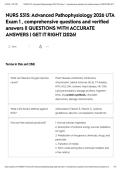
What can Reactive Oxygen Species Heart disease, Alzheimers, Parkinsons,
cause? Amyotrophic Lateral Sclerosis (ALS), CV disease,
HTN, HLD, DM, ischemic heart disease, HF, OSA.
Lipid perioxidation, damage proteins, fragment
DNA, less protein synthesis, chromatin
destruction, damage mitochondria
What is the body's defense against Antioxidants (Vitamin E, Vitamin C, cysteine,
ROS? glutathione, albumin, ceruloplasmin, transferrin)
How are free radicals produced? 1. Normal cellular respiration
2. Absorption of extreme energy sources (radiation,
UV light)
3. Metabolism of exogenous chemicals, drugs, and
pesticides
4. Transition of metals
5. Nitric oxide acting like a chemical mediator and
a free radical
https://quizlet.com/1180953117/nurs-5315-advanced-pathophysiology-2026-uta-exam-1-comprehensive-questions-and-verified-answers-questions-wi… 1/15
, 5/16/26, 12:27 PM NURS 5315: Advanced Pathophysiology 2026 UTA Exam 1 , comprehensive questions and verified answers || QUESTIONS WIT…
action potential Process of conducting an impulse. Activates the
neuron --> the neuron depolarizes --> then
repolarizes
Threshold potential Point at which depolarization must reach in order
to initiate an action potential
Hypokalemia and action potentials HYPERpolarized (more negative, ex. -100). Less
excitable. Decreased neuromuscular excitability:
weakness, smooth muscle atony, paresthesia,
cardiac dysrhythmias
Hyperkalemia and action potentials HYPOpolarized (more positive, ex: closer to 0).
More excitable. Peaked T waves.
When resting membrane potential=threshold
potential, it is BAD = cardiac standstill, paresthesia,
paralysis
Hypocalcemia and action potentials Increased permeability to Na+. More excitable.
Tetany, hyperreflexia, circumoral paresthesia,
seizures, dysrhythmias.
Hypercalcemia and action potentials Decreased permeability to Na+. Less excitable.
Weakness, hyporeflexia, fatigue, lethargy,
confusion, encephalopathy, depressed T waves
https://quizlet.com/1180953117/nurs-5315-advanced-pathophysiology-2026-uta-exam-1-comprehensive-questions-and-verified-answers-questions-wi… 2/15
NURS 5315: Advanced Pathophysiology 2026 UTA
Exam 1 , comprehensive questions and verified
answers || QUESTIONS WITH ACCURATE
ANSWERS | GET IT RIGHT |2026!
Save
Terms in this set (138)
What can Reactive Oxygen Species Heart disease, Alzheimers, Parkinsons,
cause? Amyotrophic Lateral Sclerosis (ALS), CV disease,
HTN, HLD, DM, ischemic heart disease, HF, OSA.
Lipid perioxidation, damage proteins, fragment
DNA, less protein synthesis, chromatin
destruction, damage mitochondria
What is the body's defense against Antioxidants (Vitamin E, Vitamin C, cysteine,
ROS? glutathione, albumin, ceruloplasmin, transferrin)
How are free radicals produced? 1. Normal cellular respiration
2. Absorption of extreme energy sources (radiation,
UV light)
3. Metabolism of exogenous chemicals, drugs, and
pesticides
4. Transition of metals
5. Nitric oxide acting like a chemical mediator and
a free radical
https://quizlet.com/1180953117/nurs-5315-advanced-pathophysiology-2026-uta-exam-1-comprehensive-questions-and-verified-answers-questions-wi… 1/15
, 5/16/26, 12:27 PM NURS 5315: Advanced Pathophysiology 2026 UTA Exam 1 , comprehensive questions and verified answers || QUESTIONS WIT…
action potential Process of conducting an impulse. Activates the
neuron --> the neuron depolarizes --> then
repolarizes
Threshold potential Point at which depolarization must reach in order
to initiate an action potential
Hypokalemia and action potentials HYPERpolarized (more negative, ex. -100). Less
excitable. Decreased neuromuscular excitability:
weakness, smooth muscle atony, paresthesia,
cardiac dysrhythmias
Hyperkalemia and action potentials HYPOpolarized (more positive, ex: closer to 0).
More excitable. Peaked T waves.
When resting membrane potential=threshold
potential, it is BAD = cardiac standstill, paresthesia,
paralysis
Hypocalcemia and action potentials Increased permeability to Na+. More excitable.
Tetany, hyperreflexia, circumoral paresthesia,
seizures, dysrhythmias.
Hypercalcemia and action potentials Decreased permeability to Na+. Less excitable.
Weakness, hyporeflexia, fatigue, lethargy,
confusion, encephalopathy, depressed T waves
https://quizlet.com/1180953117/nurs-5315-advanced-pathophysiology-2026-uta-exam-1-comprehensive-questions-and-verified-answers-questions-wi… 2/15


