

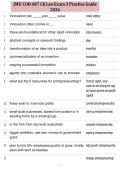
JMU COB 487 CK Lee Exam 3 Practice Guide
2026
1. Innovation can and value create; destroy
2. Innovation often comes in..... waves
3. these are foundational for other rapid innovation intial innovation
4. abstract concepts or research findings idea
5. transformation of an idea into a product invention
6. commercialization of an invention innovation
7. copying a successful innovation imitation
8. agents who undertake economic risk to innovate entrepreneurs
9. what are the 5 resources for entrepreneurship? Financial capital, social
weak-tie and strong-tie capi-
tal, human general and specific
capital
10. these exist to maximize profits commercial entrepreneurship
11. small scale businesses, started from scratch or in start-up entrepreneurship
existing firms by a small group
12. in the firm from top-level executives corporate entrepreneurship
13. bigger ambition, use own money or government aspiring entrepreneurship
grant
14. plan to hire 50+ employees quickly to grow, mostly high-growth entrepreneurship
seen with tech companies
15. strategic entrepreneurhsip
, JMU COB 487 CK Lee Exam 3 Practice Guide
2026
- pursuit of innovation using strategic tools and
concepts
- combining entrepreneurial actions
- creating new opportunities
- exploring existing opportunities
16. - the pursuit of social goals while creating profitable social entrepreneurship
businesses
- evaluate performance by financial, ecological, and
social contribution metrics
17. what are the 5 stages of the industry lifecycle? Introduction, Growth, Shake-
out, Maturity, Decline
18. - core competency: research and development Introduction stage
- barriers to entry are high
- strategic objective: market acceptance and future
growth
19. - demand increases rapidly Growth stage
- product and service standards emerge
- product innovation
- process innovation
20. new/recombined aspects of a product product innovation
21. new ways to produce a product process innovation
22. - the rate of growth declines Shakeout stage
- firms begin to intensely compete
- price is an important competitive weapon
23. - only a few large firms remain Maturity stage
- demand: replacement or repeat purchases
2026
1. Innovation can and value create; destroy
2. Innovation often comes in..... waves
3. these are foundational for other rapid innovation intial innovation
4. abstract concepts or research findings idea
5. transformation of an idea into a product invention
6. commercialization of an invention innovation
7. copying a successful innovation imitation
8. agents who undertake economic risk to innovate entrepreneurs
9. what are the 5 resources for entrepreneurship? Financial capital, social
weak-tie and strong-tie capi-
tal, human general and specific
capital
10. these exist to maximize profits commercial entrepreneurship
11. small scale businesses, started from scratch or in start-up entrepreneurship
existing firms by a small group
12. in the firm from top-level executives corporate entrepreneurship
13. bigger ambition, use own money or government aspiring entrepreneurship
grant
14. plan to hire 50+ employees quickly to grow, mostly high-growth entrepreneurship
seen with tech companies
15. strategic entrepreneurhsip
, JMU COB 487 CK Lee Exam 3 Practice Guide
2026
- pursuit of innovation using strategic tools and
concepts
- combining entrepreneurial actions
- creating new opportunities
- exploring existing opportunities
16. - the pursuit of social goals while creating profitable social entrepreneurship
businesses
- evaluate performance by financial, ecological, and
social contribution metrics
17. what are the 5 stages of the industry lifecycle? Introduction, Growth, Shake-
out, Maturity, Decline
18. - core competency: research and development Introduction stage
- barriers to entry are high
- strategic objective: market acceptance and future
growth
19. - demand increases rapidly Growth stage
- product and service standards emerge
- product innovation
- process innovation
20. new/recombined aspects of a product product innovation
21. new ways to produce a product process innovation
22. - the rate of growth declines Shakeout stage
- firms begin to intensely compete
- price is an important competitive weapon
23. - only a few large firms remain Maturity stage
- demand: replacement or repeat purchases


