

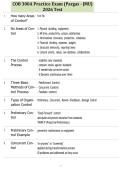
COB 300A Practice Exam (Pargas - JMU)
2026 Test
1. How many Areas 6 or Six
of Control?
2. Six Areas of Con- 1. Physical (building, equipment)
trol 2. HR (hire, productivity, culture, satisfaction)
3. Informational (forecasts, production, schedules)
4. Financial (funding, expenses, budget)
5. Structural (hierarchy, reporting lines)
6. Cultural (norms, values, law abidance, collaboration)
3. The Control - establish clear standards
Process - compare results against standards
- if needed take corrective action
- Is Dynamic (continuous over time)
4. Three Basic - Feedforward Control
Methods of Con- - Concurrent Control
trol Process - Feedback control
5. Types of Organi- Preliminary, Concurrent, Rework (Feedback), Damage Control
zation Control
6. Preliminary Con- "Feed-Forward" control
trol anticipate and prevent deviation from standards
THINK P (Proactive=Preliminary)
7. Preliminary Con- preventive maintenance on equipment
trol Example
8. Concurrent Con- "in-process" or "screening"
trol applied during transformation process
ID problems and addressed as they occur
, COB 300A Practice Exam (Pargas - JMU)
2026 Test
9. Concurrent Con- Sampling output from a production line
trol Example
10. Feedback Control fixing a defective output after produced
(or Rework Con- used as back up to prelim and concurrent fail
trol)
11. Feedback Control Touch up cars paint scratched during production or shipping
Example
12. Damage Control Actions to minimize negative impacts on stakeholders due to faulty outputs
13. Damage Control Recalls, Compensation
Example
14. Effective Control Controls should focus on key activities
Systems Must be Timely
Not likely to be 100% ettective or possible
May blind us to moral wisdom
Controls must be cost ettective
Should be accurate and precise
should be accepted by the people they attect
15. Standards Must Enable goal achievement
16. Benchmarking a process by which a company compares its performance with that of high-per-
forming organizations
17. Steps of Correc- - ID Performance Deviations
tive Action - Analyze Deviations
- Develop and Implement corrective programs
18. Regulation Costs the costs associated with implementing or maintaining control (is it worth it? what
is the value for the cost?)
, 19. Cybernetic Feasi- the extent to which it is possible to implement each step in the control process
bility
20. 5 Basic Methods Bureaucratic
for Control Objective
Normative
Concertive
Self-Control
21. Bureaucratic The use of rules, regulations, and authority to guide performance
Control
22. Objective Control the use of observable measures of worker behavior or outputs to assess perfor-
mance and influence behavior
23. Normative Con- A company's widely shared values and beliefs guide workers' behavior and deci-
trol sions.
24. Concertive Con- based on beliefs that are shaped and negotiated by work groups
trols
25. Self-Control Everyone controls their own behavior, Avoid Big Ego
26. Balanced Score an integrated set of performance measures that are derived from and support the
Card organization's strategy
27. Four perspec- financial
tives of the bal- internal business processes
anced scorecard learning and growth
customer
28. Economic Value not the same thing as profits, it is the amount by which profits exceed the cost of
Added a capital in a given year
2026 Test
1. How many Areas 6 or Six
of Control?
2. Six Areas of Con- 1. Physical (building, equipment)
trol 2. HR (hire, productivity, culture, satisfaction)
3. Informational (forecasts, production, schedules)
4. Financial (funding, expenses, budget)
5. Structural (hierarchy, reporting lines)
6. Cultural (norms, values, law abidance, collaboration)
3. The Control - establish clear standards
Process - compare results against standards
- if needed take corrective action
- Is Dynamic (continuous over time)
4. Three Basic - Feedforward Control
Methods of Con- - Concurrent Control
trol Process - Feedback control
5. Types of Organi- Preliminary, Concurrent, Rework (Feedback), Damage Control
zation Control
6. Preliminary Con- "Feed-Forward" control
trol anticipate and prevent deviation from standards
THINK P (Proactive=Preliminary)
7. Preliminary Con- preventive maintenance on equipment
trol Example
8. Concurrent Con- "in-process" or "screening"
trol applied during transformation process
ID problems and addressed as they occur
, COB 300A Practice Exam (Pargas - JMU)
2026 Test
9. Concurrent Con- Sampling output from a production line
trol Example
10. Feedback Control fixing a defective output after produced
(or Rework Con- used as back up to prelim and concurrent fail
trol)
11. Feedback Control Touch up cars paint scratched during production or shipping
Example
12. Damage Control Actions to minimize negative impacts on stakeholders due to faulty outputs
13. Damage Control Recalls, Compensation
Example
14. Effective Control Controls should focus on key activities
Systems Must be Timely
Not likely to be 100% ettective or possible
May blind us to moral wisdom
Controls must be cost ettective
Should be accurate and precise
should be accepted by the people they attect
15. Standards Must Enable goal achievement
16. Benchmarking a process by which a company compares its performance with that of high-per-
forming organizations
17. Steps of Correc- - ID Performance Deviations
tive Action - Analyze Deviations
- Develop and Implement corrective programs
18. Regulation Costs the costs associated with implementing or maintaining control (is it worth it? what
is the value for the cost?)
, 19. Cybernetic Feasi- the extent to which it is possible to implement each step in the control process
bility
20. 5 Basic Methods Bureaucratic
for Control Objective
Normative
Concertive
Self-Control
21. Bureaucratic The use of rules, regulations, and authority to guide performance
Control
22. Objective Control the use of observable measures of worker behavior or outputs to assess perfor-
mance and influence behavior
23. Normative Con- A company's widely shared values and beliefs guide workers' behavior and deci-
trol sions.
24. Concertive Con- based on beliefs that are shaped and negotiated by work groups
trols
25. Self-Control Everyone controls their own behavior, Avoid Big Ego
26. Balanced Score an integrated set of performance measures that are derived from and support the
Card organization's strategy
27. Four perspec- financial
tives of the bal- internal business processes
anced scorecard learning and growth
customer
28. Economic Value not the same thing as profits, it is the amount by which profits exceed the cost of
Added a capital in a given year


