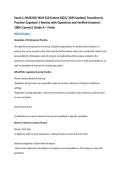
Exam 1: NSG3280 / NSG 3280 (Latest 2026/ 2027 Update) Pathophysiology
for Nurses I Guide| Questions & Answers| Grade A| 100% Correct (Verified
Solutions)- Galen
Patho NSG 3280 Exam 1
What does etiology mean?
The cause or origin of a disease.
What does idiopathic mean?
A disease with no known cause.
What does iatrogenic mean?
A condition caused by medical treatment or intervention.
What are risk factors?
Conditions or behaviors that increase the likelihood of disease.
What is the prodromal stage of disease?
Early stage with vague, nonspecific symptoms.
What are clinical manifestations?
The signs and symptoms of a disease.
What does convalescence mean?
The recovery phase after illness or injury.
,Why are older adults more vulnerable to stress?
Decreased organ reserve, weaker immune response, and slower recovery.
How does stress affect the elderly differently than younger adults?
Stress is harder to compensate for and increases risk of illness and complications.
What is the General Adaptation Syndrome (GAS)?
The body's three-stage response to stress: alarm, resistance, exhaustion.
What happens during the alarm stage of stress?
Fight-or-flight response; epinephrine and cortisol released; ↑ HR, BP, glucose.
What happens during the resistance stage of stress?
Body adapts to stress while cortisol remains elevated.
What happens during the exhaustion stage of stress?
Body resources are depleted, leading to illness or organ failure.
What is ischemia?
Decreased blood flow to tissues.
What is hypoxia?
Decreased oxygen delivery to tissues.
What are the cellular consequences of ischemia and hypoxia?
↓ ATP, lactic acid buildup, cell swelling, and possible cell death.
, What is primary prevention?
Preventing disease before it occurs (vaccines, lifestyle changes).
What is secondary prevention?
Early detection and treatment (screenings).
What is tertiary prevention?
Reducing complications and improving quality of life (rehab, chronic care).
What is necrosis?
Uncontrolled cell death causing inflammation and tissue damage.
What are common signs of necrosis?
Cell swelling, membrane rupture, and inflammation.
What is hydropic swelling?
Cell swelling due to sodium and water accumulation from ATP depletion.
What is intracellular accumulation?
Buildup of substances like fat or protein inside the cell.
What is coagulative necrosis?
Protein denaturation causing irreversible cell death (common in heart and kidneys).
What is atrophy?
Decrease in cell size due to decreased use or aging.
for Nurses I Guide| Questions & Answers| Grade A| 100% Correct (Verified
Solutions)- Galen
Patho NSG 3280 Exam 1
What does etiology mean?
The cause or origin of a disease.
What does idiopathic mean?
A disease with no known cause.
What does iatrogenic mean?
A condition caused by medical treatment or intervention.
What are risk factors?
Conditions or behaviors that increase the likelihood of disease.
What is the prodromal stage of disease?
Early stage with vague, nonspecific symptoms.
What are clinical manifestations?
The signs and symptoms of a disease.
What does convalescence mean?
The recovery phase after illness or injury.
,Why are older adults more vulnerable to stress?
Decreased organ reserve, weaker immune response, and slower recovery.
How does stress affect the elderly differently than younger adults?
Stress is harder to compensate for and increases risk of illness and complications.
What is the General Adaptation Syndrome (GAS)?
The body's three-stage response to stress: alarm, resistance, exhaustion.
What happens during the alarm stage of stress?
Fight-or-flight response; epinephrine and cortisol released; ↑ HR, BP, glucose.
What happens during the resistance stage of stress?
Body adapts to stress while cortisol remains elevated.
What happens during the exhaustion stage of stress?
Body resources are depleted, leading to illness or organ failure.
What is ischemia?
Decreased blood flow to tissues.
What is hypoxia?
Decreased oxygen delivery to tissues.
What are the cellular consequences of ischemia and hypoxia?
↓ ATP, lactic acid buildup, cell swelling, and possible cell death.
, What is primary prevention?
Preventing disease before it occurs (vaccines, lifestyle changes).
What is secondary prevention?
Early detection and treatment (screenings).
What is tertiary prevention?
Reducing complications and improving quality of life (rehab, chronic care).
What is necrosis?
Uncontrolled cell death causing inflammation and tissue damage.
What are common signs of necrosis?
Cell swelling, membrane rupture, and inflammation.
What is hydropic swelling?
Cell swelling due to sodium and water accumulation from ATP depletion.
What is intracellular accumulation?
Buildup of substances like fat or protein inside the cell.
What is coagulative necrosis?
Protein denaturation causing irreversible cell death (common in heart and kidneys).
What is atrophy?
Decrease in cell size due to decreased use or aging.