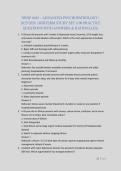
NRNP 6645 – ADVANCED PSYCHOPATHOLOGY |
2025/2026 | MIDTERM STUDY SET (100 PRACTICE
QUESTIONS WITH ANSWERS & RATIONALES)
1. A 28-year-old presents with 3 weeks of depressed mood, insomnia, 10-lb weight loss,
and passive suicidal ideation without plan. Which is the most appropriate immediate
next step?
a. Schedule outpatient psychotherapy in 2 weeks
b. Begin SSRI and discharge with safety planning
c. Conduct suicide risk assessment and consider urgent safety measures (hospitalize if
imminent risk)
d. Start benzodiazepine and follow up monthly
Answer: c
Rationale: Any suicidal ideation mandates immediate risk assessment and safety
planning; hospitalization if imminent.
2. A patient with bipolar disorder presents with elevated mood, pressured speech,
decreased need for sleep, and risky behavior for 6 days with marked impairment.
Diagnosis?
a. Hypomanic episode
b. Manic episode
c. Cyclothymic disorder
d. Major depressive episode
Answer: b
Rationale: Mania causes marked impairment; duration ≥1 week (or any duration if
hospitalization/psychosis).
3. A 45-year-old on lithium presents with nausea, coarse tremor, confusion, and a serum
lithium of 2.0 mEq/L. Best immediate action?
a. Increase dose of lithium
b. Start haloperidol
c. Stop lithium and arrange urgent medical evaluation for toxicity (IV fluids/possible
dialysis)
d. Switch to valproate without stopping lithium
Answer: c
Rationale: Lithium >1.5-2.0 with signs of toxicity requires stopping and urgent medical
management; dialysis if severe.
4. A patient with major depressive disorder has persistent anhedonia despite adequate
SSRI trial. Which augmentation has strongest evidence?
1|Page
, a. Add low-dose benzodiazepine
b. Add atypical antipsychotic (e.g., aripiprazole) or switch to another class; consider
psychotherapy/ECT if refractory
c. Add opioid analgesic
d. Increase SSRI indefinitely without reassessment
Answer: b
Rationale: Atypical antipsychotics can augment antidepressants; ECT for resistant/severe
cases.
5. A 34-year-old reports recurrent unexpected panic attacks with persistent concern for
more attacks and maladaptive avoidance for 8 months. Best diagnosis?
a. Specific phobia
b. Panic disorder with agoraphobia
c. Social anxiety disorder
d. Generalized anxiety disorder
Answer: b
Rationale: Recurrent unexpected panic attacks plus persistent worry and avoidance =
panic disorder; agoraphobia if avoidance of situations.
6. A patient with schizophrenia stabilized on haloperidol develops resting tremor, rigidity,
and bradykinesia. Management?
a. Continue haloperidol and add SSRI
b. Reduce dose/switch to atypical antipsychotic and consider anticholinergic
(benztropine) for EPS
c. Increase haloperidol dose
d. Add lithium
Answer: b
Rationale: Parkinsonism from antipsychotics treated by lowering dose/switching and
using anticholinergic temporarily.
7. A 50-year-old with long history of schizophrenia now has involuntary oral-facial
movements. Which is most likely?
a. Akathisia
b. Acute dystonia
c. Tardive dyskinesia
d. Serotonin syndrome
Answer: c
Rationale: Late-onset repetitive involuntary movements indicate tardive dyskinesia from
chronic dopamine blockade.
8. A patient on clozapine presents with fever, sore throat, and absolute neutrophil count of
400/mm3. Best step?
2|Page
, a. Continue clozapine and observe
b. Stop clozapine immediately and arrange urgent hematology evaluation
c. Increase clozapine dose
d. Add fluvoxamine
Answer: b
Rationale: Clozapine can cause agranulocytosis; immediate discontinuation and workup
required.
9. A 22-year-old with social anxiety fears public speaking only and has marked anxiety only
in performance situations. Best immediate pharmacologic option for a single
presentation?
a. Long-term SSRI only
b. Beta-blocker (propranolol) or short-acting benzodiazepine before performance
c. Antipsychotic on the day
d. Start lithium
Answer: b
Rationale: Beta-blocker or short-acting benzo useful for situational performance anxiety;
SSRIs for generalized social anxiety.
10. A patient has PTSD symptoms for 6 weeks after assault. Diagnosis?
a. Acute stress disorder
b. PTSD
c. Adjustment disorder
d. Normal reaction
Answer: a
Rationale: Symptoms <1 month after trauma = acute stress disorder; PTSD requires ≥1
month.
11. A patient with bipolar disorder and renal disease cannot take lithium. Best alternative
mood stabilizer for acute mania?
a. Valproate (careful with hepatic disease) or atypical antipsychotics; valproate preferred
if renal contraindicated
b. Start lithium regardless
c. Use SSRI monotherapy
d. Benzodiazepines only
Answer: a
Rationale: Valproate is effective for mania and does not require renal clearance like
lithium.
12. A patient stabilized on sertraline complains of sexual dysfunction. Best clinical change?
a. Switch to bupropion or augment with bupropion
b. Increase sertraline dose
3|Page
2025/2026 | MIDTERM STUDY SET (100 PRACTICE
QUESTIONS WITH ANSWERS & RATIONALES)
1. A 28-year-old presents with 3 weeks of depressed mood, insomnia, 10-lb weight loss,
and passive suicidal ideation without plan. Which is the most appropriate immediate
next step?
a. Schedule outpatient psychotherapy in 2 weeks
b. Begin SSRI and discharge with safety planning
c. Conduct suicide risk assessment and consider urgent safety measures (hospitalize if
imminent risk)
d. Start benzodiazepine and follow up monthly
Answer: c
Rationale: Any suicidal ideation mandates immediate risk assessment and safety
planning; hospitalization if imminent.
2. A patient with bipolar disorder presents with elevated mood, pressured speech,
decreased need for sleep, and risky behavior for 6 days with marked impairment.
Diagnosis?
a. Hypomanic episode
b. Manic episode
c. Cyclothymic disorder
d. Major depressive episode
Answer: b
Rationale: Mania causes marked impairment; duration ≥1 week (or any duration if
hospitalization/psychosis).
3. A 45-year-old on lithium presents with nausea, coarse tremor, confusion, and a serum
lithium of 2.0 mEq/L. Best immediate action?
a. Increase dose of lithium
b. Start haloperidol
c. Stop lithium and arrange urgent medical evaluation for toxicity (IV fluids/possible
dialysis)
d. Switch to valproate without stopping lithium
Answer: c
Rationale: Lithium >1.5-2.0 with signs of toxicity requires stopping and urgent medical
management; dialysis if severe.
4. A patient with major depressive disorder has persistent anhedonia despite adequate
SSRI trial. Which augmentation has strongest evidence?
1|Page
, a. Add low-dose benzodiazepine
b. Add atypical antipsychotic (e.g., aripiprazole) or switch to another class; consider
psychotherapy/ECT if refractory
c. Add opioid analgesic
d. Increase SSRI indefinitely without reassessment
Answer: b
Rationale: Atypical antipsychotics can augment antidepressants; ECT for resistant/severe
cases.
5. A 34-year-old reports recurrent unexpected panic attacks with persistent concern for
more attacks and maladaptive avoidance for 8 months. Best diagnosis?
a. Specific phobia
b. Panic disorder with agoraphobia
c. Social anxiety disorder
d. Generalized anxiety disorder
Answer: b
Rationale: Recurrent unexpected panic attacks plus persistent worry and avoidance =
panic disorder; agoraphobia if avoidance of situations.
6. A patient with schizophrenia stabilized on haloperidol develops resting tremor, rigidity,
and bradykinesia. Management?
a. Continue haloperidol and add SSRI
b. Reduce dose/switch to atypical antipsychotic and consider anticholinergic
(benztropine) for EPS
c. Increase haloperidol dose
d. Add lithium
Answer: b
Rationale: Parkinsonism from antipsychotics treated by lowering dose/switching and
using anticholinergic temporarily.
7. A 50-year-old with long history of schizophrenia now has involuntary oral-facial
movements. Which is most likely?
a. Akathisia
b. Acute dystonia
c. Tardive dyskinesia
d. Serotonin syndrome
Answer: c
Rationale: Late-onset repetitive involuntary movements indicate tardive dyskinesia from
chronic dopamine blockade.
8. A patient on clozapine presents with fever, sore throat, and absolute neutrophil count of
400/mm3. Best step?
2|Page
, a. Continue clozapine and observe
b. Stop clozapine immediately and arrange urgent hematology evaluation
c. Increase clozapine dose
d. Add fluvoxamine
Answer: b
Rationale: Clozapine can cause agranulocytosis; immediate discontinuation and workup
required.
9. A 22-year-old with social anxiety fears public speaking only and has marked anxiety only
in performance situations. Best immediate pharmacologic option for a single
presentation?
a. Long-term SSRI only
b. Beta-blocker (propranolol) or short-acting benzodiazepine before performance
c. Antipsychotic on the day
d. Start lithium
Answer: b
Rationale: Beta-blocker or short-acting benzo useful for situational performance anxiety;
SSRIs for generalized social anxiety.
10. A patient has PTSD symptoms for 6 weeks after assault. Diagnosis?
a. Acute stress disorder
b. PTSD
c. Adjustment disorder
d. Normal reaction
Answer: a
Rationale: Symptoms <1 month after trauma = acute stress disorder; PTSD requires ≥1
month.
11. A patient with bipolar disorder and renal disease cannot take lithium. Best alternative
mood stabilizer for acute mania?
a. Valproate (careful with hepatic disease) or atypical antipsychotics; valproate preferred
if renal contraindicated
b. Start lithium regardless
c. Use SSRI monotherapy
d. Benzodiazepines only
Answer: a
Rationale: Valproate is effective for mania and does not require renal clearance like
lithium.
12. A patient stabilized on sertraline complains of sexual dysfunction. Best clinical change?
a. Switch to bupropion or augment with bupropion
b. Increase sertraline dose
3|Page