

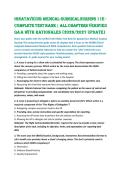
IgnatavIcIus: MedIcal-surgIcal nursIng 11e -
coMplete test Bank | all chapters verIfIed
Q&a wIth ratIonales (2026/2027 update)
Boost your grades with the verified 11th Edition Test Bank for Ignatavicius: Medical-Surgical
Nursing! This comprehensive guide covers all chapters with a focus on the NCSBN Clinical
Judgment Measurement Model and QSEN competencies. Each question features bolded
correct answers and detailed rationales to help you master the "why" behind the care.
Includes Next-Gen NCLEX style questions, fluid/electrolytes, acid-base, and complex disease
management. A+ grade assured for your nursing exams!
1. A nurse is caring for a client who is scheduled for surgery. The client expresses concern
about the recovery process. Which action by the nurse best demonstrates the QSEN
competency of Patient-Centered Care?
A. Providing a pamphlet about the surgery and walking away.
B. Telling the client that the surgeon is the best in the hospital.
C. Encouraging the client to share specific goals and preferences for post-operative care.
D. Reassuring the client that everyone feels nervous before surgery.
Rationale: Patient-Centered Care involves recognizing the patient as the source of control and
full partner in providing compassionate and coordinated care based on respect for patient
preferences, values, and needs.
2. A nurse is preparing to delegate a task to an assistive personnel (AP). Which action is a
required component of the "Five Rights of Delegation"?
A. Delegating complex assessment tasks to the AP.
B. Providing clear, concise instructions and specific expectations for reporting.
C. Assuming the AP knows how to perform the task without verification.
D. Allowing the AP to delegate the task to another coworker.
Rationale: The Right Communication/Direction requires the nurse to provide a clear, concise
description of the task, including its objective, limits, and expectations for reporting back
data.
3. The nurse uses the SBAR (Situation, Background, Assessment, Recommendation) format to
call a health care provider about a client's changing status. This tool is primarily used to
enhance which QSEN competency?
A. Informatics
B. Evidence-Based Practice
C. Quality Improvement
,D. Teamwork and Collaboration
Rationale: SBAR is a structured communication tool designed to improve hand-offs and
interprofessional communication, which are critical elements of the Teamwork and
Collaboration competency.
4. A nurse identifies that a client’s blood pressure has dropped significantly since the last
reading. Using the NCSBN Clinical Judgment Measurement Model, which action should the
nurse take first?
A. Recognize cues by assessing for associated symptoms like dizziness or pallor.
B. Formulate a hypothesis that the patient is dehydrated.
C. Take immediate action by raising the client's legs.
D. Evaluate the client’s response to a fluid bolus.
Rationale: The first step in clinical judgment is to recognize cues (assessment). The nurse must
gather more data to understand the significance of the change before jumping to conclusions
or actions.
5. Which nursing action best reflects the "Safety" competency to prevent "failure to rescue"?
A. Checking the client's ID band before giving meds.
B. Frequent monitoring of clinical trends and reporting subtle changes in status.
C. Documenting care at the end of the shift.
D. Following the hospital's dress code policy.
Rationale: Safety includes minimizing risk of harm. "Failure to rescue" is prevented by early
detection of clinical deterioration through trend analysis and timely intervention.
6. A nurse is caring for a transgender client. Which action is essential for providing inclusive,
patient-centered care?
A. Using the name and gender listed on the insurance card only.
B. Asking the client for their preferred name and pronouns and using them consistently.
C. Referring to the client as "the patient in 402" to avoid confusion.
D. Advising the client that the hospital system cannot change their name.
Rationale: Patient-centered care requires respect for the client’s identity. Using a client's
preferred name and pronouns is a fundamental aspect of providing inclusive and respectful
care.
7. When using Evidence-Based Practice (EBP), the nurse understands that the "gold standard"
for clinical research is:
A. Expert opinion from a senior nurse.
B. A single case study.
C. Systematic reviews or meta-analyses of randomized controlled trials (RCTs).
D. Traditional hospital policies.
,Rationale: EBP relies on the highest level of evidence. Systematic reviews and meta-analyses
provide the most rigorous and reliable data for clinical decision-making.
8. A nurse is participating in a "Time-Out" before a bedside procedure. This practice is an
example of which safety initiative?
A. The Joint Commission’s National Patient Safety Goals (NPSGs).
B. The American Nurses Association Code of Ethics.
C. The HIPAA Privacy Rule.
D. The Affordable Care Act.
Rationale: Time-outs are a specific requirement of the NPSGs to prevent wrong-site, wrong-
procedure, and wrong-person surgery.
9. The nurse recognizes that a client with limited health literacy is at higher risk for poor
outcomes. Which strategy is most effective for patient teaching?
A. Providing high-level medical journals for the patient to read.
B. Using the "Teach-Back" method to verify the client’s understanding.
C. Speaking loudly and slowly to the client.
D. Giving the client a 20-page manual on their condition.
Rationale: The Teach-Back method requires the patient to explain the information back in
their own words, ensuring they actually understand the instructions.
10. A nurse is caring for a client who is at risk for falls. Which intervention is a "System-Based"
approach to safety?
A. Telling the client to "be careful."
B. Using a standardized fall-risk assessment tool for every client on admission.
C. Cleaning up a spill only when seen.
D. Relying on the family to watch the client.
Rationale: System-based safety involves using standardized protocols and tools to reduce the
likelihood of human error and ensure consistent care.
11. A nurse is evaluating a client's fluid balance. Which assessment finding is the most reliable
indicator of acute fluid volume change?
A. Skin turgor over the sternum.
B. Presence of peripheral edema.
C. Daily weights taken at the same time with the same scale.
D. Intake and output (I&O) totals for 24 hours.
Rationale: Body weight change is the most accurate indicator of fluid gain or loss. One liter of
water weighs 2.2 lbs (1 kg). I&O is often subject to recording errors.
, 12. An older adult client is admitted with dehydration. Which age-related change increases
the risk for this condition?
A. Increased thirst sensation.
B. Decreased glomerular filtration rate and concentrated urine ability.
C. Increased total body water percentage.
D. Increased muscle mass.
Rationale: Older adults have a decreased sense of thirst and reduced kidney function, making
them more susceptible to rapid dehydration and electrolyte imbalances.
13. A client is admitted with a serum sodium level of 125 mEq/L. Which nursing intervention
is a priority?
A. Encouraging increased oral water intake.
B. Implementing seizure precautions.
C. Administering a strong diuretic.
D. Restricting dietary salt intake.
Rationale: Severe hyponatremia (below 135 mEq/L) can cause cerebral edema and increased
intracranial pressure, leading to seizures, coma, or death.
14. A nurse notes that a client’s potassium level is 6.2 mEq/L. Which ECG change should the
nurse expect to see?
A. Prominent U waves.
B. Tall, peaked T waves.
C. ST-segment depression.
D. Widened Q-T interval.
Rationale: Hyperkalemia causes tall, peaked T waves. If left untreated, it can lead to a
widened QRS complex and cardiac arrest.
15. A client with chronic kidney disease has a magnesium level of 3.0 mEq/L. Which physical
assessment finding is consistent with this result?
A. Hyperactive deep tendon reflexes.
B. Reduced or absent deep tendon reflexes.
C. Tachycardia and hypertension.
D. Chvostek’s sign.
Rationale: Hypermagnesemia (above 2.1 mEq/L) acts as a neuromuscular depressant, leading
to bradycardia, hypotension, and diminished reflexes.
16. Which client is at the highest risk for developing respiratory acidosis?
A. A client who is hyperventilating due to anxiety.
coMplete test Bank | all chapters verIfIed
Q&a wIth ratIonales (2026/2027 update)
Boost your grades with the verified 11th Edition Test Bank for Ignatavicius: Medical-Surgical
Nursing! This comprehensive guide covers all chapters with a focus on the NCSBN Clinical
Judgment Measurement Model and QSEN competencies. Each question features bolded
correct answers and detailed rationales to help you master the "why" behind the care.
Includes Next-Gen NCLEX style questions, fluid/electrolytes, acid-base, and complex disease
management. A+ grade assured for your nursing exams!
1. A nurse is caring for a client who is scheduled for surgery. The client expresses concern
about the recovery process. Which action by the nurse best demonstrates the QSEN
competency of Patient-Centered Care?
A. Providing a pamphlet about the surgery and walking away.
B. Telling the client that the surgeon is the best in the hospital.
C. Encouraging the client to share specific goals and preferences for post-operative care.
D. Reassuring the client that everyone feels nervous before surgery.
Rationale: Patient-Centered Care involves recognizing the patient as the source of control and
full partner in providing compassionate and coordinated care based on respect for patient
preferences, values, and needs.
2. A nurse is preparing to delegate a task to an assistive personnel (AP). Which action is a
required component of the "Five Rights of Delegation"?
A. Delegating complex assessment tasks to the AP.
B. Providing clear, concise instructions and specific expectations for reporting.
C. Assuming the AP knows how to perform the task without verification.
D. Allowing the AP to delegate the task to another coworker.
Rationale: The Right Communication/Direction requires the nurse to provide a clear, concise
description of the task, including its objective, limits, and expectations for reporting back
data.
3. The nurse uses the SBAR (Situation, Background, Assessment, Recommendation) format to
call a health care provider about a client's changing status. This tool is primarily used to
enhance which QSEN competency?
A. Informatics
B. Evidence-Based Practice
C. Quality Improvement
,D. Teamwork and Collaboration
Rationale: SBAR is a structured communication tool designed to improve hand-offs and
interprofessional communication, which are critical elements of the Teamwork and
Collaboration competency.
4. A nurse identifies that a client’s blood pressure has dropped significantly since the last
reading. Using the NCSBN Clinical Judgment Measurement Model, which action should the
nurse take first?
A. Recognize cues by assessing for associated symptoms like dizziness or pallor.
B. Formulate a hypothesis that the patient is dehydrated.
C. Take immediate action by raising the client's legs.
D. Evaluate the client’s response to a fluid bolus.
Rationale: The first step in clinical judgment is to recognize cues (assessment). The nurse must
gather more data to understand the significance of the change before jumping to conclusions
or actions.
5. Which nursing action best reflects the "Safety" competency to prevent "failure to rescue"?
A. Checking the client's ID band before giving meds.
B. Frequent monitoring of clinical trends and reporting subtle changes in status.
C. Documenting care at the end of the shift.
D. Following the hospital's dress code policy.
Rationale: Safety includes minimizing risk of harm. "Failure to rescue" is prevented by early
detection of clinical deterioration through trend analysis and timely intervention.
6. A nurse is caring for a transgender client. Which action is essential for providing inclusive,
patient-centered care?
A. Using the name and gender listed on the insurance card only.
B. Asking the client for their preferred name and pronouns and using them consistently.
C. Referring to the client as "the patient in 402" to avoid confusion.
D. Advising the client that the hospital system cannot change their name.
Rationale: Patient-centered care requires respect for the client’s identity. Using a client's
preferred name and pronouns is a fundamental aspect of providing inclusive and respectful
care.
7. When using Evidence-Based Practice (EBP), the nurse understands that the "gold standard"
for clinical research is:
A. Expert opinion from a senior nurse.
B. A single case study.
C. Systematic reviews or meta-analyses of randomized controlled trials (RCTs).
D. Traditional hospital policies.
,Rationale: EBP relies on the highest level of evidence. Systematic reviews and meta-analyses
provide the most rigorous and reliable data for clinical decision-making.
8. A nurse is participating in a "Time-Out" before a bedside procedure. This practice is an
example of which safety initiative?
A. The Joint Commission’s National Patient Safety Goals (NPSGs).
B. The American Nurses Association Code of Ethics.
C. The HIPAA Privacy Rule.
D. The Affordable Care Act.
Rationale: Time-outs are a specific requirement of the NPSGs to prevent wrong-site, wrong-
procedure, and wrong-person surgery.
9. The nurse recognizes that a client with limited health literacy is at higher risk for poor
outcomes. Which strategy is most effective for patient teaching?
A. Providing high-level medical journals for the patient to read.
B. Using the "Teach-Back" method to verify the client’s understanding.
C. Speaking loudly and slowly to the client.
D. Giving the client a 20-page manual on their condition.
Rationale: The Teach-Back method requires the patient to explain the information back in
their own words, ensuring they actually understand the instructions.
10. A nurse is caring for a client who is at risk for falls. Which intervention is a "System-Based"
approach to safety?
A. Telling the client to "be careful."
B. Using a standardized fall-risk assessment tool for every client on admission.
C. Cleaning up a spill only when seen.
D. Relying on the family to watch the client.
Rationale: System-based safety involves using standardized protocols and tools to reduce the
likelihood of human error and ensure consistent care.
11. A nurse is evaluating a client's fluid balance. Which assessment finding is the most reliable
indicator of acute fluid volume change?
A. Skin turgor over the sternum.
B. Presence of peripheral edema.
C. Daily weights taken at the same time with the same scale.
D. Intake and output (I&O) totals for 24 hours.
Rationale: Body weight change is the most accurate indicator of fluid gain or loss. One liter of
water weighs 2.2 lbs (1 kg). I&O is often subject to recording errors.
, 12. An older adult client is admitted with dehydration. Which age-related change increases
the risk for this condition?
A. Increased thirst sensation.
B. Decreased glomerular filtration rate and concentrated urine ability.
C. Increased total body water percentage.
D. Increased muscle mass.
Rationale: Older adults have a decreased sense of thirst and reduced kidney function, making
them more susceptible to rapid dehydration and electrolyte imbalances.
13. A client is admitted with a serum sodium level of 125 mEq/L. Which nursing intervention
is a priority?
A. Encouraging increased oral water intake.
B. Implementing seizure precautions.
C. Administering a strong diuretic.
D. Restricting dietary salt intake.
Rationale: Severe hyponatremia (below 135 mEq/L) can cause cerebral edema and increased
intracranial pressure, leading to seizures, coma, or death.
14. A nurse notes that a client’s potassium level is 6.2 mEq/L. Which ECG change should the
nurse expect to see?
A. Prominent U waves.
B. Tall, peaked T waves.
C. ST-segment depression.
D. Widened Q-T interval.
Rationale: Hyperkalemia causes tall, peaked T waves. If left untreated, it can lead to a
widened QRS complex and cardiac arrest.
15. A client with chronic kidney disease has a magnesium level of 3.0 mEq/L. Which physical
assessment finding is consistent with this result?
A. Hyperactive deep tendon reflexes.
B. Reduced or absent deep tendon reflexes.
C. Tachycardia and hypertension.
D. Chvostek’s sign.
Rationale: Hypermagnesemia (above 2.1 mEq/L) acts as a neuromuscular depressant, leading
to bradycardia, hypotension, and diminished reflexes.
16. Which client is at the highest risk for developing respiratory acidosis?
A. A client who is hyperventilating due to anxiety.


