

Stuvia.com - The Marketplace to Buy and Sell your Study Material
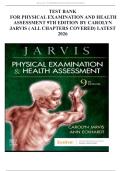
TEST BANK
FOR PHYSICAL EXAMINATION AND HEALTH
ASSESSMENT 9TH EDITION BY CAROLYN
JARVIS ( ALL CHAPTERS COVERED) LATEST
2026
, Stuvia.com - The Marketplace to Buy and Sell your Study Material
Table of contents
1. Evidence-based assessment
2. Cultural assessment
3. The interview
4. The complete health history
5. Mental status assessment
6. Substance use assessment
7. Family violence and human trafficking
8. Assessment techniques and safety in the clinical setting
9. General survey and measurement
10. Vital signs
11. Pain assessment
12. Nutrition assessment
13. Skin, hair, and nails
14. Head, face, neck, and regional lymphatics
15. Eyes
16. Ears
17. Nose, mouth, and throat
18. Breasts, axillae, and regional lymphatics
19. Thorax and lungs
20. Heart and neck vessels
21. Peripheral vascular system and lymphatic system
22. Abdomen
23. Musculoskeletal system
24. Neurologic system
25. Male genitourinary system
26. Anus, rectum, and prostate
27. Female genitourinary system
28. The complete health assessment: adult
29. The complete physical assessment: infant, young child, and adolescent
30. Bedside assessment and electronic documentation
31. Pregnancy
32. Functional assessment of the older adult
Distribution of this document is illegal extra per year?
, Stuvia.com - The Marketplace to Buy and Sell your Study Material
Chapter 01: evidence-based assessment
Multiple choice
1. After completing an initial assessment of a patient, the nurse has charted that his respirations are
eupneic andh is pulse is 58 beats per minute. These types of data would be:
a. Objective.
b. Reflective.
c. Subjective.
d. Introspective.
Ans: a
Objective data are what the health professional observes by inspecting, percussing, palpating, and
<
auscultating dur ing the physical examination. Subjective data is what the person says about him or
herself during history taking. T he terms reflective and introspective are not used to describe data.
Dif: cognitive level: understanding (comprehension)
Msc: client needs: safe and effective care environment: management of care
2. A patient tells the nurse that he is very nervous, is n a u s e a. Ct e od m, a n d feels hot. These types of data would be:
< <
a. Objective.
b. Reflective.
c. Subjective.
d. Introspective.
Ans: c
Subjective data are what the person says about him or herself during history taking. Objective data
are what the h ealth professional observes by inspecting, percussing, palpating, and auscultating
during the physical examination
. The terms reflective and introspective are not used to <
Describe data. Dif: cognitive level: understanding
(comprehension)
Msc: client needs: safe and effective care environment: management of care
3. The patients record, laboratory studies, objective data, and subjective data combine to form the:
a. Data base. Downloaded by: whizsolutions | Want to earn $1.236
Distribution of this document is illegal extra per year?
, Stuvia.com - The Marketplace to Buy and Sell your Study Material
b. Admitting data.
c. Financial statement.
d. Discharge summary.
Ans: a
Together with the patients record and laboratory studies, the objective and subjective data form the
data base.th e other items are not part of the patients record, laboratory studies, or data.
Dif: cognitive level: remembering (knowledge)
Msc: client needs: safe and effective care environment: management of care
4. When listening to a patients breath sounds, the nurse is unsure of a sound that is heard. The
<
nurses nexta ction should be to:
<
a. Immediately notify the patients physician.
<
b. Document the sound exactly as it was heard.
<
c. Validate the data by asking a coworker to listen to the breath sounds.
d. Assess again in 20 minutes to note whether the sound is still present.
Ans: c
When unsure of a sound heard while listening to a patients breath sounds, the nurse validates the data to
ensureaccurac
Y. If the nurse has less experience in an area, then he or she asks an expert to listen. Dif:
cognitive level: analyzing (analysis)
Msc: client needs: safe and effective care environment: management of care
5. The nurse is conducting a class for new graduate nurses. During the teaching session, the nurse
should keep in mind that novice nurses, without a background of skills and experience from
which to draw, are more likelyto m ake their decisions using:
a. Intuition.
b. A set of rules.
c. Articles in journals.
d. Advice from supervisors.
Ans: b
TEST BANK
FOR PHYSICAL EXAMINATION AND HEALTH
ASSESSMENT 9TH EDITION BY CAROLYN
JARVIS ( ALL CHAPTERS COVERED) LATEST
2026
, Stuvia.com - The Marketplace to Buy and Sell your Study Material
Table of contents
1. Evidence-based assessment
2. Cultural assessment
3. The interview
4. The complete health history
5. Mental status assessment
6. Substance use assessment
7. Family violence and human trafficking
8. Assessment techniques and safety in the clinical setting
9. General survey and measurement
10. Vital signs
11. Pain assessment
12. Nutrition assessment
13. Skin, hair, and nails
14. Head, face, neck, and regional lymphatics
15. Eyes
16. Ears
17. Nose, mouth, and throat
18. Breasts, axillae, and regional lymphatics
19. Thorax and lungs
20. Heart and neck vessels
21. Peripheral vascular system and lymphatic system
22. Abdomen
23. Musculoskeletal system
24. Neurologic system
25. Male genitourinary system
26. Anus, rectum, and prostate
27. Female genitourinary system
28. The complete health assessment: adult
29. The complete physical assessment: infant, young child, and adolescent
30. Bedside assessment and electronic documentation
31. Pregnancy
32. Functional assessment of the older adult
Distribution of this document is illegal extra per year?
, Stuvia.com - The Marketplace to Buy and Sell your Study Material
Chapter 01: evidence-based assessment
Multiple choice
1. After completing an initial assessment of a patient, the nurse has charted that his respirations are
eupneic andh is pulse is 58 beats per minute. These types of data would be:
a. Objective.
b. Reflective.
c. Subjective.
d. Introspective.
Ans: a
Objective data are what the health professional observes by inspecting, percussing, palpating, and
<
auscultating dur ing the physical examination. Subjective data is what the person says about him or
herself during history taking. T he terms reflective and introspective are not used to describe data.
Dif: cognitive level: understanding (comprehension)
Msc: client needs: safe and effective care environment: management of care
2. A patient tells the nurse that he is very nervous, is n a u s e a. Ct e od m, a n d feels hot. These types of data would be:
< <
a. Objective.
b. Reflective.
c. Subjective.
d. Introspective.
Ans: c
Subjective data are what the person says about him or herself during history taking. Objective data
are what the h ealth professional observes by inspecting, percussing, palpating, and auscultating
during the physical examination
. The terms reflective and introspective are not used to <
Describe data. Dif: cognitive level: understanding
(comprehension)
Msc: client needs: safe and effective care environment: management of care
3. The patients record, laboratory studies, objective data, and subjective data combine to form the:
a. Data base. Downloaded by: whizsolutions | Want to earn $1.236
Distribution of this document is illegal extra per year?
, Stuvia.com - The Marketplace to Buy and Sell your Study Material
b. Admitting data.
c. Financial statement.
d. Discharge summary.
Ans: a
Together with the patients record and laboratory studies, the objective and subjective data form the
data base.th e other items are not part of the patients record, laboratory studies, or data.
Dif: cognitive level: remembering (knowledge)
Msc: client needs: safe and effective care environment: management of care
4. When listening to a patients breath sounds, the nurse is unsure of a sound that is heard. The
<
nurses nexta ction should be to:
<
a. Immediately notify the patients physician.
<
b. Document the sound exactly as it was heard.
<
c. Validate the data by asking a coworker to listen to the breath sounds.
d. Assess again in 20 minutes to note whether the sound is still present.
Ans: c
When unsure of a sound heard while listening to a patients breath sounds, the nurse validates the data to
ensureaccurac
Y. If the nurse has less experience in an area, then he or she asks an expert to listen. Dif:
cognitive level: analyzing (analysis)
Msc: client needs: safe and effective care environment: management of care
5. The nurse is conducting a class for new graduate nurses. During the teaching session, the nurse
should keep in mind that novice nurses, without a background of skills and experience from
which to draw, are more likelyto m ake their decisions using:
a. Intuition.
b. A set of rules.
c. Articles in journals.
d. Advice from supervisors.
Ans: b


