

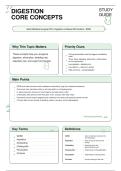
STUDY
DIGESTION GUIDE
CORE CONCEPTS
Adult Medical-Surgical RN | Digestion & Bowel Elimination | 2026
Why This Topic Matters Priority Clues
These concepts help you recognize Clinical presentation was the biggest remediation
need
digestion, elimination, bleeding risk,
Think: reflux, bleeding, obstruction, inflammation,
aspiration risk, and urgent GI changes. or liver dysfunction
Low platelets = bleeding risk
Low albumin = edema or ascites
High ammonia = encephalopathy
Main Points
GERD and hiatal hernia are reflux problems worsened by lying flat or abdominal pressure
Oral cancer clue: persistent white or red scaly patch or nonhealing lesion
H. pylori prevention focuses on hand hygiene and safe food or water
Cholecystitis often presents with RUQ pain, fever, and pain after fatty meals
Pancreatitis causes severe epigastric pain radiating to the back and hypoactive bowel sounds
Cirrhosis labs connect directly to bleeding, edema, jaundice, and encephalopathy
Key Terms Definitions
GERD GERD reflux of stomach contents into
the esophagus.
Aspiration Aspiration entry of food or fluid into the
GI bleeding airway.
GI bleeding blood loss from the
Cholecystitis gastrointestinal tract.
Pancreatitis Cholecystitis inflammation of the gallbladder.
Cirrhosis
Pancreatitis inflammation of the pancreas.
Cirrhosis chronic scarring of the liver.
, STUDY
GERD + HIATAL HERNIA GUIDE
Adult Medical-Surgical RN | Digestion & Bowel Elimination | 2026
Why This Topic Matters Priority Clues
These questions focus on reflux triggers, GERD = acid goes backward into esophagus
chronic GERD complications, and teaching Symptoms worsen after meals or lying flat
Chronic GERD increases Barrett esophagus risk
that decreases reflux and abdominal
Hiatal hernia can worsen reflux
pressure. Teaching: small meals, HOB up, loose clothes,
no heavy lifting
Main Points
GERD occurs when the lower esophageal sphincter does not close effectively
Common findings include heartburn, regurgitation, sour taste, throat irritation, cough, and hoarseness
Risk factors include obesity, smoking, caffeine, high-fat foods, alcohol, large meals, and bedtime eating
Barrett esophagus can occur after chronic reflux and increases risk for esophageal cancer
For hiatal hernia, elevate the head of the bed - not the legs
Avoid tight clothes, heavy lifting, trigger foods, and lying down after meals
Key Terms Definitions
GERD GERD backflow of stomach contents
into the esophagus.
Lower esophageal sphincter Lower esophageal valve that helps prevent reflux.
Regurgitation sphincter
Regurgitation backward flow of stomach
Barrett esophagus contents.
Hiatal hernia Barrett esophagus cell changes from chronic acid
exposure.
Head-of-bed elevation
Hiatal hernia stomach protrudes upward
through diaphragm.
Head-of-bed elevation positioning that reduces nighttime
reflux.
DIGESTION GUIDE
CORE CONCEPTS
Adult Medical-Surgical RN | Digestion & Bowel Elimination | 2026
Why This Topic Matters Priority Clues
These concepts help you recognize Clinical presentation was the biggest remediation
need
digestion, elimination, bleeding risk,
Think: reflux, bleeding, obstruction, inflammation,
aspiration risk, and urgent GI changes. or liver dysfunction
Low platelets = bleeding risk
Low albumin = edema or ascites
High ammonia = encephalopathy
Main Points
GERD and hiatal hernia are reflux problems worsened by lying flat or abdominal pressure
Oral cancer clue: persistent white or red scaly patch or nonhealing lesion
H. pylori prevention focuses on hand hygiene and safe food or water
Cholecystitis often presents with RUQ pain, fever, and pain after fatty meals
Pancreatitis causes severe epigastric pain radiating to the back and hypoactive bowel sounds
Cirrhosis labs connect directly to bleeding, edema, jaundice, and encephalopathy
Key Terms Definitions
GERD GERD reflux of stomach contents into
the esophagus.
Aspiration Aspiration entry of food or fluid into the
GI bleeding airway.
GI bleeding blood loss from the
Cholecystitis gastrointestinal tract.
Pancreatitis Cholecystitis inflammation of the gallbladder.
Cirrhosis
Pancreatitis inflammation of the pancreas.
Cirrhosis chronic scarring of the liver.
, STUDY
GERD + HIATAL HERNIA GUIDE
Adult Medical-Surgical RN | Digestion & Bowel Elimination | 2026
Why This Topic Matters Priority Clues
These questions focus on reflux triggers, GERD = acid goes backward into esophagus
chronic GERD complications, and teaching Symptoms worsen after meals or lying flat
Chronic GERD increases Barrett esophagus risk
that decreases reflux and abdominal
Hiatal hernia can worsen reflux
pressure. Teaching: small meals, HOB up, loose clothes,
no heavy lifting
Main Points
GERD occurs when the lower esophageal sphincter does not close effectively
Common findings include heartburn, regurgitation, sour taste, throat irritation, cough, and hoarseness
Risk factors include obesity, smoking, caffeine, high-fat foods, alcohol, large meals, and bedtime eating
Barrett esophagus can occur after chronic reflux and increases risk for esophageal cancer
For hiatal hernia, elevate the head of the bed - not the legs
Avoid tight clothes, heavy lifting, trigger foods, and lying down after meals
Key Terms Definitions
GERD GERD backflow of stomach contents
into the esophagus.
Lower esophageal sphincter Lower esophageal valve that helps prevent reflux.
Regurgitation sphincter
Regurgitation backward flow of stomach
Barrett esophagus contents.
Hiatal hernia Barrett esophagus cell changes from chronic acid
exposure.
Head-of-bed elevation
Hiatal hernia stomach protrudes upward
through diaphragm.
Head-of-bed elevation positioning that reduces nighttime
reflux.


