

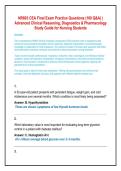
NR603 CEA Final Exam Practice Questions (100 Q&A) |
Advanced Clinical Reasoning, Diagnostics & Pharmacology
Study Guide for Nursing Students
Overview
This comprehensive NR603 Clinical Evaluation Assessment (CEA) practice exam is designed to help
advanced nursing students strengthen clinical reasoning, diagnostic interpretation, and pharmacology
knowledge in preparation for final evaluations. The resource includes 100 exam-style questions that reflect
real-world patient scenarios commonly encountered in advanced practice nursing education.
Topics covered include cardiovascular, respiratory, endocrine, renal, neurological, and infectious disease
conditions, along with laboratory interpretation, emergency interventions, and evidence-based treatment
decisions. Each question is structured to enhance critical thinking and clinical judgment, aligning with
graduate-level nursing expectations.
This study guide is ideal for final exam preparation, offering structured practice that reinforces key
concepts, improves diagnostic accuracy, and supports safe, effective patient-centered care.
1.
A 52-year-old patient presents with persistent fatigue, weight gain, and cold
intolerance over several months. Which condition is most likely being assessed?
Answer: B. Hypothyroidism
These are classic symptoms of low thyroid hormone levels.
2.
Which laboratory value is most important for evaluating long-term glycemic
control in a patient with diabetes mellitus?
Answer: C. Hemoglobin A1c
A1c reflects average blood glucose over 2–3 months.
3.
,A patient reports chest pain radiating to the left arm and jaw. What is the priority
nursing action?
Answer: A. Initiate emergency cardiac protocol and notify provider
immediately
Symptoms suggest acute myocardial infarction.
4.
Which condition is most associated with elevated serum troponin levels?
Answer: D. Myocardial infarction
Troponin indicates cardiac muscle injury.
5.
A patient with hypertension is prescribed lisinopril. What is the most important
monitoring parameter?
Answer: B. Serum potassium and renal function
ACE inhibitors can cause hyperkalemia and affect kidneys.
6.
Which symptom is most consistent with hyperglycemia in a diabetic patient?
Answer: C. Polyuria, polydipsia, and fatigue
High glucose levels cause osmotic diuresis.
7.
A patient presents with sudden unilateral weakness and facial drooping. What is
the most likely diagnosis?
, Answer: A. Stroke (CVA)
These are classic stroke symptoms.
8.
Which medication is commonly used for acute management of anaphylaxis?
Answer: D. Epinephrine
Epinephrine is first-line treatment for anaphylaxis.
9.
A patient with heart failure is prescribed furosemide. What electrolyte imbalance
is most concerning?
Answer: B. Hypokalemia
Loop diuretics increase potassium loss.
10.
Which finding is most concerning in a patient with suspected sepsis?
Answer: C. Hypotension and altered mental status
These indicate systemic infection progression.
11.
A patient is diagnosed with iron deficiency anemia. Which symptom is most
expected?
Answer: A. Fatigue and pallor
Reduced oxygen delivery causes these symptoms.
Advanced Clinical Reasoning, Diagnostics & Pharmacology
Study Guide for Nursing Students
Overview
This comprehensive NR603 Clinical Evaluation Assessment (CEA) practice exam is designed to help
advanced nursing students strengthen clinical reasoning, diagnostic interpretation, and pharmacology
knowledge in preparation for final evaluations. The resource includes 100 exam-style questions that reflect
real-world patient scenarios commonly encountered in advanced practice nursing education.
Topics covered include cardiovascular, respiratory, endocrine, renal, neurological, and infectious disease
conditions, along with laboratory interpretation, emergency interventions, and evidence-based treatment
decisions. Each question is structured to enhance critical thinking and clinical judgment, aligning with
graduate-level nursing expectations.
This study guide is ideal for final exam preparation, offering structured practice that reinforces key
concepts, improves diagnostic accuracy, and supports safe, effective patient-centered care.
1.
A 52-year-old patient presents with persistent fatigue, weight gain, and cold
intolerance over several months. Which condition is most likely being assessed?
Answer: B. Hypothyroidism
These are classic symptoms of low thyroid hormone levels.
2.
Which laboratory value is most important for evaluating long-term glycemic
control in a patient with diabetes mellitus?
Answer: C. Hemoglobin A1c
A1c reflects average blood glucose over 2–3 months.
3.
,A patient reports chest pain radiating to the left arm and jaw. What is the priority
nursing action?
Answer: A. Initiate emergency cardiac protocol and notify provider
immediately
Symptoms suggest acute myocardial infarction.
4.
Which condition is most associated with elevated serum troponin levels?
Answer: D. Myocardial infarction
Troponin indicates cardiac muscle injury.
5.
A patient with hypertension is prescribed lisinopril. What is the most important
monitoring parameter?
Answer: B. Serum potassium and renal function
ACE inhibitors can cause hyperkalemia and affect kidneys.
6.
Which symptom is most consistent with hyperglycemia in a diabetic patient?
Answer: C. Polyuria, polydipsia, and fatigue
High glucose levels cause osmotic diuresis.
7.
A patient presents with sudden unilateral weakness and facial drooping. What is
the most likely diagnosis?
, Answer: A. Stroke (CVA)
These are classic stroke symptoms.
8.
Which medication is commonly used for acute management of anaphylaxis?
Answer: D. Epinephrine
Epinephrine is first-line treatment for anaphylaxis.
9.
A patient with heart failure is prescribed furosemide. What electrolyte imbalance
is most concerning?
Answer: B. Hypokalemia
Loop diuretics increase potassium loss.
10.
Which finding is most concerning in a patient with suspected sepsis?
Answer: C. Hypotension and altered mental status
These indicate systemic infection progression.
11.
A patient is diagnosed with iron deficiency anemia. Which symptom is most
expected?
Answer: A. Fatigue and pallor
Reduced oxygen delivery causes these symptoms.


