

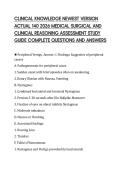
CLINICAL KNOWLEDGE NEWEST VERSION
ACTUAL 140 2026 MEDICAL SURGICAL AND
CLINICAL REASONING ASSESSMENT STUDY
GUIDE COMPLETE QUESTIONS AND ANSWERS
◉ Peripheral Vertigo. Answer: I. Findings: Suggestive of peripheral
causes
A. Pathognomonic for peripheral cause
1. Sudden onset with brief episodes often on awakening
2. Rotary Illusion with Nausea, Vomiting
B. Nystagmus
1. Combined horizontal and torsional Nystagmus
2. Persists 5-20 seconds after Dix-Hallpike Maneuver
3. Fixation of eyes on object inhibits Nystagmus
C. Moderate imbalance
D. Nausea or Vomiting
E. Associated findings
1. Hearing Loss
2. Tinnitus
F. Tullio's Phenomenon
1. Nystagmus and Vertigo provoked by loud sounds
,II. Causes: Common (Peripheral Vertigo)
A. Acute Vestibular Neuronitis
B. Benign Paroxysmal Positional Vertigo
C. Meniere's Disease
III. Causes: Other (Peripheral Vertigo)
A. Ear Infections
1. Serous Otitis Media
2. Chronic Otitis Media
3. Otitis Externa
4. Mastoiditis
B. Other infections
1. Herpes Zoster Oticus (Ramsay Hunt Syndrome)
2. Acute Labyrinthitis (uncommon)
a. Not synonymous with Vestibular Neuritis
i. Labyrinthitis is much less common than neuritis
ii. Labyrinthitis causes permanent Hearing Loss
b. Types
i. Viral Labyrinthitis
ii. Bacterial Labyrinthitis (Rare)
C. Structural disorder
,1. Cholesteatoma
2. Perilymphatic Fistula
3. Otosclerosis
D. Trauma
1. Temporal Bone Fracture
2. Labyrinthine Concussion
◉ Reiter's Syndrome. Answer:
◉ Perihepatitis. Answer:
◉ Spontaneous Abortions. Answer: When there is vaginal bleeding
and cramping but the cervix remains closed it is a threatened
abortion. It is possible in this case that the pregnancy can be
salvaged. In an inevitable abortion the cervix is dilated. In a
complete abortion the placenta and fetus are expelled completely. In
an incomplete abortion placental products remain in the uterus and
the cervix remains dilated.
◉ Addison's Disease. Answer:
◉ Cushing's Disease. Answer:
, ◉ Myocardial Infarction. Answer:
◉ Fosamax. Answer: Patients taking aledronate are instructed to
take the medication when they get up in the morning, 30 minutes
before eating and with a full glass of water. They should be
instructed to remain upright to avoid esophageal irritation. If they
take this medication with food, it will reduce the bioavailability by
40%. Taking alendronate with coffee or orange juice will reduce
bioavailabiliy by 60%.
◉ Hyperlipidemia Medications. Answer: The expected outcomes of
the preceding medications are as follows: Lipitor: LDL: 20-60%
decrease HDL: 5-15% increase Triglyceride: 10-40% decrease
Gemfibrozil: LDL: 5-15% decrease HDL: 14-20% increase
Triglyceride: 20-50% decrease Nicotinic acid: LDL: 10-25% decrease
HDL: 15-35% increase Triglyceride: 20-50% decrease Colestipol:
LDL: 10-20% decrease HDL: 3-5% increase Triglyceride: May
increase
◉ Trochanteric Bursitis. Answer: I. Definition
A. Inflammation of bursa overlying hip greater trochanter
II. Symptoms
A. Pain overlying greater trochanter
B. May radiate into knee or ankle or into buttock
ACTUAL 140 2026 MEDICAL SURGICAL AND
CLINICAL REASONING ASSESSMENT STUDY
GUIDE COMPLETE QUESTIONS AND ANSWERS
◉ Peripheral Vertigo. Answer: I. Findings: Suggestive of peripheral
causes
A. Pathognomonic for peripheral cause
1. Sudden onset with brief episodes often on awakening
2. Rotary Illusion with Nausea, Vomiting
B. Nystagmus
1. Combined horizontal and torsional Nystagmus
2. Persists 5-20 seconds after Dix-Hallpike Maneuver
3. Fixation of eyes on object inhibits Nystagmus
C. Moderate imbalance
D. Nausea or Vomiting
E. Associated findings
1. Hearing Loss
2. Tinnitus
F. Tullio's Phenomenon
1. Nystagmus and Vertigo provoked by loud sounds
,II. Causes: Common (Peripheral Vertigo)
A. Acute Vestibular Neuronitis
B. Benign Paroxysmal Positional Vertigo
C. Meniere's Disease
III. Causes: Other (Peripheral Vertigo)
A. Ear Infections
1. Serous Otitis Media
2. Chronic Otitis Media
3. Otitis Externa
4. Mastoiditis
B. Other infections
1. Herpes Zoster Oticus (Ramsay Hunt Syndrome)
2. Acute Labyrinthitis (uncommon)
a. Not synonymous with Vestibular Neuritis
i. Labyrinthitis is much less common than neuritis
ii. Labyrinthitis causes permanent Hearing Loss
b. Types
i. Viral Labyrinthitis
ii. Bacterial Labyrinthitis (Rare)
C. Structural disorder
,1. Cholesteatoma
2. Perilymphatic Fistula
3. Otosclerosis
D. Trauma
1. Temporal Bone Fracture
2. Labyrinthine Concussion
◉ Reiter's Syndrome. Answer:
◉ Perihepatitis. Answer:
◉ Spontaneous Abortions. Answer: When there is vaginal bleeding
and cramping but the cervix remains closed it is a threatened
abortion. It is possible in this case that the pregnancy can be
salvaged. In an inevitable abortion the cervix is dilated. In a
complete abortion the placenta and fetus are expelled completely. In
an incomplete abortion placental products remain in the uterus and
the cervix remains dilated.
◉ Addison's Disease. Answer:
◉ Cushing's Disease. Answer:
, ◉ Myocardial Infarction. Answer:
◉ Fosamax. Answer: Patients taking aledronate are instructed to
take the medication when they get up in the morning, 30 minutes
before eating and with a full glass of water. They should be
instructed to remain upright to avoid esophageal irritation. If they
take this medication with food, it will reduce the bioavailability by
40%. Taking alendronate with coffee or orange juice will reduce
bioavailabiliy by 60%.
◉ Hyperlipidemia Medications. Answer: The expected outcomes of
the preceding medications are as follows: Lipitor: LDL: 20-60%
decrease HDL: 5-15% increase Triglyceride: 10-40% decrease
Gemfibrozil: LDL: 5-15% decrease HDL: 14-20% increase
Triglyceride: 20-50% decrease Nicotinic acid: LDL: 10-25% decrease
HDL: 15-35% increase Triglyceride: 20-50% decrease Colestipol:
LDL: 10-20% decrease HDL: 3-5% increase Triglyceride: May
increase
◉ Trochanteric Bursitis. Answer: I. Definition
A. Inflammation of bursa overlying hip greater trochanter
II. Symptoms
A. Pain overlying greater trochanter
B. May radiate into knee or ankle or into buttock


