

Unit 14: Applications of Organic Chemistry
C: Understand types, structures, reactions, uses and properties of isomers
Assignment title: Designing molecules
P4: Explain different types of structural isomerism and stereoisomerism
Isomers are molecules with same molecular formula but different structure of atom arrangements.
There are two types of isomers: structural isomerism and stereoisomerism. There are three types of
structural isomerism, chain isomerism, position isomerism and functional isomerism. With
stereoisomerism there are two types, optical isomerism and geometrical isomerism.
Structural isomerism
Structural isomerism has the same molecular formula but different structural formulae. This is due to
atoms being able to be linked in different ways. There are three types of structural isomerism: chain
isomerism, position isomerism and functional group isomerism.
Chain isomerism
These isomers happen due to the branching in carbon chains. The differences between chain isomers
are that chemically they got similar properties as the functional group is present but physical
properties like density and boiling point depends on the branching of the chain. The straight chain has
higher boiling point than branched isomers. The boiling point is low when the branching is longer.
This is because of the intermolecular forces being weaker and less effective and therefore less energy
is needed to separate the molecules.
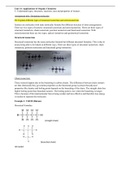
Example 1: C4H10 (Butane)
Structural formulae:
(straight chain)
(branched chain)
3d model:
C: Understand types, structures, reactions, uses and properties of isomers
Assignment title: Designing molecules
P4: Explain different types of structural isomerism and stereoisomerism
Isomers are molecules with same molecular formula but different structure of atom arrangements.
There are two types of isomers: structural isomerism and stereoisomerism. There are three types of
structural isomerism, chain isomerism, position isomerism and functional isomerism. With
stereoisomerism there are two types, optical isomerism and geometrical isomerism.
Structural isomerism
Structural isomerism has the same molecular formula but different structural formulae. This is due to
atoms being able to be linked in different ways. There are three types of structural isomerism: chain
isomerism, position isomerism and functional group isomerism.
Chain isomerism
These isomers happen due to the branching in carbon chains. The differences between chain isomers
are that chemically they got similar properties as the functional group is present but physical
properties like density and boiling point depends on the branching of the chain. The straight chain has
higher boiling point than branched isomers. The boiling point is low when the branching is longer.
This is because of the intermolecular forces being weaker and less effective and therefore less energy
is needed to separate the molecules.
Example 1: C4H10 (Butane)
Structural formulae:
(straight chain)
(branched chain)
3d model:




