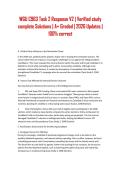
WGU C963 Task 2 Response V2 | Verified study
complete Solutions | A+ Graded | 2026 Updates |
100% correct
A. Political Party Influence in the Nomination Phase
In the 2048 race, political parties played a major role in shaping the nomination process. The
Conservative Party, for instance, encouraged a challenger to run against the sitting president,
Candidate C. This move revealed the internal division within the party and forced Candidate C to
defend his record while competing with another conservative candidate. Although some
members criticized this decision, it created an atmosphere of competition that ultimately
strengthened Candidate C’s campaign when he secured the nomination (Case Study 2, 2048
Election).
B. Factors That Affected the General Election Outcome
Two key elements influenced the outcome of the 2048 general election:
1. PAC and Super PAC Funding: Many conservative PACs were reluctant to fully support
Candidate C because voters linked him to economic struggles. These groups chose to invest
more heavily in congressional and local races. In contrast, liberal PACs and Super PACs such as
Planned Parenthood increased their financial contributions to Candidate D once he became the
nominee, boosting his visibility in critical swing states (Case Study 2, 2048 Election).
2. Voter Participation: Only a little over half of eligible voters participated in the 2048
election, which marked a steep decline compared to earlier elections. Online enthusiasm for
Candidate D did not translate into votes, particularly among young people. This low turnout
damaged Candidate C’s chances in battleground states, helping Candidate D secure 370
electoral votes and the presidency (Case Study 2, 2048 Election).
C. Post-Election Environment for the Winning Candidate
1. Campaign Versus First 100 Days
During his campaign, Candidate D promised progressive changes such as tax hikes on the
wealthy, Medicaid expansion, and reduced military spending. Once in office, however, he faced
a divided government, with Conservatives controlling the House and the Senate evenly split.
This forced him to scale back his agenda. Rather than pushing for tax increases, he focused on
policies that had bipartisan appeal, such as lowering prescription drug costs and improving
transparency in medical pricing (Case Study 2, 2048 Election).
complete Solutions | A+ Graded | 2026 Updates |
100% correct
A. Political Party Influence in the Nomination Phase
In the 2048 race, political parties played a major role in shaping the nomination process. The
Conservative Party, for instance, encouraged a challenger to run against the sitting president,
Candidate C. This move revealed the internal division within the party and forced Candidate C to
defend his record while competing with another conservative candidate. Although some
members criticized this decision, it created an atmosphere of competition that ultimately
strengthened Candidate C’s campaign when he secured the nomination (Case Study 2, 2048
Election).
B. Factors That Affected the General Election Outcome
Two key elements influenced the outcome of the 2048 general election:
1. PAC and Super PAC Funding: Many conservative PACs were reluctant to fully support
Candidate C because voters linked him to economic struggles. These groups chose to invest
more heavily in congressional and local races. In contrast, liberal PACs and Super PACs such as
Planned Parenthood increased their financial contributions to Candidate D once he became the
nominee, boosting his visibility in critical swing states (Case Study 2, 2048 Election).
2. Voter Participation: Only a little over half of eligible voters participated in the 2048
election, which marked a steep decline compared to earlier elections. Online enthusiasm for
Candidate D did not translate into votes, particularly among young people. This low turnout
damaged Candidate C’s chances in battleground states, helping Candidate D secure 370
electoral votes and the presidency (Case Study 2, 2048 Election).
C. Post-Election Environment for the Winning Candidate
1. Campaign Versus First 100 Days
During his campaign, Candidate D promised progressive changes such as tax hikes on the
wealthy, Medicaid expansion, and reduced military spending. Once in office, however, he faced
a divided government, with Conservatives controlling the House and the Senate evenly split.
This forced him to scale back his agenda. Rather than pushing for tax increases, he focused on
policies that had bipartisan appeal, such as lowering prescription drug costs and improving
transparency in medical pricing (Case Study 2, 2048 Election).