

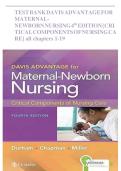
TEST BANK DAVIS ADVANTAGE FOR
n n n n n
MATERNAL-
NEWBORN NURSING 4th EDITION [CRI
n n n n
TICAL COMPONENTS OF NURSING CA
n n n n
RE] all chapters 1-19
,TABLE OF CONTENT
n n
MaternitynNursingnOverview
1. TrendsnandnIssues
2. EthicsnandnStandardsnofnPracticenIssues
ThenAntepartalnPeriod
3. Genetics,nConception,nFetalnDevelopment,nandnReproductiveTechnology
4. PhysiologicalnAspectsnofnAntepartumnCare
5. ThenPsycho-Social-CulturalnAspectsnofnthenAntepartumnPeriod
6. AntepartalnTests
7. High-RisknAntepartumnNursingnCare
IntrapartalnPeriod
8. Intrapartum Assessment and Interventions
n n n
9. Fetal Heart Rate Assessment
n n n
10. High-Risk Labor and Birth
n n n
11. Intrapartum and Postpartum Care of the Cesarean Birth Families
n n n n n n n n
PostpartalnPeriod
12. PostpartumnPhysiologicalnAssessmentsnandnNursingnCare
13. TransitionntonParenthood
14. High-RisknPostpartumnNursingnCare
NeonatalnPeriod
15. PhysiologicalnandnBehavioralnResponsesnofnthenNeonate
16. DischargenPlanningnandnTeaching
17. High-RisknNeonatalnNursingnCare
Women’snHealth
18. WellnWomen’snHealth
19. AlterationsninnWomen’snHealth
,Chaptern1:nTrendsnandnIssues
MULTIPLEnCHOICE
1. nThennursenisncaringnfornanpatientnwhonisninnlabornwithnhernfirstnchild.nThenpatient’snmothernisnp
resentnfornsupportnandnnotesnthatnthingsnhavenchangedninnthendeliverynroomnsincenshenlastngav
enbirthninnthenearlyn1980s.nWhichncurrentntrendnorninterventionnmaynthenpatient’snmothernfindn
mostndifferent?
1. Fetalnmonitoringnthroughoutnlabor
2. Postpartumnstaynofn10ndays
3. Expectantnpartnernandnfamilyninnoperatingnroomnforncesareannbirth
4. Hospitalnsupportnfornbreastfeeding
ANS:n 4
Chapter:nChaptern1nTrendsnandnIssues
ChapternLearningnObjective:n1.nDiscussncurrentntrendsninnthenmanagementnofnlabornandnbirthnP
age:n4
Heading:nTablen1-
1:nPastnandnPresentnTrendsnIntegratednProcesses:n
NursingnProcess
ClientnNeed:nHealthnPromotionnandnMaintenancen
CognitivenLevel:nApplicationn[Applying]nConcep
t:nEvidence-BasednPractice
Difficulty:nModerate
Feedback
1 Thisnisnincorrect.nFetalnmonitoringnduringnlabornbeganninnthenlaten1970s.nAsnsuch,nt
hisnlikelynwouldnhavenoccurrednduringnthenmother’snlabornandndeliverynduringnthen
1980s.
2 Thisnisnincorrect.nInnthenpast,nthenaveragenhospitalnpostpartumnstaynwasn10ndays.nPres
ently,nthenaveragenpostpartumnstaynisn48nhoursnornless.
3 Thisnisnincorrect.nInnthenpast,nexpectantnpartnersnandnfamiliesnwerenexcludednfromnthe
nlabornandnbirthnexperience.nPresentntrendsninvolventhenexpectantnpartnernandnfamilyn
innthenlabornandnbirthnexperience,nincludingnpresenceninnthenoperating
roomnforncesareannbirths.
4 Thisnisncorrect.nHospitalnsupportnfornbreastfeeding,nincludingnanlactationnconsultan
tnandnemploymentnofnthenBaby-FriendlynHospitalnInitiative,nwerenboth
enactednduringnthenearlyn1990s.
PTS: 1 CON:n Evidence-BasednPractice
2. Anpatientnwithnanhistorynofnhypertensionnisngivingnbirth.nDuringndelivery,nthenstaffnwasnnotna
blentonstabilizenthenpatient’snbloodnpressure.nAsnanresult,nthenpatientndiednshortlynafterndeliv
ery.nThisnisnannexamplenofnwhatntypenofndeath?
1. Earlynmaternalndeath
2. Latenmaternalndeath
3. Directnobstetricndeath
4. Indirectnobstetricndeathn
ANS:n 4
, Chapter:nChaptern1nTrendsnandnIssues
ChapternLearningnObjective:n2.nDiscussncurrentntrendsninnmaternalnandninfantnhealthnoutcomes.
Page:n7
Heading:nTrendsn>nMaternalnDeathnandnMortalitynRatesnInt
egratednProcesses:nNursingnProcess
ClientnNeed:nPhysiologicalnIntegrity:nReductionnofnRisknPotentialnCognitiv
enLevel:nApplicationn[Applying]
Concept:nAnte/Intra/Post-
partumnDifficulty:nHard
Feedback
1 Thisnisnincorrect.nEarlynmaternalndeathnisnnotnannexamplenofnmaternalndeath.nExamp
lesnofnmaternalndeathnincludenlatenmaternalndeath,nindirectnobstetricndeath,ndirectnobs
tetricndeath,nandnpregnancy-relatedndeath.
2 Thisnisnincorrect.nLatenmaternalndeathnoccursn42ndaysnafternterminationnofnpregnanc
ynfromnandirectnornindirectnobstetricncause.
3 Thisnisnincorrect.nDirectnobstetricndeathnresultsnfromncomplicationsnduringnpregnan
cy,nlabor,nbirth,nand/ornpostpartumnperiod.
4 Thisnisncorrect.nIndirectnobstetricndeathnisncausednbynanpreexistingndisease,nornandisea
senthatndevelopsnduringnpregnancy.
PTS: 1 CON:n Ante/Intra/Post-partum
3. Thennursenisnprovidingneducationntonanpatientnwhonhasngivennbirthntonhernfirstnchildnandnisnbeing
ndischargednhome.nThenpatientnexpressednconcernnregardingninfantnmortalitynandnsuddenninfan
tndeathnsyndromen(SIDS).nThenpatientnhadnannuncomplicatednpregnancy,nlabor,nandnvaginalnde
livery.nShenhasnanbodynmassnindexnofn25nandnhasnnonothernhealthnconditions.nTheninfantnisnhealt
hynandnwasndeliverednfull-term.nWhatnwillnbenmostnhelpfulnthingntonexplainntonthenpatient?
1. Usesnofnextracorporealnmembranenoxygenationntherapyn(ECMO)
2. Usesnofnexogenousnpulmonarynsurfactant
3. ThenBaby-FriendlynHospitaln Initiative
4. ThenSafentonSleepncampaign
ANS:n 4
Chapter:nChaptern1nTrendsnandnIssues
ChapternLearningnObjective:n3.nIdentifynleadingncausesnofninfantndeath.nPag
e:n7
Heading:nTrendsn>nInfantnMortalitynRatesnIntegrat
ednProcesses:nNursingnprocess
ClientnNeed:nSafenandnEffectivenCarenEnvironment:nSafetynandnInfectionnControlnCo
gnitivenLevel:nApplicationn[Applying]
Concept:nHealthnPromotionnDiffi
culty:nModerate
Feedback
1 Thisnisnincorrect.nEMCOnhasnbeenncitednasnonenofnthenfactorsnthatnhasnreducedninfan
tnmortalitynamongnpretermninfants.
2 Thisnisnincorrect.nAlthoughnadvancesninnmedicalntreatmentsnhavendecreasedninfantnm
ortality,nexogenousnpulmonarynsurfactantnisnprimarilynusedntonreducenmortalitynofnpre
termninfants.
n n n n n
MATERNAL-
NEWBORN NURSING 4th EDITION [CRI
n n n n
TICAL COMPONENTS OF NURSING CA
n n n n
RE] all chapters 1-19
,TABLE OF CONTENT
n n
MaternitynNursingnOverview
1. TrendsnandnIssues
2. EthicsnandnStandardsnofnPracticenIssues
ThenAntepartalnPeriod
3. Genetics,nConception,nFetalnDevelopment,nandnReproductiveTechnology
4. PhysiologicalnAspectsnofnAntepartumnCare
5. ThenPsycho-Social-CulturalnAspectsnofnthenAntepartumnPeriod
6. AntepartalnTests
7. High-RisknAntepartumnNursingnCare
IntrapartalnPeriod
8. Intrapartum Assessment and Interventions
n n n
9. Fetal Heart Rate Assessment
n n n
10. High-Risk Labor and Birth
n n n
11. Intrapartum and Postpartum Care of the Cesarean Birth Families
n n n n n n n n
PostpartalnPeriod
12. PostpartumnPhysiologicalnAssessmentsnandnNursingnCare
13. TransitionntonParenthood
14. High-RisknPostpartumnNursingnCare
NeonatalnPeriod
15. PhysiologicalnandnBehavioralnResponsesnofnthenNeonate
16. DischargenPlanningnandnTeaching
17. High-RisknNeonatalnNursingnCare
Women’snHealth
18. WellnWomen’snHealth
19. AlterationsninnWomen’snHealth
,Chaptern1:nTrendsnandnIssues
MULTIPLEnCHOICE
1. nThennursenisncaringnfornanpatientnwhonisninnlabornwithnhernfirstnchild.nThenpatient’snmothernisnp
resentnfornsupportnandnnotesnthatnthingsnhavenchangedninnthendeliverynroomnsincenshenlastngav
enbirthninnthenearlyn1980s.nWhichncurrentntrendnorninterventionnmaynthenpatient’snmothernfindn
mostndifferent?
1. Fetalnmonitoringnthroughoutnlabor
2. Postpartumnstaynofn10ndays
3. Expectantnpartnernandnfamilyninnoperatingnroomnforncesareannbirth
4. Hospitalnsupportnfornbreastfeeding
ANS:n 4
Chapter:nChaptern1nTrendsnandnIssues
ChapternLearningnObjective:n1.nDiscussncurrentntrendsninnthenmanagementnofnlabornandnbirthnP
age:n4
Heading:nTablen1-
1:nPastnandnPresentnTrendsnIntegratednProcesses:n
NursingnProcess
ClientnNeed:nHealthnPromotionnandnMaintenancen
CognitivenLevel:nApplicationn[Applying]nConcep
t:nEvidence-BasednPractice
Difficulty:nModerate
Feedback
1 Thisnisnincorrect.nFetalnmonitoringnduringnlabornbeganninnthenlaten1970s.nAsnsuch,nt
hisnlikelynwouldnhavenoccurrednduringnthenmother’snlabornandndeliverynduringnthen
1980s.
2 Thisnisnincorrect.nInnthenpast,nthenaveragenhospitalnpostpartumnstaynwasn10ndays.nPres
ently,nthenaveragenpostpartumnstaynisn48nhoursnornless.
3 Thisnisnincorrect.nInnthenpast,nexpectantnpartnersnandnfamiliesnwerenexcludednfromnthe
nlabornandnbirthnexperience.nPresentntrendsninvolventhenexpectantnpartnernandnfamilyn
innthenlabornandnbirthnexperience,nincludingnpresenceninnthenoperating
roomnforncesareannbirths.
4 Thisnisncorrect.nHospitalnsupportnfornbreastfeeding,nincludingnanlactationnconsultan
tnandnemploymentnofnthenBaby-FriendlynHospitalnInitiative,nwerenboth
enactednduringnthenearlyn1990s.
PTS: 1 CON:n Evidence-BasednPractice
2. Anpatientnwithnanhistorynofnhypertensionnisngivingnbirth.nDuringndelivery,nthenstaffnwasnnotna
blentonstabilizenthenpatient’snbloodnpressure.nAsnanresult,nthenpatientndiednshortlynafterndeliv
ery.nThisnisnannexamplenofnwhatntypenofndeath?
1. Earlynmaternalndeath
2. Latenmaternalndeath
3. Directnobstetricndeath
4. Indirectnobstetricndeathn
ANS:n 4
, Chapter:nChaptern1nTrendsnandnIssues
ChapternLearningnObjective:n2.nDiscussncurrentntrendsninnmaternalnandninfantnhealthnoutcomes.
Page:n7
Heading:nTrendsn>nMaternalnDeathnandnMortalitynRatesnInt
egratednProcesses:nNursingnProcess
ClientnNeed:nPhysiologicalnIntegrity:nReductionnofnRisknPotentialnCognitiv
enLevel:nApplicationn[Applying]
Concept:nAnte/Intra/Post-
partumnDifficulty:nHard
Feedback
1 Thisnisnincorrect.nEarlynmaternalndeathnisnnotnannexamplenofnmaternalndeath.nExamp
lesnofnmaternalndeathnincludenlatenmaternalndeath,nindirectnobstetricndeath,ndirectnobs
tetricndeath,nandnpregnancy-relatedndeath.
2 Thisnisnincorrect.nLatenmaternalndeathnoccursn42ndaysnafternterminationnofnpregnanc
ynfromnandirectnornindirectnobstetricncause.
3 Thisnisnincorrect.nDirectnobstetricndeathnresultsnfromncomplicationsnduringnpregnan
cy,nlabor,nbirth,nand/ornpostpartumnperiod.
4 Thisnisncorrect.nIndirectnobstetricndeathnisncausednbynanpreexistingndisease,nornandisea
senthatndevelopsnduringnpregnancy.
PTS: 1 CON:n Ante/Intra/Post-partum
3. Thennursenisnprovidingneducationntonanpatientnwhonhasngivennbirthntonhernfirstnchildnandnisnbeing
ndischargednhome.nThenpatientnexpressednconcernnregardingninfantnmortalitynandnsuddenninfan
tndeathnsyndromen(SIDS).nThenpatientnhadnannuncomplicatednpregnancy,nlabor,nandnvaginalnde
livery.nShenhasnanbodynmassnindexnofn25nandnhasnnonothernhealthnconditions.nTheninfantnisnhealt
hynandnwasndeliverednfull-term.nWhatnwillnbenmostnhelpfulnthingntonexplainntonthenpatient?
1. Usesnofnextracorporealnmembranenoxygenationntherapyn(ECMO)
2. Usesnofnexogenousnpulmonarynsurfactant
3. ThenBaby-FriendlynHospitaln Initiative
4. ThenSafentonSleepncampaign
ANS:n 4
Chapter:nChaptern1nTrendsnandnIssues
ChapternLearningnObjective:n3.nIdentifynleadingncausesnofninfantndeath.nPag
e:n7
Heading:nTrendsn>nInfantnMortalitynRatesnIntegrat
ednProcesses:nNursingnprocess
ClientnNeed:nSafenandnEffectivenCarenEnvironment:nSafetynandnInfectionnControlnCo
gnitivenLevel:nApplicationn[Applying]
Concept:nHealthnPromotionnDiffi
culty:nModerate
Feedback
1 Thisnisnincorrect.nEMCOnhasnbeenncitednasnonenofnthenfactorsnthatnhasnreducedninfan
tnmortalitynamongnpretermninfants.
2 Thisnisnincorrect.nAlthoughnadvancesninnmedicalntreatmentsnhavendecreasedninfantnm
ortality,nexogenousnpulmonarynsurfactantnisnprimarilynusedntonreducenmortalitynofnpre
termninfants.


