Identifying Strategic Options
The Leader’s Role in Identifying Strategic Options
After having identified the strategic problem, i.e. the need for change, strategic leaders need to be
able to identify promising strategies, based on a meaningful conception (i.e. understanding /
comprehension) of the organisation’s mission, strategic objectives, core resources and current
performance with consideration of organisational culture & history and staff. (Yukl, 2013)
The Option Development and Evaluation Process
There will always be a variety of strategic options available to any organisation. these are alternative
ways of dealing with issues such as weaknesses in the organisation or the potential actions of
competitors or capitalising any areas of strength that are currently being under-exploited. In these
notes the various types of strategic option will be addressed; with methods of implementation and
evaluation being discussed later. This process is mapped in the figure below.
Confrontation Matrix (i.e. TOWS)
A Confrontation Matrix is a tool which is used to further analyse the output of a SWOT analysis. It
allows you to analyse each different combination of strength, weakness, opportunity, and threat. By
doing this the aim is to identify the most important strategic issues the organization is facing. An
example of a confrontation matrix is shown below.
,Note: this can be used to prioritise strategic issues.
Strategic Options
After assessing the performance of an organisation and identifying the main strategic issues facing it,
the next stage in the analysis is to develop a range of strategic options that will address the highest-
priority issues. For each issue, it is good discipline to seek out a number of different alternative
strategic options. This is to stimulate the creative reasoning that is a vital part of top-level strategic
thinking. It also helps to avoid automatically gravitating (i.e. leaning) towards obvious strategies that
may give no advantage, because competitors are following identical paths.
One option that is always available, in theory, is for the organisation to carry on with its present
strategy. This is sometimes referred to as the ‘do nothing option’, although in competitive markets
most organisations have to ‘run to stand still’: doing nothing is rarely an option. However, a broad
continuation of the present strategy may be quite a reasonable way forward where there is no
obvious way of resolving an issue, or where the present strategy is obviously successful.
Nevertheless, even highly successful organisations need to change their strategy to cope with
potential new developments in the environment. Sticking too rigidly (i.e. tightly / inflexibly) to the
same strategy for too long may lead the organisation into competency traps.
The options an organisation’s managers consider needs to be conditioned by the type of future that
it is confronting: some types of strategy make sense in very dynamic or uncertain environments, but
not where demand for a product and the features that will be required are predictable.
(Source: Adrian Haberberg, Alison Rieple ‘Strategic Management: Theory and Application’)
Note: a competency trap is the false belief that the same practice that led to a past success, it will
necessary lead to a future one.
Different Types of Strategic Future
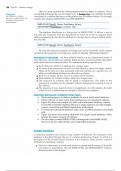
As shown reflected by the diagrams below, strategic futures can be broadly divided into four
categories.
, (Source: Adrian Haberberg, Alison Rieple ‘Strategic Management: Theory and Application’)
A Known Future
In some, quite rare, situations, it is clear how many customers there will be and what they will
require – or be persuaded by. For example, future demand for education services or for car for the
elderly can be predicted based on freely available demographic statistics. What people will want or
need to learn, or how older people will want to spend their time, can also be extrapolated (i.e.
deduced / inferred) with reasonable confidence by looking at the behaviour of similar customers in
the past.
Some allowance must be made for differences between generations, and there is still the possibility
of surprises. But managers are able to make informed and confident decisions about how much
capacity to build, where, and with what features.
Managers need to be cautious in deciding whether they have a known or a limited-option future. A
manager running a power utility could at one stage look back at past patterns of usage in order to
predict demand for the future. However, changing consumer concerns, and climate patterns may
mean increased use of air-conditioners or solar panels, which may affect demand in unprecedented
ways.
(Source: Adrian Haberberg, Alison Rieple ‘Strategic Management: Theory and Application’)
A Limited-option Future
In this, more common, situation, it is possible to identify a small number of potential outcomes from
a strategic decision, some of which may be more favourable than others. The final outcome may
depend on a number of factors e.g. whether overall demand for a product gets beyond a certain
threshold, whether certain competitors enter the market with competing products etc.
Decisions will depend on how probable the business believes each outcome to be, and what the
costs and benefits will be.
Decision structures like this can be found, in particular, in mature industries, where technological
option, and the number of competitors, tend to be few. For example, decisions as to whether to roll
out a new supermarket format, launch a new type of beer, or alter the way in which an accountant
approaches an audit would all fit this pattern. Tools that can help to inform businesses:
The Leader’s Role in Identifying Strategic Options
After having identified the strategic problem, i.e. the need for change, strategic leaders need to be
able to identify promising strategies, based on a meaningful conception (i.e. understanding /
comprehension) of the organisation’s mission, strategic objectives, core resources and current
performance with consideration of organisational culture & history and staff. (Yukl, 2013)
The Option Development and Evaluation Process
There will always be a variety of strategic options available to any organisation. these are alternative
ways of dealing with issues such as weaknesses in the organisation or the potential actions of
competitors or capitalising any areas of strength that are currently being under-exploited. In these
notes the various types of strategic option will be addressed; with methods of implementation and
evaluation being discussed later. This process is mapped in the figure below.
Confrontation Matrix (i.e. TOWS)
A Confrontation Matrix is a tool which is used to further analyse the output of a SWOT analysis. It
allows you to analyse each different combination of strength, weakness, opportunity, and threat. By
doing this the aim is to identify the most important strategic issues the organization is facing. An
example of a confrontation matrix is shown below.
,Note: this can be used to prioritise strategic issues.
Strategic Options
After assessing the performance of an organisation and identifying the main strategic issues facing it,
the next stage in the analysis is to develop a range of strategic options that will address the highest-
priority issues. For each issue, it is good discipline to seek out a number of different alternative
strategic options. This is to stimulate the creative reasoning that is a vital part of top-level strategic
thinking. It also helps to avoid automatically gravitating (i.e. leaning) towards obvious strategies that
may give no advantage, because competitors are following identical paths.
One option that is always available, in theory, is for the organisation to carry on with its present
strategy. This is sometimes referred to as the ‘do nothing option’, although in competitive markets
most organisations have to ‘run to stand still’: doing nothing is rarely an option. However, a broad
continuation of the present strategy may be quite a reasonable way forward where there is no
obvious way of resolving an issue, or where the present strategy is obviously successful.
Nevertheless, even highly successful organisations need to change their strategy to cope with
potential new developments in the environment. Sticking too rigidly (i.e. tightly / inflexibly) to the
same strategy for too long may lead the organisation into competency traps.
The options an organisation’s managers consider needs to be conditioned by the type of future that
it is confronting: some types of strategy make sense in very dynamic or uncertain environments, but
not where demand for a product and the features that will be required are predictable.
(Source: Adrian Haberberg, Alison Rieple ‘Strategic Management: Theory and Application’)
Note: a competency trap is the false belief that the same practice that led to a past success, it will
necessary lead to a future one.
Different Types of Strategic Future
As shown reflected by the diagrams below, strategic futures can be broadly divided into four
categories.
, (Source: Adrian Haberberg, Alison Rieple ‘Strategic Management: Theory and Application’)
A Known Future
In some, quite rare, situations, it is clear how many customers there will be and what they will
require – or be persuaded by. For example, future demand for education services or for car for the
elderly can be predicted based on freely available demographic statistics. What people will want or
need to learn, or how older people will want to spend their time, can also be extrapolated (i.e.
deduced / inferred) with reasonable confidence by looking at the behaviour of similar customers in
the past.
Some allowance must be made for differences between generations, and there is still the possibility
of surprises. But managers are able to make informed and confident decisions about how much
capacity to build, where, and with what features.
Managers need to be cautious in deciding whether they have a known or a limited-option future. A
manager running a power utility could at one stage look back at past patterns of usage in order to
predict demand for the future. However, changing consumer concerns, and climate patterns may
mean increased use of air-conditioners or solar panels, which may affect demand in unprecedented
ways.
(Source: Adrian Haberberg, Alison Rieple ‘Strategic Management: Theory and Application’)
A Limited-option Future
In this, more common, situation, it is possible to identify a small number of potential outcomes from
a strategic decision, some of which may be more favourable than others. The final outcome may
depend on a number of factors e.g. whether overall demand for a product gets beyond a certain
threshold, whether certain competitors enter the market with competing products etc.
Decisions will depend on how probable the business believes each outcome to be, and what the
costs and benefits will be.
Decision structures like this can be found, in particular, in mature industries, where technological
option, and the number of competitors, tend to be few. For example, decisions as to whether to roll
out a new supermarket format, launch a new type of beer, or alter the way in which an accountant
approaches an audit would all fit this pattern. Tools that can help to inform businesses: