

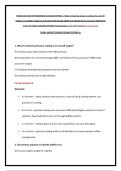
ENGINE COOLING SYSTEMSENGINE COOLING SYSTEMS 1. What is meant by pressure cooling of an aircraft
engine? -Air cooling in which air is forced to flow through baffles and cylinder fins by a pressure differential
across the engine-COOLING SYSTEMS Total Questions: 105+ With Verified Correct Answers
EXAM: AIRCRAFT ENGINE COOLING SYSTEMS A+
1. What is meant by pressure cooling of an aircraft engine?
A) Cooling using a liquid coolant under high pressure
B) Cooling where air is forced through baffles and cylinder fins by a pressure differential
across the engine
C) Cooling by directing exhaust gases over the cylinders
D) Cooling achieved only at high altitudes
Correct Answer: B
Rationale:
• A: Incorrect – liquid coolant under pressure is part of liquid cooling systems, not
pressure air cooling.
• B: Correct – pressure cooling uses a pressure differential (higher pressure in front of
cylinders, lower behind) to force air through baffles and fins.
• C: Incorrect – exhaust gases are hot; they would heat, not cool, the engine.
• D: Incorrect – pressure cooling works at all altitudes but requires proper airflow
management.
2. The primary purpose of cylinder baffles is to:
A) Increase engine weight for stability
,B) Direct cooling air flow around the cylinders and heads
C) Reduce engine noise
D) Contain oil leaks
Correct Answer: B
Rationale: Baffles create passages that force air to flow over the hottest areas (cylinder
heads, exhaust ports), maximizing heat transfer.
3. In a pressure cooling system, the pressure differential is created by:
A) A supercharger
B) The forward motion of the aircraft and the cowling design
C) An electric fan
D) Compressor bleed air
Correct Answer: B
Rationale: Ram air from forward motion enters the cowling, and the cowling’s exit area is
smaller or shaped to create a lower pressure behind the engine, pulling air through.
4. Excessive cylinder head temperature in an air-cooled engine is most likely caused by:
A) Too rich a fuel mixture
B) Too low a power setting
C) A defective baffle or missing cowl flap
D) Excessive oil pressure
Correct Answer: C
Rationale: Defective baffles allow cooling air to bypass cylinders; cowl flaps control exit air –
if stuck closed, cooling is poor; if open too much, drag increases but cooling improves.
,5. What happens to the cooling air pressure as it passes through the engine cylinder
section?
A) It increases
B) It remains constant
C) It decreases
D) It reverses direction
Correct Answer: C
Rationale: Pressure drops due to friction and expansion as air absorbs heat and passes
through narrow fin passages.
6. Cowl flaps are used to:
A) Increase engine power
B) Regulate the amount of cooling air flowing through the cowling
C) Decrease fuel flow
D) Direct exhaust gases
Correct Answer: B
Rationale: Cowl flaps open to increase airflow (more cooling) and close to reduce drag (less
cooling needed).
7. If cowl flaps are left fully open during cruise flight, the most likely consequence is:
A) Engine overheating
B) Excessive drag and higher fuel consumption
C) Increased engine power
D) Carburetor icing
, Correct Answer: B
Rationale: Open cowl flaps increase drag, reducing airspeed and increasing fuel burn for
same power.
8. The hottest part of an air-cooled aircraft cylinder is usually the:
A) Cylinder base (near crankcase)
B) Exhaust valve area
C) Intake valve area
D) Spark plug boss
Correct Answer: B
Rationale: Exhaust valve and its seat are exposed to combustion gases at ~1400-1600°F,
requiring maximum cooling fin area nearby.
9. Cooling fins on cylinders are made of aluminum because:
A) Aluminum is cheap
B) Aluminum has high thermal conductivity
C) Aluminum is heavy
D) Aluminum resists corrosion best
Correct Answer: B
Rationale: High thermal conductivity (approx. 205 W/m·K) allows rapid heat transfer from
cylinder walls to air.
10. In a horizontally opposed engine, the rear cylinders tend to run hotter than front
cylinders because:
A) Rear cylinders have smaller fins
engine? -Air cooling in which air is forced to flow through baffles and cylinder fins by a pressure differential
across the engine-COOLING SYSTEMS Total Questions: 105+ With Verified Correct Answers
EXAM: AIRCRAFT ENGINE COOLING SYSTEMS A+
1. What is meant by pressure cooling of an aircraft engine?
A) Cooling using a liquid coolant under high pressure
B) Cooling where air is forced through baffles and cylinder fins by a pressure differential
across the engine
C) Cooling by directing exhaust gases over the cylinders
D) Cooling achieved only at high altitudes
Correct Answer: B
Rationale:
• A: Incorrect – liquid coolant under pressure is part of liquid cooling systems, not
pressure air cooling.
• B: Correct – pressure cooling uses a pressure differential (higher pressure in front of
cylinders, lower behind) to force air through baffles and fins.
• C: Incorrect – exhaust gases are hot; they would heat, not cool, the engine.
• D: Incorrect – pressure cooling works at all altitudes but requires proper airflow
management.
2. The primary purpose of cylinder baffles is to:
A) Increase engine weight for stability
,B) Direct cooling air flow around the cylinders and heads
C) Reduce engine noise
D) Contain oil leaks
Correct Answer: B
Rationale: Baffles create passages that force air to flow over the hottest areas (cylinder
heads, exhaust ports), maximizing heat transfer.
3. In a pressure cooling system, the pressure differential is created by:
A) A supercharger
B) The forward motion of the aircraft and the cowling design
C) An electric fan
D) Compressor bleed air
Correct Answer: B
Rationale: Ram air from forward motion enters the cowling, and the cowling’s exit area is
smaller or shaped to create a lower pressure behind the engine, pulling air through.
4. Excessive cylinder head temperature in an air-cooled engine is most likely caused by:
A) Too rich a fuel mixture
B) Too low a power setting
C) A defective baffle or missing cowl flap
D) Excessive oil pressure
Correct Answer: C
Rationale: Defective baffles allow cooling air to bypass cylinders; cowl flaps control exit air –
if stuck closed, cooling is poor; if open too much, drag increases but cooling improves.
,5. What happens to the cooling air pressure as it passes through the engine cylinder
section?
A) It increases
B) It remains constant
C) It decreases
D) It reverses direction
Correct Answer: C
Rationale: Pressure drops due to friction and expansion as air absorbs heat and passes
through narrow fin passages.
6. Cowl flaps are used to:
A) Increase engine power
B) Regulate the amount of cooling air flowing through the cowling
C) Decrease fuel flow
D) Direct exhaust gases
Correct Answer: B
Rationale: Cowl flaps open to increase airflow (more cooling) and close to reduce drag (less
cooling needed).
7. If cowl flaps are left fully open during cruise flight, the most likely consequence is:
A) Engine overheating
B) Excessive drag and higher fuel consumption
C) Increased engine power
D) Carburetor icing
, Correct Answer: B
Rationale: Open cowl flaps increase drag, reducing airspeed and increasing fuel burn for
same power.
8. The hottest part of an air-cooled aircraft cylinder is usually the:
A) Cylinder base (near crankcase)
B) Exhaust valve area
C) Intake valve area
D) Spark plug boss
Correct Answer: B
Rationale: Exhaust valve and its seat are exposed to combustion gases at ~1400-1600°F,
requiring maximum cooling fin area nearby.
9. Cooling fins on cylinders are made of aluminum because:
A) Aluminum is cheap
B) Aluminum has high thermal conductivity
C) Aluminum is heavy
D) Aluminum resists corrosion best
Correct Answer: B
Rationale: High thermal conductivity (approx. 205 W/m·K) allows rapid heat transfer from
cylinder walls to air.
10. In a horizontally opposed engine, the rear cylinders tend to run hotter than front
cylinders because:
A) Rear cylinders have smaller fins


