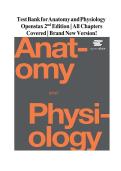
Test Bank for Anatomy and Physiology
n6n6 n6n6 n6n6 n6n6 n6n6
Openstax 2nd Edition | All Chapters
n6n6 n6n6 n6n6 n6n6 n6n6 n6n6
Covered | Brand New Version!
n6n6 n6n6 n6n6 n6n6 n6n6
,1. An Introduction to the Human Body
n6n6 n6n6 n6n6 n6n6 n6n6
1. is the study of the larger structures of the body, those visible without the aid of magnification
n6n6 n6n6 n6n6 n6n6 n6n6 n6n6 n6n6 n6n6 n6n6 n6n6 n6n6 n6n6 n6n6 n6n6 n6n6 n6n6
(A) Gross anatomy n6n6
(B) Microscopic anatomy n6n6
(C) Macroscopic anatomy n6n6
(D) Physical anatomy n6n6
Ans A n6n6 Diff Easy n6n6 Page 8 n6n6
2. The word “anatomy” comes from a Greek root that means “........ ’’
n6n6 n6n6 n6n6 n6n6 n6n6 n6n6 n6n6 n6n6 n6n6 n6n6
(A) To cut apart n6n6 n6n6
(B) To fix with n6n6 n6n6
(C) To view inside n6n6 n6n6
(D) To study exterior n6n6 n6n6
Ans A n6n6 Diff Easy n6n6 Page 8 n6n6
3. Dissection is still used in …………. n6n6 n6n6 n6n6 n6n6 n6n6
(A) Medical schools n6n6
(B) Pathology labs n6n6
(C) Anatomy courses n6n6
(D) All of above n6n6 n6n6
Ans D n6n6 Diff Easy n6n6 Page 8 n6n6
4. Microscopic anatomy includes …………. n6n6 n6n6 n6n6
(A) Histology
(B) Cytology
(C) Both of above n6n6 n6n6
(D) None of above n6n6 n6n6
Ans C n6n6 Diff Easy n6n6 Page 8 n6n6
5 ................. is the study of the structures that make up a discrete body system—that is, a group of
n6n6 n6n6 n6n6 n6n6 n6n6 n6n6 n6n6 n6n6 n6n6 n6n6 n6n6 n6n6 n6n6 n6n6 n6n6 n6n6
structures that work together to perform a unique body function.
n6n6 n6n6 n6n6 n6n6 n6n6 n6n6 n6n6 n6n6 n6n6
(A) Regional anatomy n6n6
(B) Systematic anatomy n6n6
, (C) Both of above n6n6 n6n6
(D) None of above n6n6 n6n6
Ans C n6n6 Diff Easy n6n6 Page 9 n6n6
6. Human physiology is the scientific study of the ......... of the structures of the body and the ways in
n6n6 n6n6 n6n6 n6n6 n6n6 n6n6 n6n6 n6n6 n6n6 n6n6 n6n6 n6n6 n6n6 n6n6 n6n6 n6n6
which they work together to support the functions of life.
n6n6 n6n6 n6n6 n6n6 n6n6 n6n6 n6n6 n6n6 n6n6
(A) Chemistry
(B) Physic
(C) Both Above n6n6
(D) None of Above n6n6 n6n6
Ans C n6n6 Diff Medium n6n6 Page 9 n6n6
7. Homeostasis is the state of steady ------- maintained by living things.
n6n6 n6n6 n6n6 n6n6 n6n6 n6n6 n6n6 n6n6
(A) Internal Condition n6n6
(B) External conditions n6n6
(C) Both Above n6n6
(D) None of Above n6n6 n6n6
Ans A n6n6 Diff Easy n6n6 Page 9 n6n6
8. An organ is an anatomically distinct structure of the body composed of ------- tissue types.
n6n6 n6n6 n6n6 n6n6 n6n6 n6n6 n6n6 n6n6 n6n6 n6n6 n6n6 n6n6
(A) One
(B) Two
(C) Two or more n6n6 n6n6
(D) None of above n6n6 n6n6
Ans C
n6n6 Diff Easy n6n6 Page 11 n6n6
9. In ------------- organisms, including humans, all cells, tissues, organs, and organ systems of the body n6n6 n6n6 n6n6 n6n6 n6n6 n6n6 n6n6 n6n6 n6n6 n6n6 n6n6 n6n6
work together to maintain the life and health of the organism.
n6n6 n6n6 n6n6 n6n6 n6n6 n6n6 n6n6 n6n6 n6n6 n6n6
(A) Unicellular
(B) Bicellular
(C) Multicellular
(D) None of above n6n6 n6n6
, Ans C
n6n6 Diff Easy n6n6 Page 14 n6n6
10. The different organ systems each have different functions and therefore -------- roles to perform in
n6n6 n6n6 n6n6 n6n6 n6n6 n6n6 n6n6 n6n6 n6n6 n6n6 n6n6 n6n6
physiology.
(A) Unique
(B) Different
(C) Both Above n6n6
(D) None of Above n6n6 n6n6
Ans C n6n6 Diff Easy n6n6 Page14
11. A human body consists of trillions of cells organized in a way that maintains distinct ……….. .
n6n6 n6n6 n6n6 n6n6 n6n6 n6n6 n6n6 n6n6 n6n6 n6n6 n6n6 n6n6 n6n6 n6n6 n6n6 n6n6
(A) Internal compartments n6n6
(B) External compartments n6n6
(C) Both of above n6n6 n6n6
(D) None of above n6n6 n6n6
Ans A n6n6 Diff Mediumn6n6 Page 14 n6n6
12. The organism level is the .......... level of organization
n6n6 n6n6 n6n6 n6n6 n6n6 n6n6
(A) Lowest
(B) Highest
(C) Medium
(D) Extreme
Ans A n6n6 Diff Mediumn6n6 Page 14 n6n6
13. Which of the following mechanism is involved in releasing energy?
n6n6 n6n6 n6n6 n6n6 n6n6 n6n6 n6n6 n6n6 n6n6
(A) Catabolism
(B) Anabolism
(C) Both of above n6n6 n6n6
(D) None of above n6n6 n6n6
Ans C n6n6 Diff Medium
n6n6 Page 14 n6n6
14. Every cell in your body makes use of a chemical compound, adenosine triphosphate (ATP), to ………. .
n6n6 n6n6 n6n6 n6n6 n6n6 n6n6 n6n6 n6n6 n6n6 n6n6 n6n6 n6n6 n6n6 n6n6 n6n6 n6n6
(A) Store energy n6n6
(B) Release energy n6n6
n6n6 n6n6 n6n6 n6n6 n6n6
Openstax 2nd Edition | All Chapters
n6n6 n6n6 n6n6 n6n6 n6n6 n6n6
Covered | Brand New Version!
n6n6 n6n6 n6n6 n6n6 n6n6
,1. An Introduction to the Human Body
n6n6 n6n6 n6n6 n6n6 n6n6
1. is the study of the larger structures of the body, those visible without the aid of magnification
n6n6 n6n6 n6n6 n6n6 n6n6 n6n6 n6n6 n6n6 n6n6 n6n6 n6n6 n6n6 n6n6 n6n6 n6n6 n6n6
(A) Gross anatomy n6n6
(B) Microscopic anatomy n6n6
(C) Macroscopic anatomy n6n6
(D) Physical anatomy n6n6
Ans A n6n6 Diff Easy n6n6 Page 8 n6n6
2. The word “anatomy” comes from a Greek root that means “........ ’’
n6n6 n6n6 n6n6 n6n6 n6n6 n6n6 n6n6 n6n6 n6n6 n6n6
(A) To cut apart n6n6 n6n6
(B) To fix with n6n6 n6n6
(C) To view inside n6n6 n6n6
(D) To study exterior n6n6 n6n6
Ans A n6n6 Diff Easy n6n6 Page 8 n6n6
3. Dissection is still used in …………. n6n6 n6n6 n6n6 n6n6 n6n6
(A) Medical schools n6n6
(B) Pathology labs n6n6
(C) Anatomy courses n6n6
(D) All of above n6n6 n6n6
Ans D n6n6 Diff Easy n6n6 Page 8 n6n6
4. Microscopic anatomy includes …………. n6n6 n6n6 n6n6
(A) Histology
(B) Cytology
(C) Both of above n6n6 n6n6
(D) None of above n6n6 n6n6
Ans C n6n6 Diff Easy n6n6 Page 8 n6n6
5 ................. is the study of the structures that make up a discrete body system—that is, a group of
n6n6 n6n6 n6n6 n6n6 n6n6 n6n6 n6n6 n6n6 n6n6 n6n6 n6n6 n6n6 n6n6 n6n6 n6n6 n6n6
structures that work together to perform a unique body function.
n6n6 n6n6 n6n6 n6n6 n6n6 n6n6 n6n6 n6n6 n6n6
(A) Regional anatomy n6n6
(B) Systematic anatomy n6n6
, (C) Both of above n6n6 n6n6
(D) None of above n6n6 n6n6
Ans C n6n6 Diff Easy n6n6 Page 9 n6n6
6. Human physiology is the scientific study of the ......... of the structures of the body and the ways in
n6n6 n6n6 n6n6 n6n6 n6n6 n6n6 n6n6 n6n6 n6n6 n6n6 n6n6 n6n6 n6n6 n6n6 n6n6 n6n6
which they work together to support the functions of life.
n6n6 n6n6 n6n6 n6n6 n6n6 n6n6 n6n6 n6n6 n6n6
(A) Chemistry
(B) Physic
(C) Both Above n6n6
(D) None of Above n6n6 n6n6
Ans C n6n6 Diff Medium n6n6 Page 9 n6n6
7. Homeostasis is the state of steady ------- maintained by living things.
n6n6 n6n6 n6n6 n6n6 n6n6 n6n6 n6n6 n6n6
(A) Internal Condition n6n6
(B) External conditions n6n6
(C) Both Above n6n6
(D) None of Above n6n6 n6n6
Ans A n6n6 Diff Easy n6n6 Page 9 n6n6
8. An organ is an anatomically distinct structure of the body composed of ------- tissue types.
n6n6 n6n6 n6n6 n6n6 n6n6 n6n6 n6n6 n6n6 n6n6 n6n6 n6n6 n6n6
(A) One
(B) Two
(C) Two or more n6n6 n6n6
(D) None of above n6n6 n6n6
Ans C
n6n6 Diff Easy n6n6 Page 11 n6n6
9. In ------------- organisms, including humans, all cells, tissues, organs, and organ systems of the body n6n6 n6n6 n6n6 n6n6 n6n6 n6n6 n6n6 n6n6 n6n6 n6n6 n6n6 n6n6
work together to maintain the life and health of the organism.
n6n6 n6n6 n6n6 n6n6 n6n6 n6n6 n6n6 n6n6 n6n6 n6n6
(A) Unicellular
(B) Bicellular
(C) Multicellular
(D) None of above n6n6 n6n6
, Ans C
n6n6 Diff Easy n6n6 Page 14 n6n6
10. The different organ systems each have different functions and therefore -------- roles to perform in
n6n6 n6n6 n6n6 n6n6 n6n6 n6n6 n6n6 n6n6 n6n6 n6n6 n6n6 n6n6
physiology.
(A) Unique
(B) Different
(C) Both Above n6n6
(D) None of Above n6n6 n6n6
Ans C n6n6 Diff Easy n6n6 Page14
11. A human body consists of trillions of cells organized in a way that maintains distinct ……….. .
n6n6 n6n6 n6n6 n6n6 n6n6 n6n6 n6n6 n6n6 n6n6 n6n6 n6n6 n6n6 n6n6 n6n6 n6n6 n6n6
(A) Internal compartments n6n6
(B) External compartments n6n6
(C) Both of above n6n6 n6n6
(D) None of above n6n6 n6n6
Ans A n6n6 Diff Mediumn6n6 Page 14 n6n6
12. The organism level is the .......... level of organization
n6n6 n6n6 n6n6 n6n6 n6n6 n6n6
(A) Lowest
(B) Highest
(C) Medium
(D) Extreme
Ans A n6n6 Diff Mediumn6n6 Page 14 n6n6
13. Which of the following mechanism is involved in releasing energy?
n6n6 n6n6 n6n6 n6n6 n6n6 n6n6 n6n6 n6n6 n6n6
(A) Catabolism
(B) Anabolism
(C) Both of above n6n6 n6n6
(D) None of above n6n6 n6n6
Ans C n6n6 Diff Medium
n6n6 Page 14 n6n6
14. Every cell in your body makes use of a chemical compound, adenosine triphosphate (ATP), to ………. .
n6n6 n6n6 n6n6 n6n6 n6n6 n6n6 n6n6 n6n6 n6n6 n6n6 n6n6 n6n6 n6n6 n6n6 n6n6 n6n6
(A) Store energy n6n6
(B) Release energy n6n6