

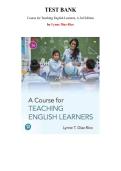
TEST BANK
Course for Teaching English Learners, A 3rd Edition
by Lynne Diaz-Rico
LU
XE
LI
BR
AR
Y
, TABLE OF CONTENT
1. English Learners and Their Teachers
2. Language Structure and Use
3. First- and Second-Language Development Related to Academic Achievement
4. Programs for English Learners
5. English-Language Literacy Development, Lesson Planning, and Specially Designed Content
LU
Instruction in English
6. English-Language Oracy Development
XE
7. English-Language Literacy Development
8. Assessment of English Learners
9. Culture and Cultural Diversity and Their Relationship to Academic Achievement
LI
10. Culturally Inclusive Instruction
BR
AR
Y
, KJHGFD
Chapter 1 English Learners and Their Teachers
1. What is the definition of CLD students?
A. culturally and linguistically diverse
B. competently learning differences
C. continuously learning diversity
D. classified learning disabled
2. What are two-way immersion (TWI) programs?
A. classroom programs that enable English speakers to learn a second language with
LU
English learners
B. community-based programs in which participants learn two languages simultaneously
C. study abroad programs in which English speakers learn the local language while
teaching English
D. university programs that encourage English learners to study English and an
XE
additional language
3. Approximately what percent of all K-12 students in the U.S. are English learners?
A. 50
B. 94
C. 2.5
D. 9.4
LI
4. Which state has the highest percentage of English learners in public schools?
A. Texas
BR
B. New York
C. California
D. Florida
5. Which three states have the highest number of English learners in public school?
A. California, Texas, Arizona
B. California, Texas, Florida
AR
C. Texas, Arizona, New Mexico
D. Nevada, Arizona, New Mexico
6. What languages do the two largest non-English-speaking populations speak in the U.S.?
A. Spanish and Arabic
B. Spanish and Chinese
Y
C. Spanish and Japanese
D. Spanish and Hindu
7. Approximately what percentage of English learners were born in the U.S.?
A. 5
B. 19
C. 27
D. 44
1
Copyright © 2020, 2012, 2008 Pearson Education, Inc. All rights reserved.
, KJHGFD
8. What are the six elements of teaching with integrity?
A. advocating for social change, compassion, fairness, justice, equity, and equal
opportunities for all students
B. creating after-school programs, meeting with parents, serving as liaison between
English learners and the community, serving on committees, donating time, and
writing letters to policy makers
C. having the willingness to be fully human, having high expectations for students, being
fully qualified, maintaining professional ethics, being an intercultural educator, and
having clarity of vision
D. understanding more than one language, supporting bilingual students, volunteering
LU
with English learners, creating democratic spaces, helping create multilingual spaces,
and donating money to worthwhile causes
9. What is an example of a teacher acting as a fully actualized human being?
A. using behavior charts
XE
B. apologizing when wrong
C. acting like a student’s buddy
D. treating students like peers
10. What is a “self-fulfilling prophecy of low achievement”?
A. A student who believes they will do poorly on exams will do poorly even if a teacher
has high expectations.
LI
B. A teacher’s low expectations and negative perceptions of students can cause students
to have low academic achievement.
C. A teacher’s low expectations of self can lead to low achievement in the classroom,
BR
which leads to low student test scores.
D. A student with parents who discourage the student from spending time studying after
school.
11. What does it mean to be a “fully qualified” English-language teacher?
A. having a degree in English and a teaching credential in the state where one intends to
teach
AR
B. having expertise in theories and pedagogies related to teaching academic literacy to
English learners and having proficiency in the native language of the students one
intends to teach
C. having training as an English teacher in the communities one intends to teach and
being able to critically analyze those communities
D. having compassion toward marginalized students and a strong desire to help students
Y
from those communities
12. Which organization is responsible for the Code of Ethics of the Education Profession?
A. Teaching English to Speakers of Other Languages International (TESOL)
B. The National Association of English Language Teachers (NAELT)
C. The U.S. Department of Education (USDE)
D. The National Education Association (NEA)
2
Copyright © 2020, 2012, 2008 Pearson Education, Inc. All rights reserved.
Course for Teaching English Learners, A 3rd Edition
by Lynne Diaz-Rico
LU
XE
LI
BR
AR
Y
, TABLE OF CONTENT
1. English Learners and Their Teachers
2. Language Structure and Use
3. First- and Second-Language Development Related to Academic Achievement
4. Programs for English Learners
5. English-Language Literacy Development, Lesson Planning, and Specially Designed Content
LU
Instruction in English
6. English-Language Oracy Development
XE
7. English-Language Literacy Development
8. Assessment of English Learners
9. Culture and Cultural Diversity and Their Relationship to Academic Achievement
LI
10. Culturally Inclusive Instruction
BR
AR
Y
, KJHGFD
Chapter 1 English Learners and Their Teachers
1. What is the definition of CLD students?
A. culturally and linguistically diverse
B. competently learning differences
C. continuously learning diversity
D. classified learning disabled
2. What are two-way immersion (TWI) programs?
A. classroom programs that enable English speakers to learn a second language with
LU
English learners
B. community-based programs in which participants learn two languages simultaneously
C. study abroad programs in which English speakers learn the local language while
teaching English
D. university programs that encourage English learners to study English and an
XE
additional language
3. Approximately what percent of all K-12 students in the U.S. are English learners?
A. 50
B. 94
C. 2.5
D. 9.4
LI
4. Which state has the highest percentage of English learners in public schools?
A. Texas
BR
B. New York
C. California
D. Florida
5. Which three states have the highest number of English learners in public school?
A. California, Texas, Arizona
B. California, Texas, Florida
AR
C. Texas, Arizona, New Mexico
D. Nevada, Arizona, New Mexico
6. What languages do the two largest non-English-speaking populations speak in the U.S.?
A. Spanish and Arabic
B. Spanish and Chinese
Y
C. Spanish and Japanese
D. Spanish and Hindu
7. Approximately what percentage of English learners were born in the U.S.?
A. 5
B. 19
C. 27
D. 44
1
Copyright © 2020, 2012, 2008 Pearson Education, Inc. All rights reserved.
, KJHGFD
8. What are the six elements of teaching with integrity?
A. advocating for social change, compassion, fairness, justice, equity, and equal
opportunities for all students
B. creating after-school programs, meeting with parents, serving as liaison between
English learners and the community, serving on committees, donating time, and
writing letters to policy makers
C. having the willingness to be fully human, having high expectations for students, being
fully qualified, maintaining professional ethics, being an intercultural educator, and
having clarity of vision
D. understanding more than one language, supporting bilingual students, volunteering
LU
with English learners, creating democratic spaces, helping create multilingual spaces,
and donating money to worthwhile causes
9. What is an example of a teacher acting as a fully actualized human being?
A. using behavior charts
XE
B. apologizing when wrong
C. acting like a student’s buddy
D. treating students like peers
10. What is a “self-fulfilling prophecy of low achievement”?
A. A student who believes they will do poorly on exams will do poorly even if a teacher
has high expectations.
LI
B. A teacher’s low expectations and negative perceptions of students can cause students
to have low academic achievement.
C. A teacher’s low expectations of self can lead to low achievement in the classroom,
BR
which leads to low student test scores.
D. A student with parents who discourage the student from spending time studying after
school.
11. What does it mean to be a “fully qualified” English-language teacher?
A. having a degree in English and a teaching credential in the state where one intends to
teach
AR
B. having expertise in theories and pedagogies related to teaching academic literacy to
English learners and having proficiency in the native language of the students one
intends to teach
C. having training as an English teacher in the communities one intends to teach and
being able to critically analyze those communities
D. having compassion toward marginalized students and a strong desire to help students
Y
from those communities
12. Which organization is responsible for the Code of Ethics of the Education Profession?
A. Teaching English to Speakers of Other Languages International (TESOL)
B. The National Association of English Language Teachers (NAELT)
C. The U.S. Department of Education (USDE)
D. The National Education Association (NEA)
2
Copyright © 2020, 2012, 2008 Pearson Education, Inc. All rights reserved.


