

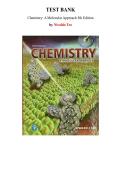
TEST BANK
Chemistry: A Molecular Approach 5th Edition
by Nivaldo Tro
SC
O
R
EG
U
ID
ES
, Table of Content
Ch.1 - Matter, Measurement & Problem Solving
Ch.2 - Atoms & Elements
Ch.3 - Molecules and Compounds
Ch.4 - Chemical Reactions and Chemical Quantities
Ch.5 - Introduction to Solutions and Aqueous Solutions
Ch.6 - Gases
SC
Ch.7 - Thermochemistry
Ch.8 - The Quantum-Mechanical Model of the Atom
Ch.9 - Periodic Properties of the Elements
O
Ch.10 - Chemical Bonding I: The Lewis Model
R
Ch.11 - Chemical Bonding II: Molecular Shapes, VSEPR & MO Theory
Ch.12 - Liquids, Solids & Intermolecular Forces
EG
Ch.13 - Solids & Modern Materials
Ch.14 - Solutions
Ch.15 - Chemical Kinetics
U
Ch.16 - Chemical Equilibrium
Ch.17 - Acids and Bases
ID
Ch.18 - Aqueous Ionic Equilibrium
Ch.19 - Free Energy & Thermodynamics
ES
Ch.20 - Electrochemistry
Ch.21 - Radioactivity & Nuclear Chemistry
Ch.22 - Organic Chemistry
, Test Bank for Chemistry A
Molecular Approach, 5e
Nivaldo Tro (Correct
Answer Marked with *)
Chapter 1
1. Which of the following is an example of physical change?
SC
a. Bread is baked.
b. Fireworks explode.
c. Baking soda decomposes.
*d. Sugar is dissolved in water.
O
2. Which of the following is an example of a physical change?
*a. Melting ice
b. Digesting food
R
c. Souring milk
d. Making water from hydrogen gas and oxygen gas
e. Burning wood
EG
3. Which of the following is an example of a physical change?
a. An egg solidifies during cooking.
b. A hydrogen balloon explodes when contacted with a flame.
c. A Halloween light stick glows after shaking.
*d. Dew forms on a blade of grass.
e. None of the above is a physical change.
U
4. Which of the following is an example of a chemical change?
ID
a. Solid ice melts.
b. Brewing tea.
c. Ethanol evaporates.
*d. Copper building materials develop a green patina over time.
ES
5. Which of the following is an example of a chemical change?
a. Evaporating water
b. Sublimation of moth balls
c. Melting gold
*d. Burning wood
, e. Condensation of steam
6. A physical change ________.
*a. occurs when water is evaporated
b. occurs when sugar is heated into caramel
c. occurs when glucose is converted into energy within your cells
d. occurs when iron rusts
e. occurs when propane is burned for heat
7. A chemical change ________.
*a. occurs when methane gas is burned
SC
b. occurs when sand is mixed with water
c. occurs when water is vaporized
d. occurs when powdered lemonade is stirred into water
e. occurs when paper is shredded
8. Which of the following represents a physical property?
O
*a. Mercury is a silvery liquid at room temperature.
b. Aluminum has a tendency to "rust."
c. Argon has an unreactive nature.
R
d. Butane is highly flammable.
e. Sodium metal is extremely reactive with chlorine gas.
EG
9. Which of the following represents a chemical property of hydrogen
gas?
*a. It reacts explosively with oxygen.
b. It is colourless.
c. It is less dense than air.
d. It is gaseous at room temperature.
U
e. It is tasteless.
10. Total energy of an object is best defined as the sum of ________.
ID
a. kinetic energy and thermal energy
b. potential energy and magnetic energy
*c. kinetic energy and potential energy
d. chemical energy and potential energy
ES
e. chemical energy and magnetic energy
11. The energy associated with the temperature of an object is known as
the ________.
a. total energy
*b. thermal energy
Chemistry: A Molecular Approach 5th Edition
by Nivaldo Tro
SC
O
R
EG
U
ID
ES
, Table of Content
Ch.1 - Matter, Measurement & Problem Solving
Ch.2 - Atoms & Elements
Ch.3 - Molecules and Compounds
Ch.4 - Chemical Reactions and Chemical Quantities
Ch.5 - Introduction to Solutions and Aqueous Solutions
Ch.6 - Gases
SC
Ch.7 - Thermochemistry
Ch.8 - The Quantum-Mechanical Model of the Atom
Ch.9 - Periodic Properties of the Elements
O
Ch.10 - Chemical Bonding I: The Lewis Model
R
Ch.11 - Chemical Bonding II: Molecular Shapes, VSEPR & MO Theory
Ch.12 - Liquids, Solids & Intermolecular Forces
EG
Ch.13 - Solids & Modern Materials
Ch.14 - Solutions
Ch.15 - Chemical Kinetics
U
Ch.16 - Chemical Equilibrium
Ch.17 - Acids and Bases
ID
Ch.18 - Aqueous Ionic Equilibrium
Ch.19 - Free Energy & Thermodynamics
ES
Ch.20 - Electrochemistry
Ch.21 - Radioactivity & Nuclear Chemistry
Ch.22 - Organic Chemistry
, Test Bank for Chemistry A
Molecular Approach, 5e
Nivaldo Tro (Correct
Answer Marked with *)
Chapter 1
1. Which of the following is an example of physical change?
SC
a. Bread is baked.
b. Fireworks explode.
c. Baking soda decomposes.
*d. Sugar is dissolved in water.
O
2. Which of the following is an example of a physical change?
*a. Melting ice
b. Digesting food
R
c. Souring milk
d. Making water from hydrogen gas and oxygen gas
e. Burning wood
EG
3. Which of the following is an example of a physical change?
a. An egg solidifies during cooking.
b. A hydrogen balloon explodes when contacted with a flame.
c. A Halloween light stick glows after shaking.
*d. Dew forms on a blade of grass.
e. None of the above is a physical change.
U
4. Which of the following is an example of a chemical change?
ID
a. Solid ice melts.
b. Brewing tea.
c. Ethanol evaporates.
*d. Copper building materials develop a green patina over time.
ES
5. Which of the following is an example of a chemical change?
a. Evaporating water
b. Sublimation of moth balls
c. Melting gold
*d. Burning wood
, e. Condensation of steam
6. A physical change ________.
*a. occurs when water is evaporated
b. occurs when sugar is heated into caramel
c. occurs when glucose is converted into energy within your cells
d. occurs when iron rusts
e. occurs when propane is burned for heat
7. A chemical change ________.
*a. occurs when methane gas is burned
SC
b. occurs when sand is mixed with water
c. occurs when water is vaporized
d. occurs when powdered lemonade is stirred into water
e. occurs when paper is shredded
8. Which of the following represents a physical property?
O
*a. Mercury is a silvery liquid at room temperature.
b. Aluminum has a tendency to "rust."
c. Argon has an unreactive nature.
R
d. Butane is highly flammable.
e. Sodium metal is extremely reactive with chlorine gas.
EG
9. Which of the following represents a chemical property of hydrogen
gas?
*a. It reacts explosively with oxygen.
b. It is colourless.
c. It is less dense than air.
d. It is gaseous at room temperature.
U
e. It is tasteless.
10. Total energy of an object is best defined as the sum of ________.
ID
a. kinetic energy and thermal energy
b. potential energy and magnetic energy
*c. kinetic energy and potential energy
d. chemical energy and potential energy
ES
e. chemical energy and magnetic energy
11. The energy associated with the temperature of an object is known as
the ________.
a. total energy
*b. thermal energy


