Summary HEMATOLOGY STUDY PACK REVISED EDITION- LATEST
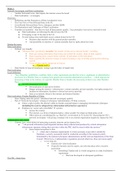
HEMATOLOGY STUDY PACK REVISED EDITION I. Introduction Definition: Hemopoiesis is the process of blood cell formation. Sites of hemopoiesis: Foetus: 0-3 months yolk sac, 3-5 months liver and spleen, 5-9 months Bone marrow. Postnatal life: - Infancy: all bone marrow is haemopoeitic. During childhood, There is progressive fatty replacement of marrow of long bones, so that, by the age of 20 years, the marrow cavities of peripheral bones have stopped producing blood cells yellow marrow”, while Haemopoeitic marrow red marrow becomes confined only to the axial skeleton vertebrae, sternum, ribs, skull, sacrum and iliac bones, in addition to the proximal ends of femurs and humeri. - Even in the red hemopietic marrow, approximately 25-50% of this marrow consists of fat - In cases of sever hematological stress e.g. chronic hemolytic anemias and myelofibrosis, the yellow fatty marrow in the long bones is capable to reversion to hemopoiesis (i.e. becomes red marrow) to help meet the demands for increased blood cells production. In addition, extramedullary hemopoiesis can occur in the liver and spleen leading to hepato-splenomegaly. II. BM: The hemopoietic ability of the bone marrow depends on both its cellular and physical composition. a. Stem cells - The stem cells (CD34+, CD38-) found within the marrow are the origin of all blood cells. Stem cells have multiple abilities of forming the different types of cells. They are called pluripotential (totipotent) stem cells and are characterized by their ability to generate colonies of progenitor cells on the spleen of irradiated mice thus; they were first called Colony forming unit-spleen (CFU-S). - The pluripotential stem cells are uncommitted cells which under stimulation by growth factors will be partially committed to yield partially committed cells, the progenitor cells, which are myeloid ad lymphoid multipotential stem cells (also called Pluripotent stem cell myeloid PSC-M and Pluripotent stem cell lymphoid PSC-L also called myeloid progenitor cell and lymphoid progenitor cell) that differentiate into different types of blood cells b. Microenvironment: The cellular, physical and chemical properties of the bone marrow that render it hemopoietic are collectively termed the hemopoietic microenvironment. 1. Stromal cells: Stromal cells provide the support, on which the hemopoietic cells grow and divide. These cells provide hemopoietic growth factors and specific recognition and adhesion sites: - Macrophages - Endothelial cells - Fibroblasts - Reticulum cells - Fat cells (fill about half of marrow cavity). 2. Extracellular matrix: Extracellular matrix provides a framework on which differentiation of the hemopoietic cells can occur. Several matrix glycoproteins act as specific recognition sites and adhesion sites for the hemopietic progenitor cells: - Fibronectin binds erythroid precursors. - Hemonectin binds granulocyte precursors - Laminin - Collagen - Proteoglycans acid mucopolysaccharides e.g. chondrotin & heparin. 3. blood sinusoids 4. Hemopoietic growth factors: Hemopoietic growth factors are protein hormones that contribute to the microenvironment of the bone marrow hemopoiesis. They regulate the proliferation and differentiation of hemopoietic progenitor cells and the function of the mature blood cells. General properties of growth factor: - Glycoproteins that act at very low concentration. - Produced by many stromal cell types lymphocytes, monocytes, MQ, endothelial cells & fibroblasts. - Control the multiplication and differentiation of stem and progenitor cells intro mature circulating blood cells. - Active on stem/progenitor cells as well as mature functioning cells. - Multiple actions proliferation, differentiation, maturation, membrane integrity & functional activation. Usually affect more than on lineage. Classification 1. Non-lineage specific growth factors: - Act on stromal cell IL-1 & TND stimulate production of GM-CSF, G-CSF, M-CSF & IL-6 - Act on pluripotential stem cells SCF (stem cell factor). - Act on early multipotential cells IL-3, IL-6 & GM-CSF. 2. Lineage specific growth factors: - G-CSF - M-CSF - IL-5 - Erythropoietin - Thrombopoietin 3. Lymphokines & monokines have wide ranging hemopoietic effects IL-1 stimulate marrow stromal cells to produce CSF. III. Erythropoiesis: Definition: It is the process of production of red cells in the adult bone marrow. Regulation of erythropoesis: Erythropoiesis is regulated by several growth factors that moderate the differentiation of erythroid progenitor cells. 1. IL-3: Is a multi-colony stimulating factor (multi-CSF) that is essential for providing the bone marrow with cells that are responsive to erythropoietin. 2. Erythropoietin: Important note: Erythropoietin - It is a glycoprotein hormone that stimulates erythropoiesis by acting one bone marrow stem cells. - It is synthesized primarily in the kidney 90% and in the liver 10% in response to hypoxia. It has a molecular weight of 34,000 Daltons. It is heavily glycosylated with a polypeptide of 165 aminoacids. It has a plasma half life of 6-9 hours. - oxygen tension in renal tissue is the stimulus for erythropoietin synthesis while oxygen supply to the tissue ( red cell mass), reduced the erythropoietin release. - Actions of erythropoietin: Inhibit apoptosis of erythroid progenitor. Stimulates the differentiation of stem cells into pronormoblasts. Stimulates the rate of maturation of normoblasts. Stimulates the rate of hemoglobin synthesis. Stimulates premature release of Reticulocytes from bone marrow. - Causes of erythropoietin: a. Appropriate resulting from low tissue oxygenation: All anemias except that due to uremia. High altitude and hypoventilation. Cardiovascular disease especially congenital cyanotic heart disease (right to left shunt). Chronic obstructive pulmonary disease (COPD) Hemoglobinopathies with high oxygen affinity. Cigarette smoking ( carboxyhemoglobin).
Written for
- Institution
- HEMATOLOGY
- Course
- HEMATOLOGY
Document information
- Uploaded on
- April 28, 2021
- Number of pages
- 117
- Written in
- 2020/2021
- Type
- SUMMARY
Subjects
-
hematology study pack revised edition
-
i introduction definition hemopoiesis is the process of blood cell formation sites of hemopoiesis foetus 0 3 months yolk sac
-
3 5 months liver and spl