

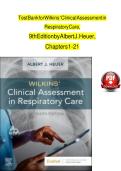
TestBank for Wilkins’ Clinical Assessment in
n n n n n n
Respiratory Care,
n n
9th Edition byAlbert J.Heuer,
n n n n n
Chapters 1-21 n n n
,Wilkins' Clinical Assessment in Respiratory Care,
n n n n n
Contents:
Chapter 1. Preparing for the Patient Encounter
n n n n n n
Chapter 2. The Medical Historyand the Interview
n n n n n n n
Chapter 3. CardiopulmonarySymptoms
n n n
Chapter 4. Vital Signs
n n n
Chapter 5. Fundamentals of Physical Examination
n n n n n
Chapter 6. Neurologic Assessment
n n n
Chapter 7. Clinical LaboratoryStudies
n n n n
Chapter 8. Interpretation of Blood Gases
n n n n n
Chapter 9. Pulmonary Function Testing
n n n n
Chapter 10. Chest Imaging
n n n
Chapter 11. Electrocardiography
n n
Chapter 12. Neonatal and Pediatric Assessment
n n n n n
Chapter 13. Older Patient Assessment
n n n n
Chapter 14. Monitoring in Critical Care
n n n n n
Chapter 15. Vascular Pressure Monitoring
n n n n
Chapter 16. Cardiac Output Measurement
n n n n
Chapter 17. Bronchoscopy
n n
Chapter 18. Nutritional Assessment
n n n
Chapter 19. Sleep and Breathing Assessment
n n n n n
Chapter20. Home Care Patient Assessment
n n n n n
Chapter 21. Documentation
n n
,Chapter1:PreparingforthePatientEncounter Test
n n n n n n n
Bank
n
MULTIPLECHOICE n
1. Whichofthe followingactivitiesis notpartoftheroleofrespiratorytherapists(RTs)in patient
n n n n n n n n n n n n n n n n
nassessment?
a. Assist thephysician withdiagnostic reasoning skills. n n n n n n
b. Help thephysician select appropriatepulmonaryfunction tests.
n n n n n n n
c. Interpret arterialblood gas values and suggestmechanicalventilation changes. n n n n n n n n n
d. Documentthe patientdiagnosisinthepatient’s chart. n n n n n n n
ANSWER: D n
RTsarenotqualified tomakeanofficial diagnosis.Thisistheroleofthe attending physician.
n n n n n n n n n n n n n n n n
REF: Table1-1,pg.4 n n n n OBJ: 9 n n
2. In which ofthefollowing stages ofpatient–clinician interaction isthe reviewof physician orders
n n n n n n n n n n n n n n
ncarried out? n
a. Treatmentstage n
b. Introductorystage n
c. Preinteractionstage n
d. Initialassessmentstage n n
ANSWER: C n
Physicianordersshouldbereviewedinthepatient’schartbeforethephysicianseesthe patient.
n n n n n n n n n n n n n n
REF: Table1-1,pg.4 n n n n OBJ: 9 n n
3. In which stageofpatient–clinician interaction isthepatient identification bracelet checked?
n n n n n n n n n n n
a. Introductorystage n
b. Preinteractionstage n
c. Initialassessmentstage n n
d. Treatmentstage n
ANSWER: A n
The patient IDbracelet mustbechecked before movingforward with assessment and treatment.
n n n n n n n n n n n n n
REF: Table1-1,pg.4 n n n n OBJ: 9 n n
4. Whatshouldbedone justbeforethepatient’s ID bracelet is checked?
n n n n n n n n n n n
a. Checkthepatient’sSpO2. n n n
b. Askthe patient for permission. n n n n
c. Check the chart for vital signs. n n n n n
d. Listen to breath sounds. n n n
ANSWER: B n
It is considered polite to ask thepatient for permission beforetouching and reading his or her ID
n n n n n n n n n n n n n n n n n
bracelet.
n
, REF: pg. 3 n n n OBJ: 3 |5 n n n n
5. Whatis the goal of the introductory phase?
n n n n n n n
a. Assessthepatient’sapparentage. n n n n
b. Identifythepatient’sfamilyhistory. n n n n
c. Determinethepatient’sdiagnosis. n n n
d. Establish a rapport with the patient. n n n n n
ANSWER: D n
The introductoryphaseis allabout getting to know the patientand establishing arapport with him or her.
n n n n n n n n n n n n n n n n n n
REF: Table1-1,pg.4 n n n n OBJ: 3 n n
6. Whichof the following behaviors is not consistent with resistive behavior of a patient?
n n n n n n n n n n n n n
a. Crossed arms n
b. Minimal eye contact n n
c. Brief answers to questions n n n
d. Asking the purpose of the treatment n n n n n
ANSWER: D n
If a patient asks aboutthe purpose of thetreatment you are aboutto give, this generally indicates that
n n n n n n n n n n n n n n n n n n
he or she is not upset.
n n n n n n
REF: Table1-1,pg.4 n n n n OBJ: 3 n n
7. Whatis the main purpose of the initial assessment stage?
n n n n n n n n n
a. Toidentifyanyallergiesto medications n n n n n
b. Todocumentthepatient’ssmokinghistory n n n n n
c. Topersonallyget to knowthepatient better
n n n n n n n
d. Toverifythat theprescribedtreatmentisstillneeded andappropriate
n n n n n n n n n n
ANSWER: D n
When you first see the patient, you are encouraged to perform a brief assessment to make sure the
n n n n n n n n n n n n n n n n n
treatment order by the physician is still appropriate. The patient’s status may have changed abruptly
n n n n n n n n n n n n n n n
recently.
n
REF: Table1-1,pg.4 n n n n OBJ: 3 n n
8. Whatis the appropriate distance for the social space fromthe patient?
n n n n n n n n n n n
a. 3 to 5 feet n n n
b. 4 to 12 feet n n n
c. 6 to 18 feet n n n
d. 8 to 20 feet n n n
ANSWER: B n
The social space is 4 to 12 feet.
n n n n n n n
REF: pg. 5 n n n OBJ: 5 n n
9. Whatis the appropriate distancefor the personal space?
n n n n n n n n
n n n n n n
Respiratory Care,
n n
9th Edition byAlbert J.Heuer,
n n n n n
Chapters 1-21 n n n
,Wilkins' Clinical Assessment in Respiratory Care,
n n n n n
Contents:
Chapter 1. Preparing for the Patient Encounter
n n n n n n
Chapter 2. The Medical Historyand the Interview
n n n n n n n
Chapter 3. CardiopulmonarySymptoms
n n n
Chapter 4. Vital Signs
n n n
Chapter 5. Fundamentals of Physical Examination
n n n n n
Chapter 6. Neurologic Assessment
n n n
Chapter 7. Clinical LaboratoryStudies
n n n n
Chapter 8. Interpretation of Blood Gases
n n n n n
Chapter 9. Pulmonary Function Testing
n n n n
Chapter 10. Chest Imaging
n n n
Chapter 11. Electrocardiography
n n
Chapter 12. Neonatal and Pediatric Assessment
n n n n n
Chapter 13. Older Patient Assessment
n n n n
Chapter 14. Monitoring in Critical Care
n n n n n
Chapter 15. Vascular Pressure Monitoring
n n n n
Chapter 16. Cardiac Output Measurement
n n n n
Chapter 17. Bronchoscopy
n n
Chapter 18. Nutritional Assessment
n n n
Chapter 19. Sleep and Breathing Assessment
n n n n n
Chapter20. Home Care Patient Assessment
n n n n n
Chapter 21. Documentation
n n
,Chapter1:PreparingforthePatientEncounter Test
n n n n n n n
Bank
n
MULTIPLECHOICE n
1. Whichofthe followingactivitiesis notpartoftheroleofrespiratorytherapists(RTs)in patient
n n n n n n n n n n n n n n n n
nassessment?
a. Assist thephysician withdiagnostic reasoning skills. n n n n n n
b. Help thephysician select appropriatepulmonaryfunction tests.
n n n n n n n
c. Interpret arterialblood gas values and suggestmechanicalventilation changes. n n n n n n n n n
d. Documentthe patientdiagnosisinthepatient’s chart. n n n n n n n
ANSWER: D n
RTsarenotqualified tomakeanofficial diagnosis.Thisistheroleofthe attending physician.
n n n n n n n n n n n n n n n n
REF: Table1-1,pg.4 n n n n OBJ: 9 n n
2. In which ofthefollowing stages ofpatient–clinician interaction isthe reviewof physician orders
n n n n n n n n n n n n n n
ncarried out? n
a. Treatmentstage n
b. Introductorystage n
c. Preinteractionstage n
d. Initialassessmentstage n n
ANSWER: C n
Physicianordersshouldbereviewedinthepatient’schartbeforethephysicianseesthe patient.
n n n n n n n n n n n n n n
REF: Table1-1,pg.4 n n n n OBJ: 9 n n
3. In which stageofpatient–clinician interaction isthepatient identification bracelet checked?
n n n n n n n n n n n
a. Introductorystage n
b. Preinteractionstage n
c. Initialassessmentstage n n
d. Treatmentstage n
ANSWER: A n
The patient IDbracelet mustbechecked before movingforward with assessment and treatment.
n n n n n n n n n n n n n
REF: Table1-1,pg.4 n n n n OBJ: 9 n n
4. Whatshouldbedone justbeforethepatient’s ID bracelet is checked?
n n n n n n n n n n n
a. Checkthepatient’sSpO2. n n n
b. Askthe patient for permission. n n n n
c. Check the chart for vital signs. n n n n n
d. Listen to breath sounds. n n n
ANSWER: B n
It is considered polite to ask thepatient for permission beforetouching and reading his or her ID
n n n n n n n n n n n n n n n n n
bracelet.
n
, REF: pg. 3 n n n OBJ: 3 |5 n n n n
5. Whatis the goal of the introductory phase?
n n n n n n n
a. Assessthepatient’sapparentage. n n n n
b. Identifythepatient’sfamilyhistory. n n n n
c. Determinethepatient’sdiagnosis. n n n
d. Establish a rapport with the patient. n n n n n
ANSWER: D n
The introductoryphaseis allabout getting to know the patientand establishing arapport with him or her.
n n n n n n n n n n n n n n n n n n
REF: Table1-1,pg.4 n n n n OBJ: 3 n n
6. Whichof the following behaviors is not consistent with resistive behavior of a patient?
n n n n n n n n n n n n n
a. Crossed arms n
b. Minimal eye contact n n
c. Brief answers to questions n n n
d. Asking the purpose of the treatment n n n n n
ANSWER: D n
If a patient asks aboutthe purpose of thetreatment you are aboutto give, this generally indicates that
n n n n n n n n n n n n n n n n n n
he or she is not upset.
n n n n n n
REF: Table1-1,pg.4 n n n n OBJ: 3 n n
7. Whatis the main purpose of the initial assessment stage?
n n n n n n n n n
a. Toidentifyanyallergiesto medications n n n n n
b. Todocumentthepatient’ssmokinghistory n n n n n
c. Topersonallyget to knowthepatient better
n n n n n n n
d. Toverifythat theprescribedtreatmentisstillneeded andappropriate
n n n n n n n n n n
ANSWER: D n
When you first see the patient, you are encouraged to perform a brief assessment to make sure the
n n n n n n n n n n n n n n n n n
treatment order by the physician is still appropriate. The patient’s status may have changed abruptly
n n n n n n n n n n n n n n n
recently.
n
REF: Table1-1,pg.4 n n n n OBJ: 3 n n
8. Whatis the appropriate distance for the social space fromthe patient?
n n n n n n n n n n n
a. 3 to 5 feet n n n
b. 4 to 12 feet n n n
c. 6 to 18 feet n n n
d. 8 to 20 feet n n n
ANSWER: B n
The social space is 4 to 12 feet.
n n n n n n n
REF: pg. 5 n n n OBJ: 5 n n
9. Whatis the appropriate distancefor the personal space?
n n n n n n n n


